
With the change of locations came a change to the schedule. Our roundtrip excursion to two small but historic Bulgarian towns, Arbanasi and Veliko Tarnovo, was moved up to today.
The drive – about two hours in length – took us through a mostly agricultural area of Bulgaria, one of narrow country roads lined with hedgerow borders that partially hid planted fields.
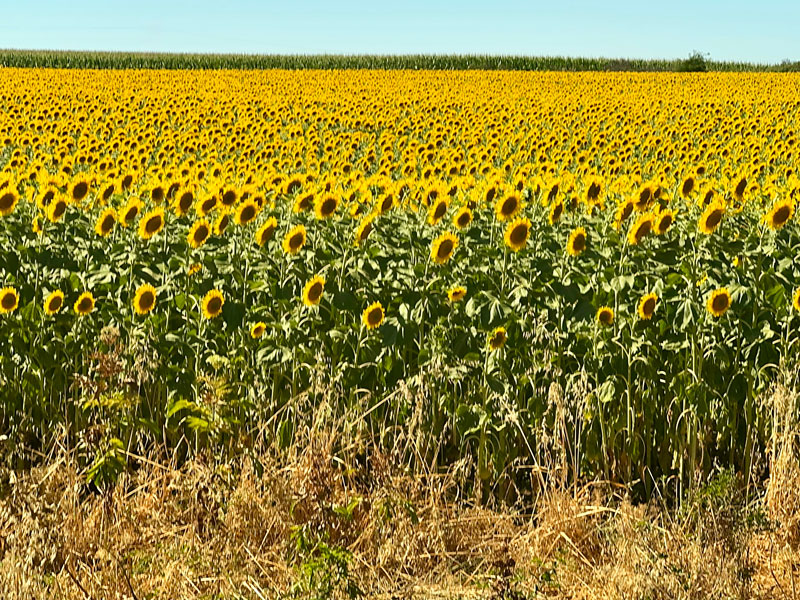
But then, suddenly, glowing blocks of color would burst through the shrubbery. Openings in the thickets revealed a checkerboard landscape dotted both near and far with fields upon fields of sunflowers, their yellow brilliance, as if stolen from Sol, in stark contrast to the darker fields of corn and other crops.
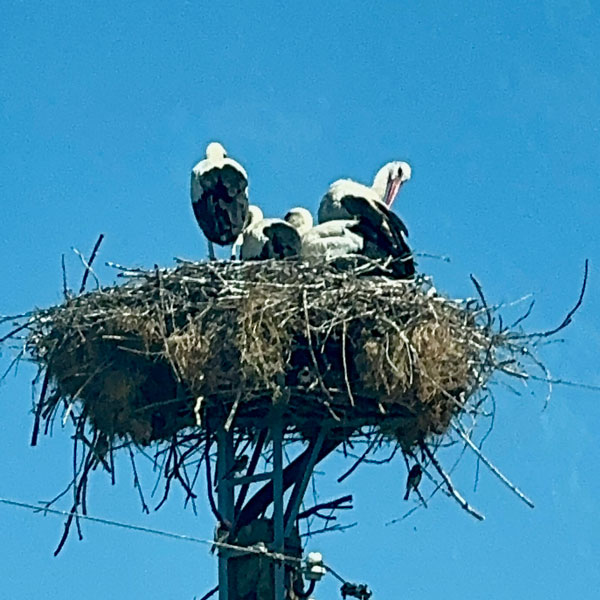
Then, as we would pass through tiny villages along the way, we began to see occupied stork nests. (Storks mate for life.) Most of them had hatchlings within, squawking for their supper.
As we neared our destinations, the terrain on each side of the road began to diverge into two distinct types: small mountains in their natural, uncultivated state rose up on one side of the bus. And the land on the other side of the bus remained arable, undulating a bit compared to the mostly level fields we’d seen earlier.
Our first stop was the village of Arbanasi. This was a three-pronged visit. First, we toured a former residence preserved now as a museum of how people lived under the Ottoman occupation. The second stop was at an Orthodox church “on the down low”, so to speak. It was designed to be hidden in plain sight so as not to irritate their Turkish overlords. And the third was to have lunch in the small cluster of buildings that could amusingly be called downtown Arnabasi.
THE KONSTANTSALIEVA’S HOUSE MUSEUM
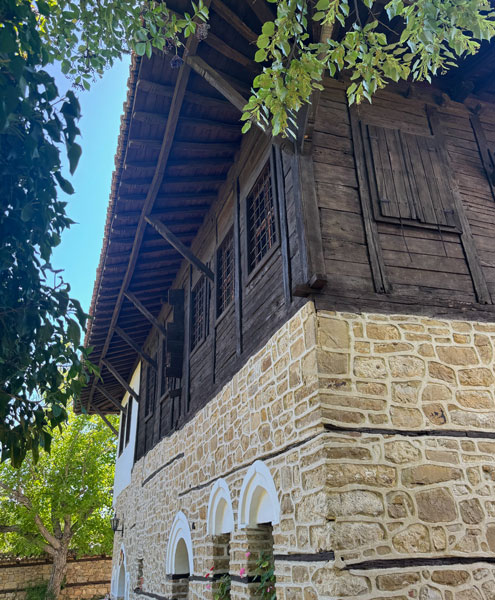
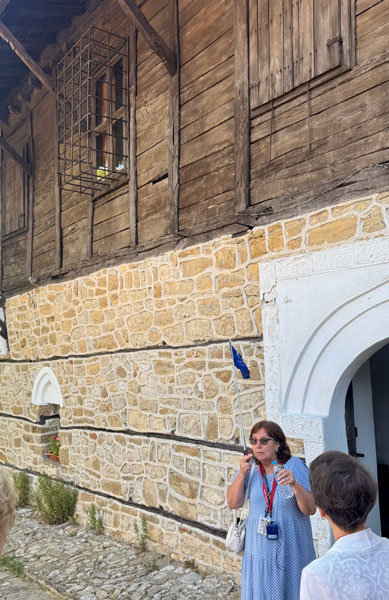
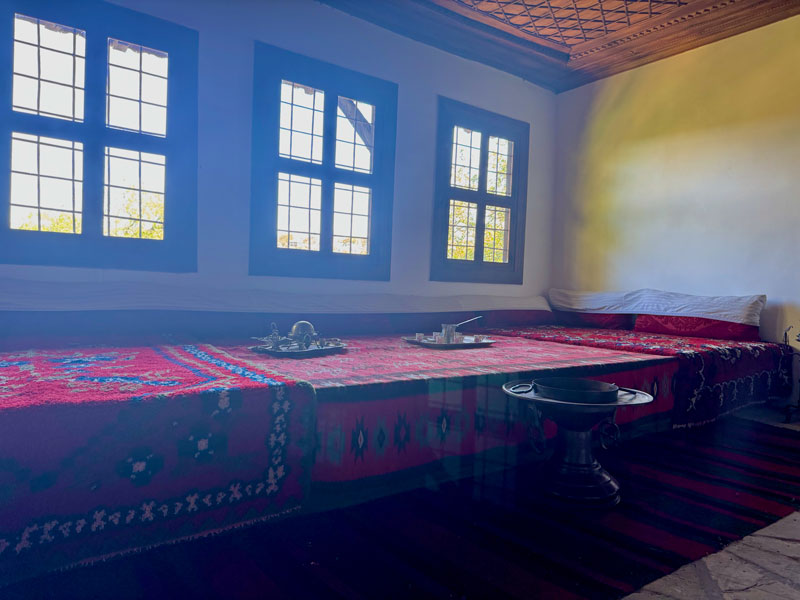
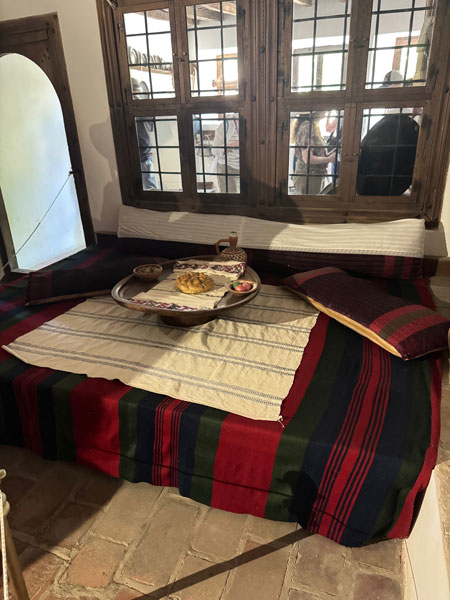
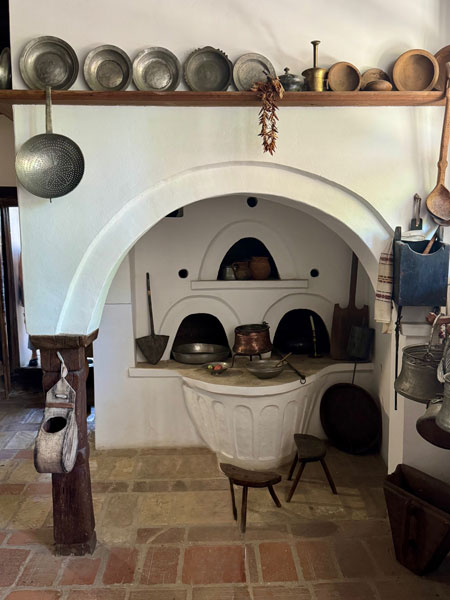
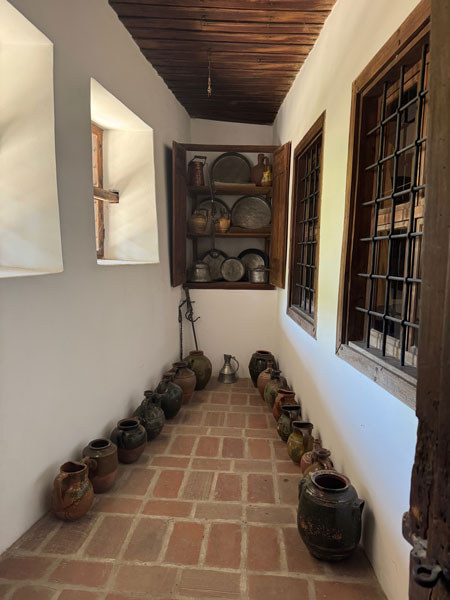
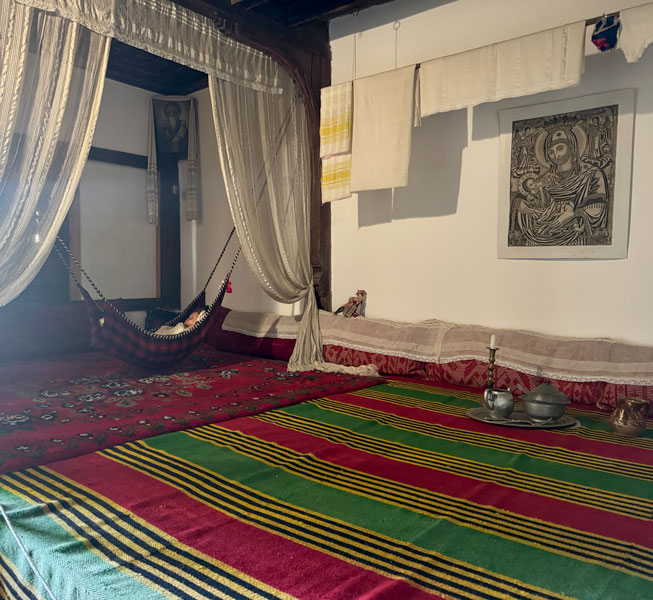
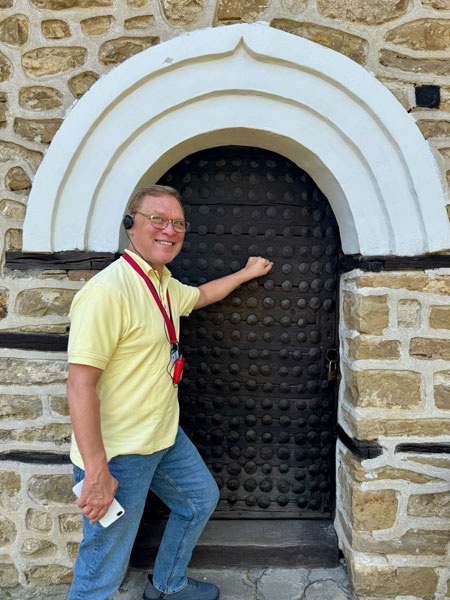
Built at the end of XVII century when the Ottoman Turks ruled and their influence was adopted by locals, the house is an ethnographic museum that showcases the opulent lifestyle of wealthy Bulgarian merchants during the occupation. It is a well-preserved example of the unique style of architecture used in Arbanasi: a house-fortress surrounded by high stone walls.
And the interior rooms, meticulously restored to reflect their original use and decor, feature the adopted Ottoman style of large seating areas called divans. These were low, upholstered platforms, often piled with cushions, that dominate the room. At night, entire families slept together on straw mattresses that were used to cushion the divans.
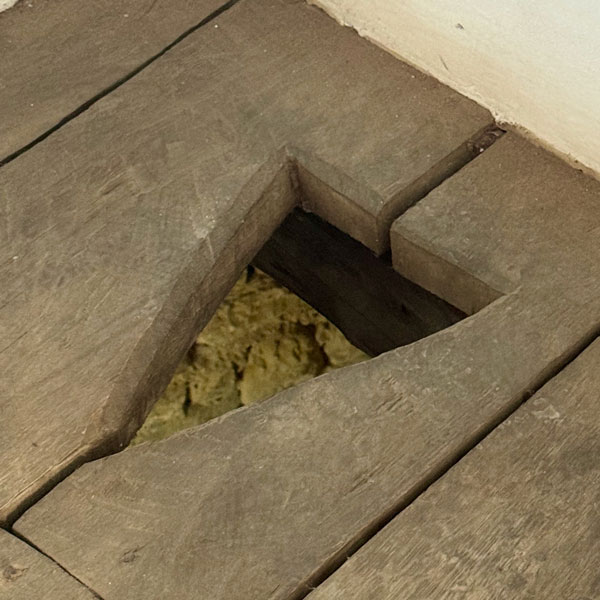
Not exactly an Ottoman tradition was the inclusion of secret staircases that provided safe passage to basement areas if under attack.
CHURCH OF SS. ARCHANGELS MICHAEL AND GABRIEL
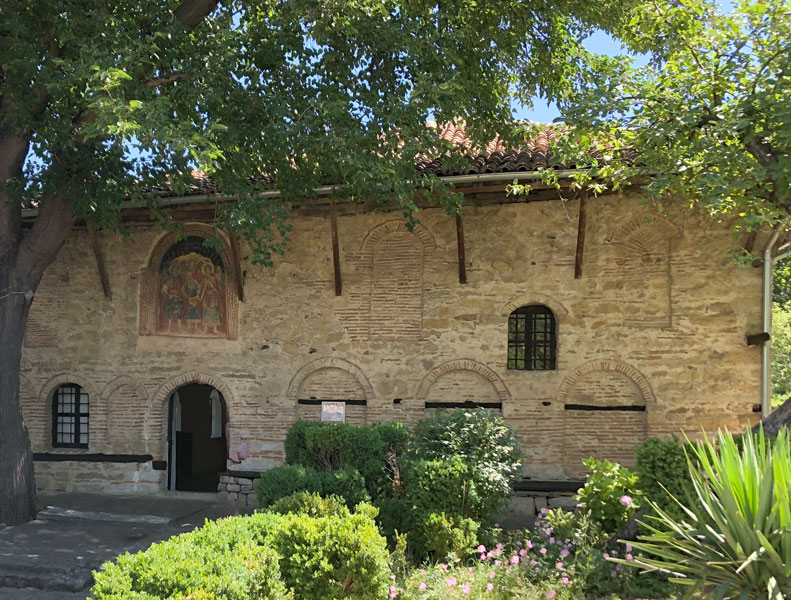
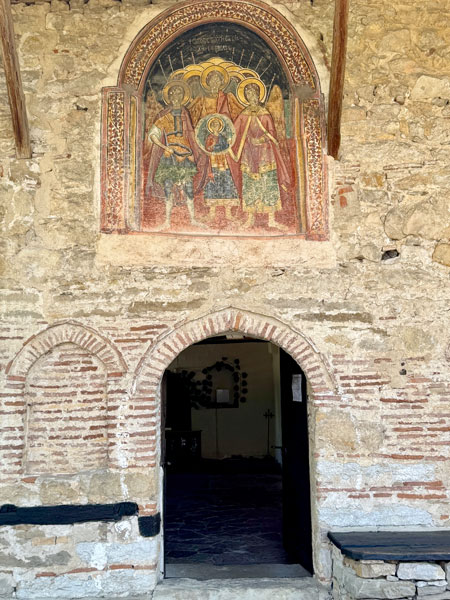
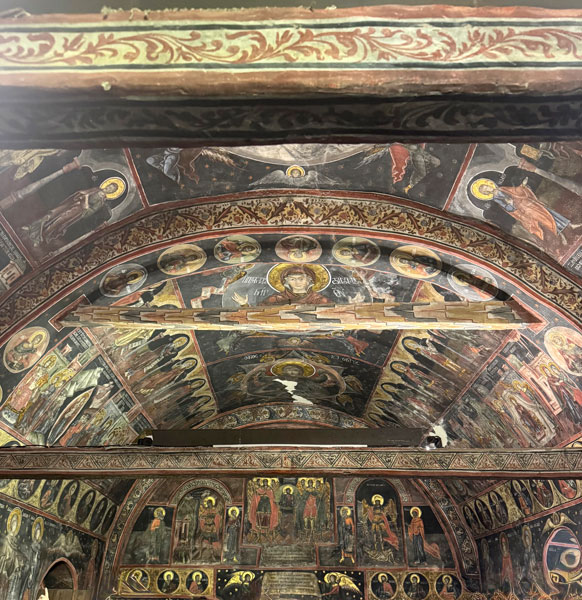
Set back off the road a bit was the “secret” church of the archangels. Its external appearance is typical for a building of the area: stone construction with a square footprint, a few small windows and a tile roof. Conspicuously missing are the tell-tale signs of a Christian house of worship: spires, onion domes, crosses, etc. The only give-away to the building’s true purpose is the mural of the namesake archangels above the entry door.
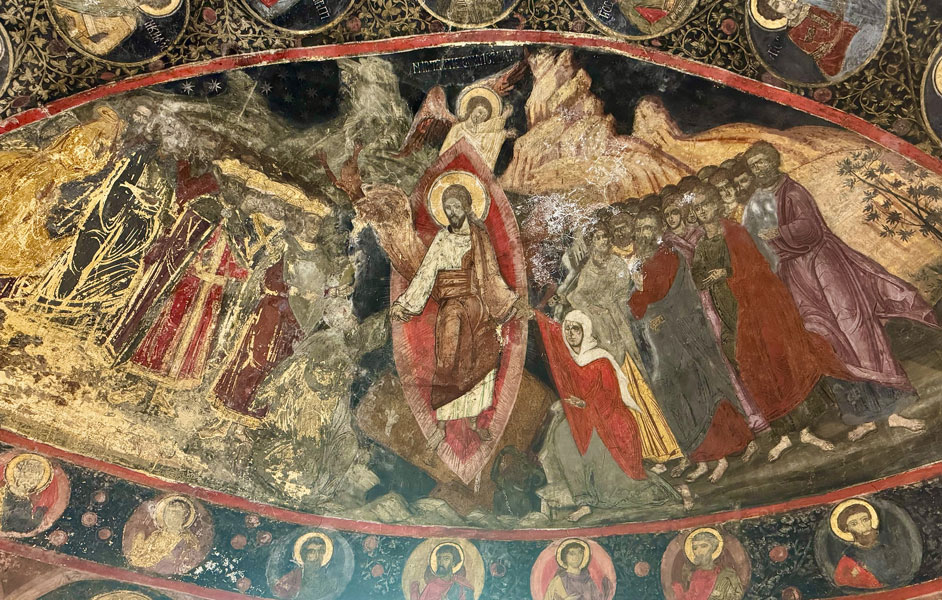
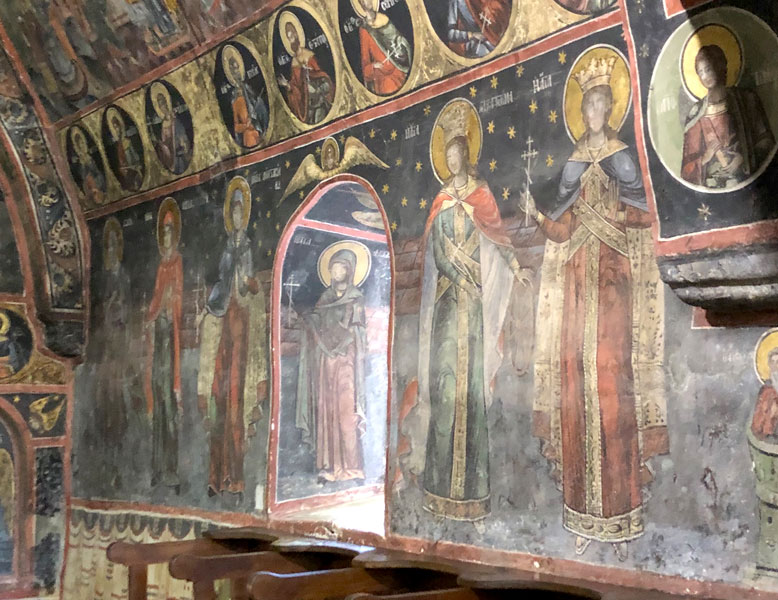
Inside, both the inner and outer (women’s) naves are covered with colorful, instructive murals depicting important biblical themes, milestones of Christ’s life, and important saints. Above the altar area, a false dome was cut into the ceiling, hidden from view on the outside. Strikingly, the walls of the women’s chamber are lined with depictions of prominent female saints set against a star-filled night sky.
During our visit, we were entertained by a men’s a cappella quartet who performed sacred music in the main sanctuary. CDs were available for purchase.
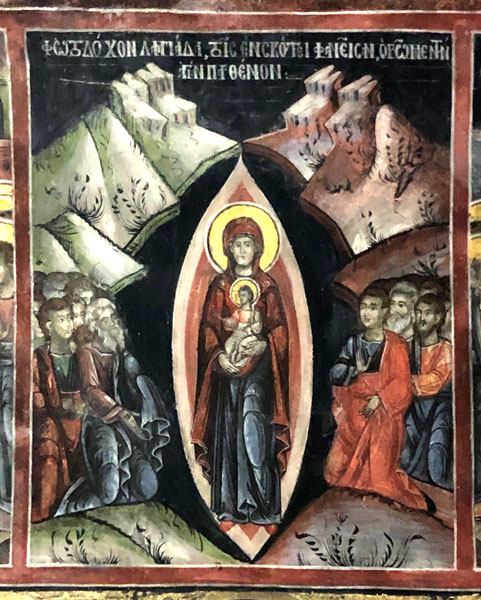
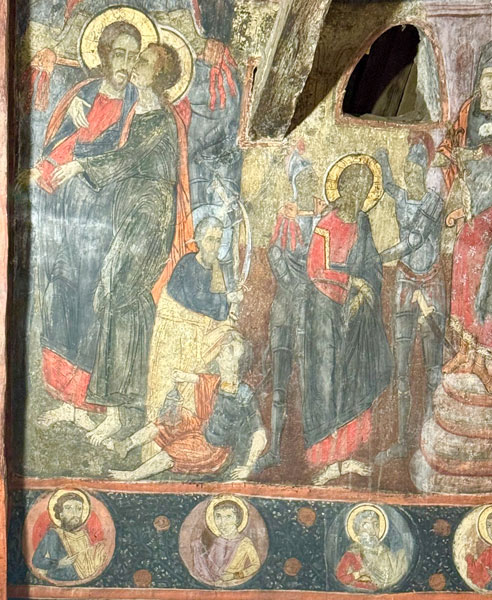
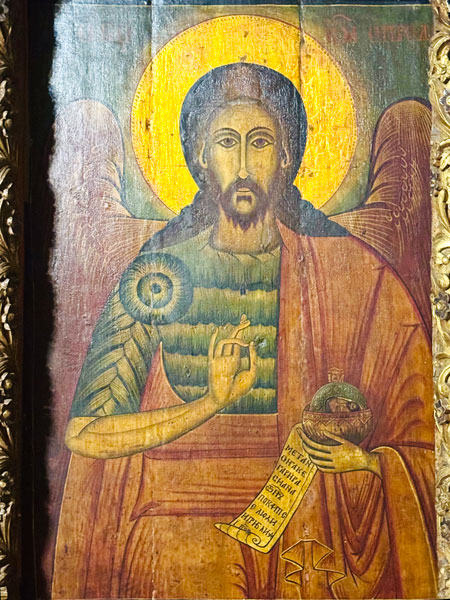
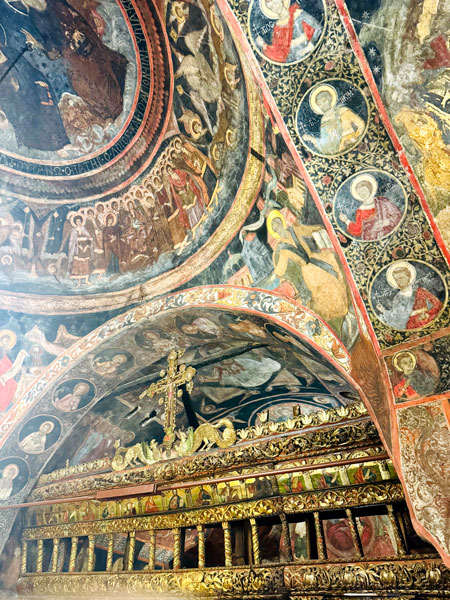
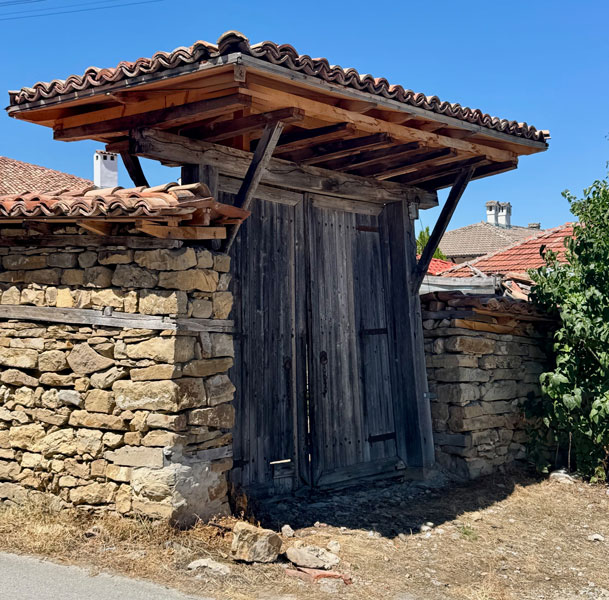
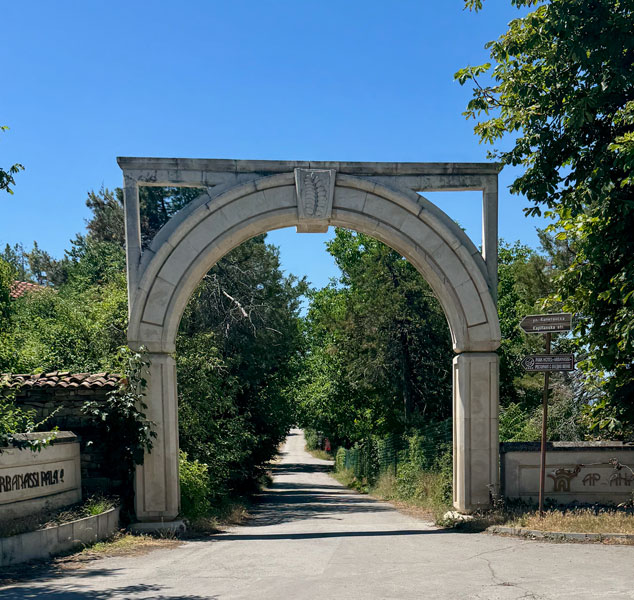
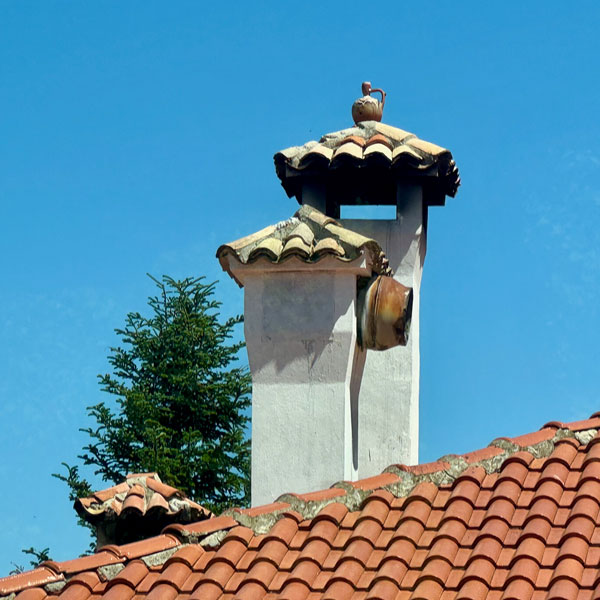
SEEN ON THE STREETS OF ARBANASI
LUNCH IN ARBANASI
Leaving the church, we walked through the adjacent churchyard, emerging on the main street of Arbanasi. Here, we gathered at a local establishment for lunch.
However, before entering the restaurant’s door, we were invited to break off a chunk of bread from a freshly-baked, knotted loaf and dip it into a dry seasoning mix, a local convention to welcome guests.
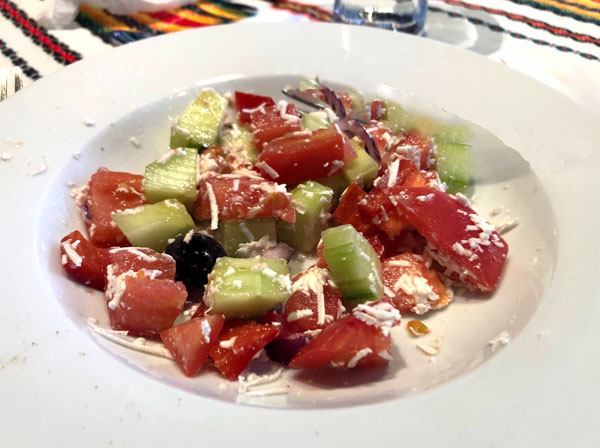
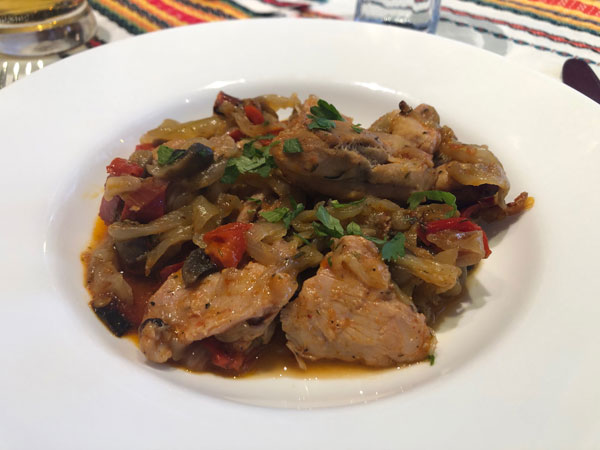
The meal, consisting of soup, salad and a chicken entrée, was delicious.
VELIKO TARNOVO
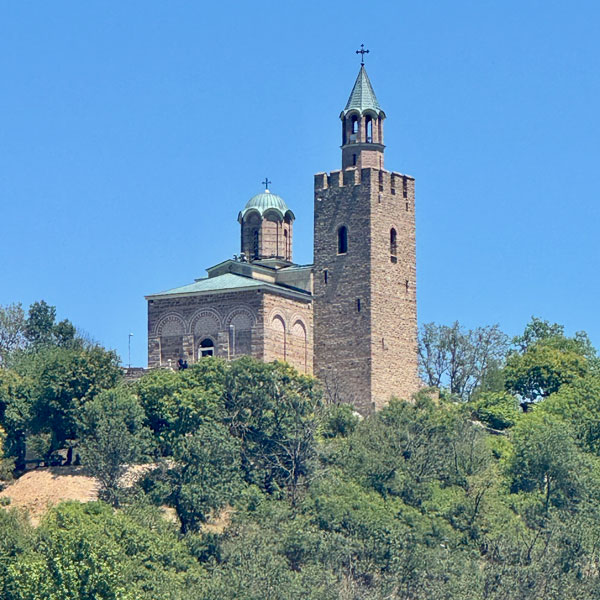
Leaving Arnabasi behind, we rode to nearby Veliko Tarnovo: former capital of the Second Bulgarian Empire; spiritual heart of Bulgaria; and, translated, the “City of the Tsars.” Our local guide walked us down to an overlook that provided a great view of the hilltop Tsarevets Fortress and the (reconstructed1) towering Patrarchal Cathedral St. Ascension and castle that the fortification surrounds.
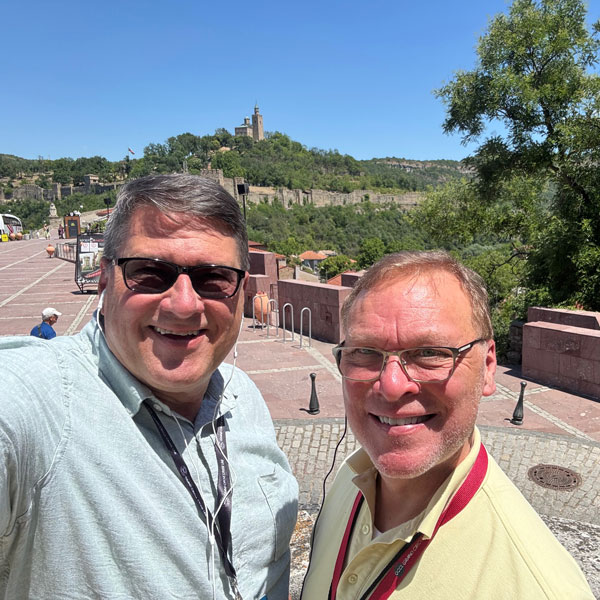
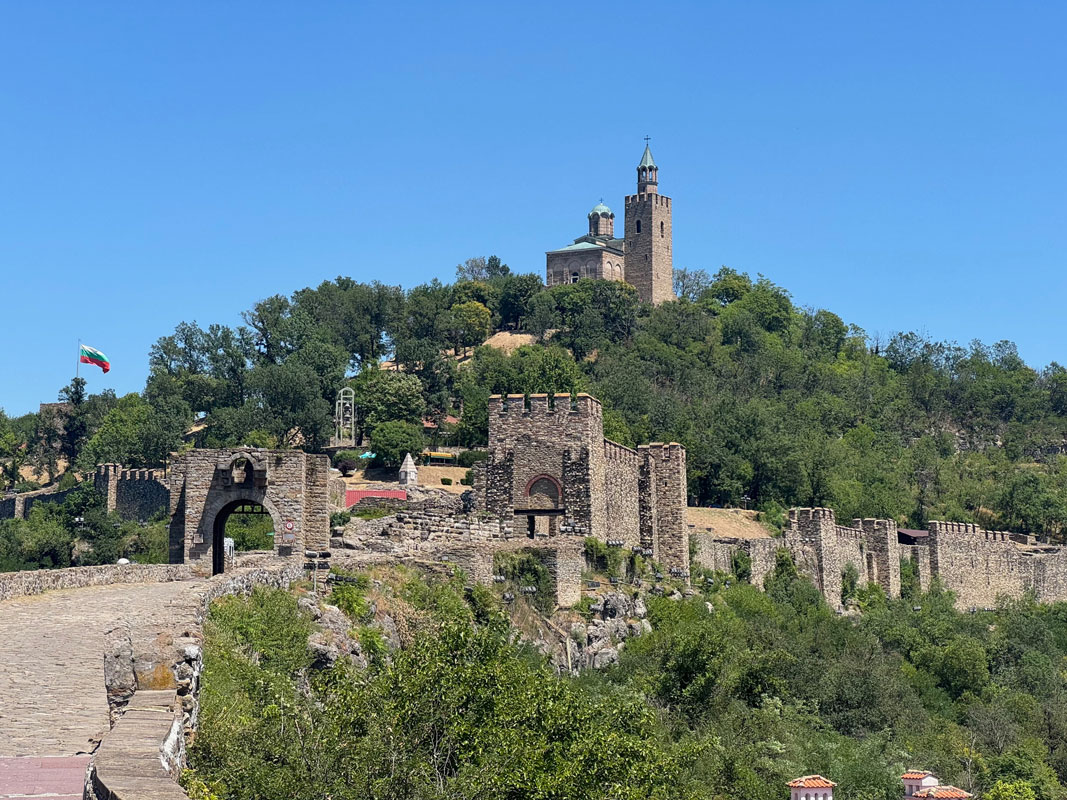
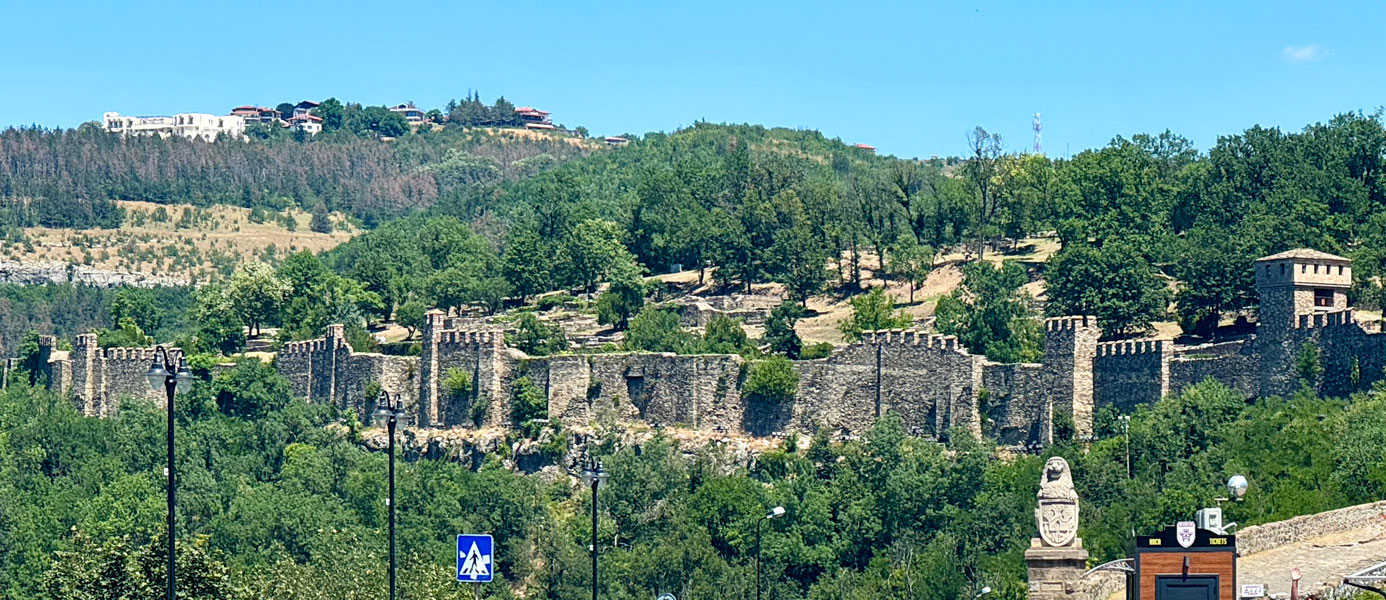
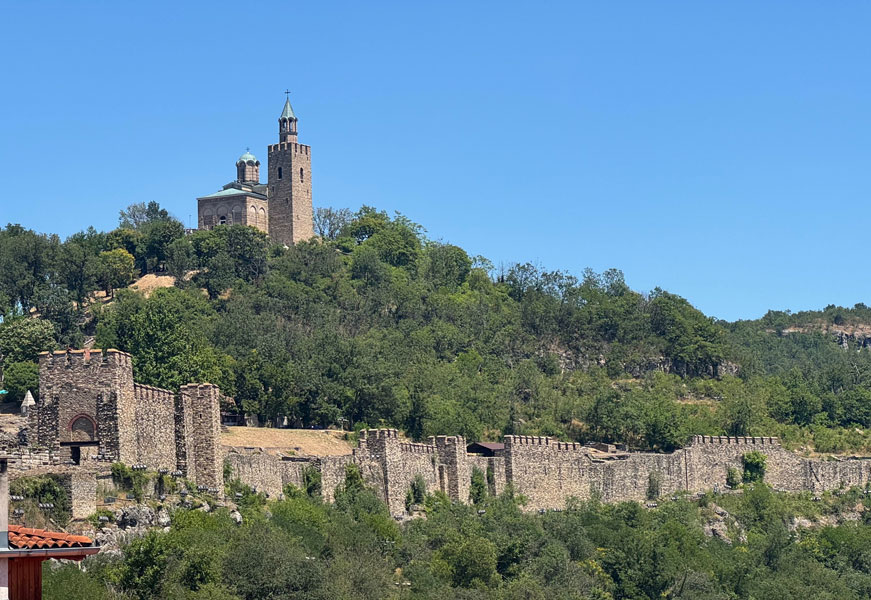
Having taken in the grand view, we moved on to the Old Town market road, the famous Rakovski Street. Lined on both sides with crafts shops, the (supposedly2) pedestrian-only cobblestone street provided the Full-Tourist Experience: visitors could watch artisans at work (if they were open) and then purchase handmade souvenirs such as pottery, textiles, woodcarvings and more.
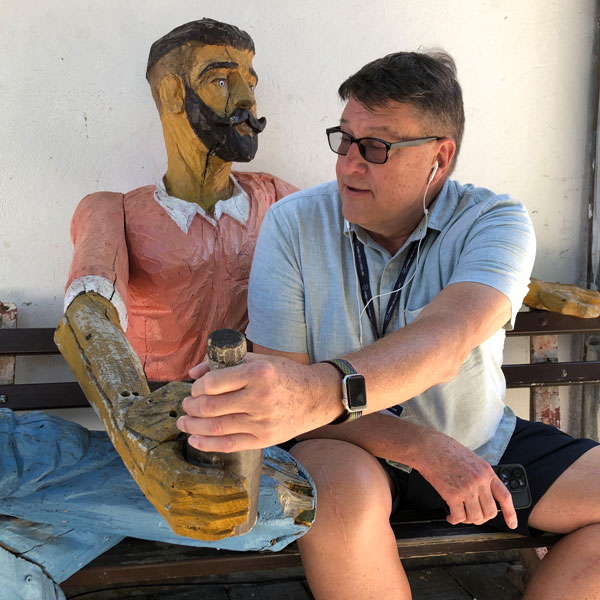
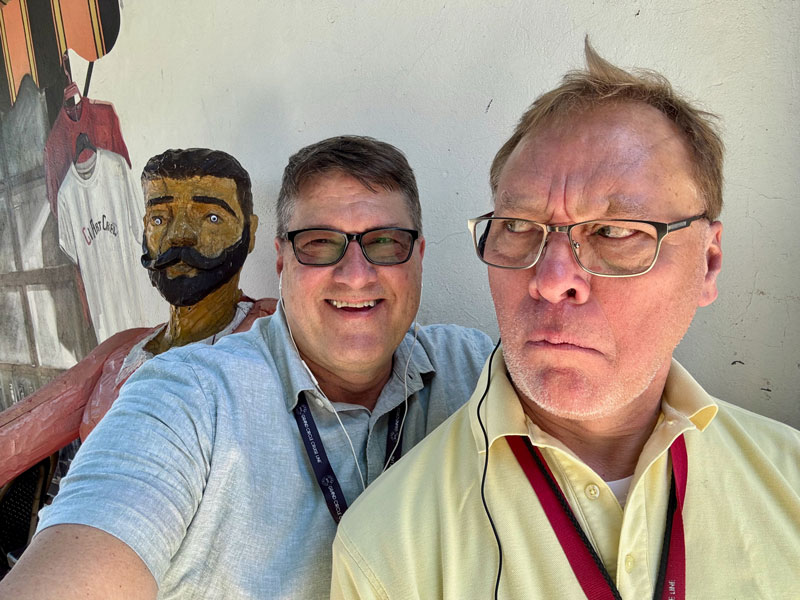
There were also a couple of life-size, hand-carved “locals” randomly seated on benches up and down the street, just begging to be included in a selfie! We obviously obliged.
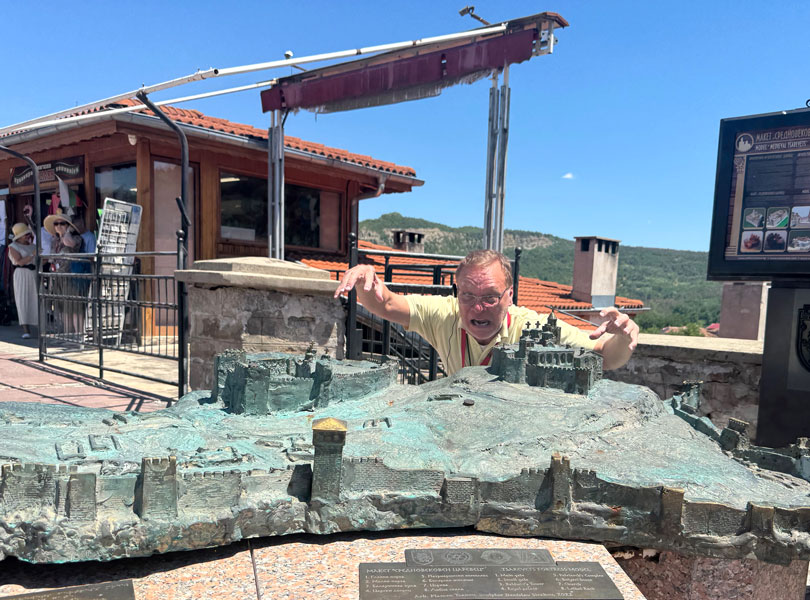
(See High jinks in Veliko Tarnovo below.)
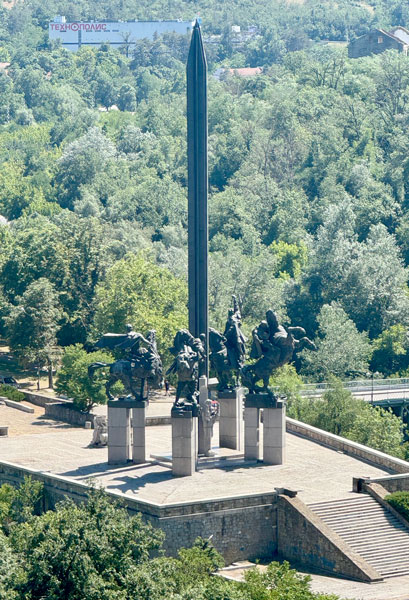
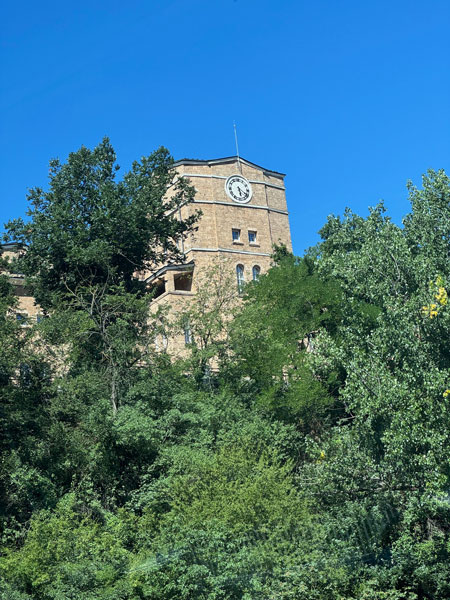
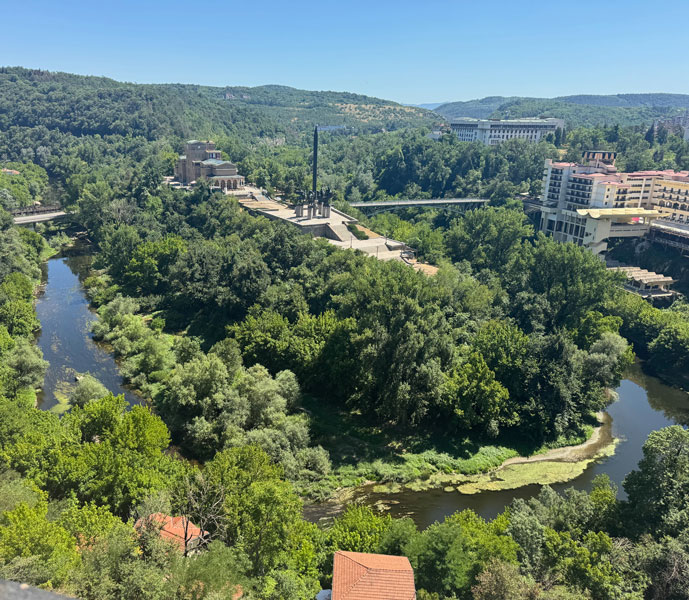
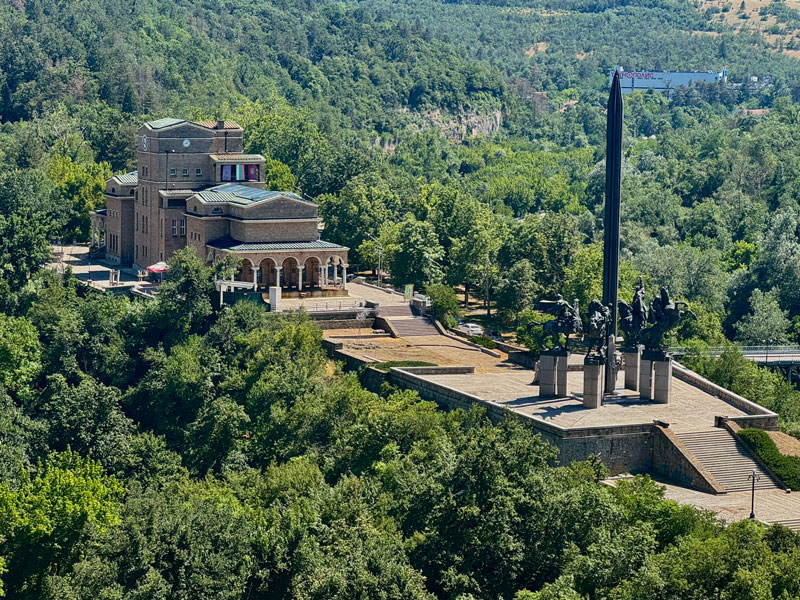
High jinx in Veliko Tarnovo
After we returned to the ship, the evening’s festivities started with a Captain’s Welcome Drink…with Open Bar! (And I mean “Open Bar” in every sense of the words. BTW, their “caps”–not mine.) The crew was introduced and a sail-away toast was raised before we proceeded to the dining room for the multi-coursed Captain’s Welcome Dinner.
The lounge entertainment was a Tribute to Elton John. Rob was not impressed. One drink and he was out.
I blogged.
1 The Patriarchal Cathedral was completely reconstructed in the 70s & 80s after being destroyed by the Ottomans in 1393. The inside has been filled with modernist murals of Bulgarian history…and, as such, the church has not been consecrated nor are services held there.
2 For a “supposedly” pedestrian-only street, our group had to be quite vigilant in alerting others of the many cars that apparently did not get the memo.
 Eastern Europe: Black Sea to Budapest