
Today is a fine day to learn some Serbian history!
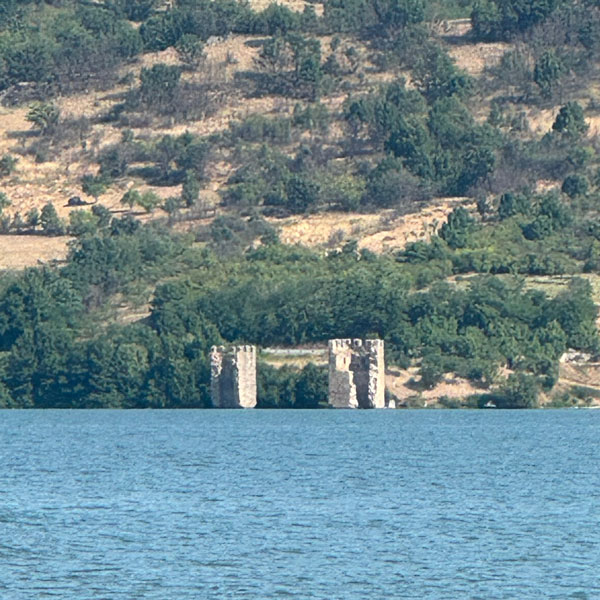
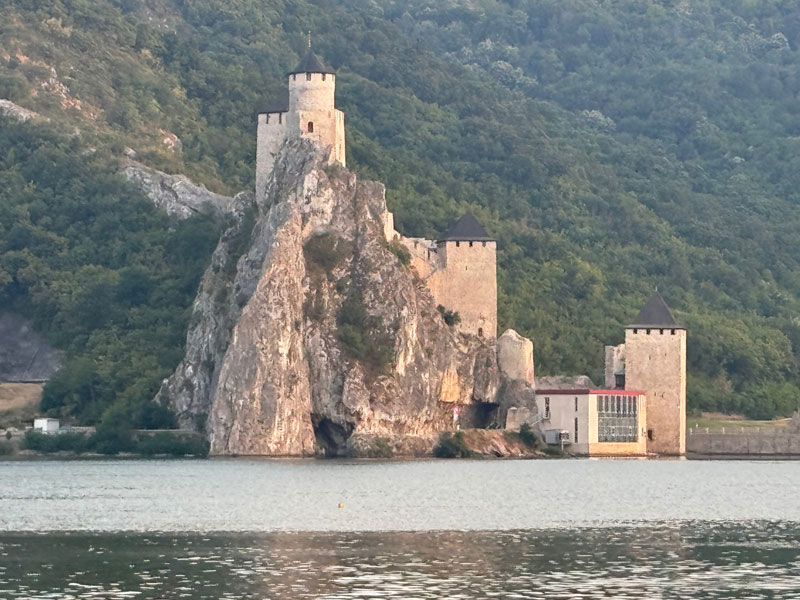
First, our dining room view at breakfast revealed a mysterious half-submerged stone structure across the river that could have been built anytime from the 15th century to the 1950s.
With a little research, I discovered that it is the (top of the) Fortress of Tricule, built in the 16th century to stop Turkish and other armed incursions. Built with three tower-turrets connected by palisades, it was fairly ineffective, having been conquered by the Austrians, Turks and Serbian hajduks. Final defeat came at the hands of the accumulating waters of the dammed Danube…with its third turret lost beneath the waves.
Pleistocene Epoch Hilarity
“What we’re gonna do right here is go back, way back, back into time.”
from Troglodyte
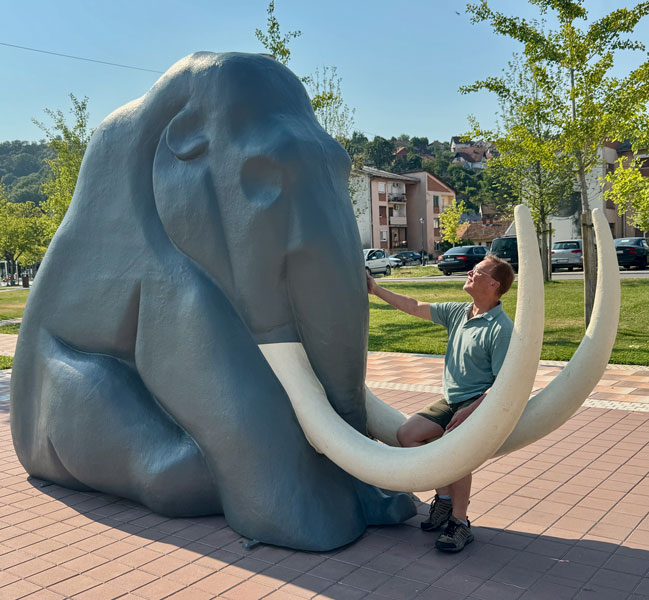
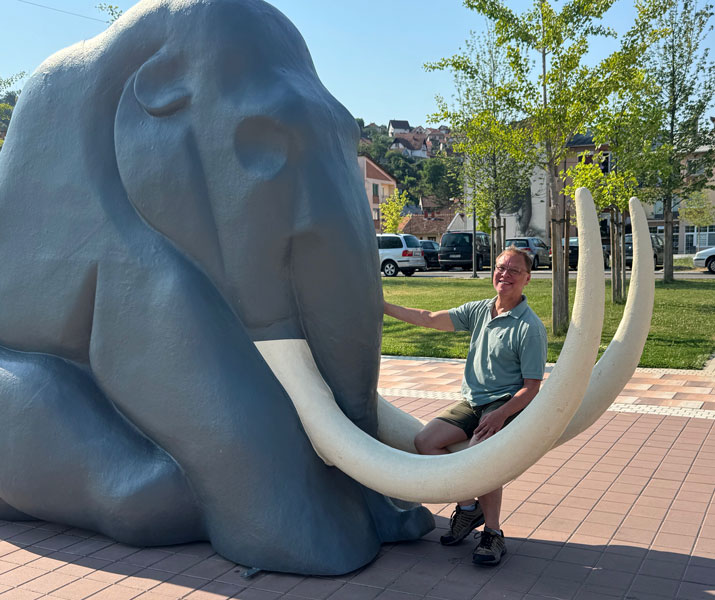
Right off the boat, after passing Customs, there is a landscaped park and playground that was filled with adults and children the night before. That meant the “elephant in the room” (read: wooly mammoth) was occupied by local children and unavailable for Rob’s shenanigans.
This morning, before boarding the bus, I was able to capture his pleasure playing with the prehistoric pachyderm.
Lepenski Vir Archeological Site
Supported by the EU (despite Serbia’s non-membership), Lepenski Vir is included as part of the surrounding UNESCO global geopark.
🔹 Lepenski Vir is one of the largest and most important archaeological sites of developing Balkan culture…and the Stone Age overall.
🔹 Current chronology has Lepenski Vir starting in the Early Mesolithic Period (9500-7200 BCE) and lasting to the Neolithic Period (5500 BCE).
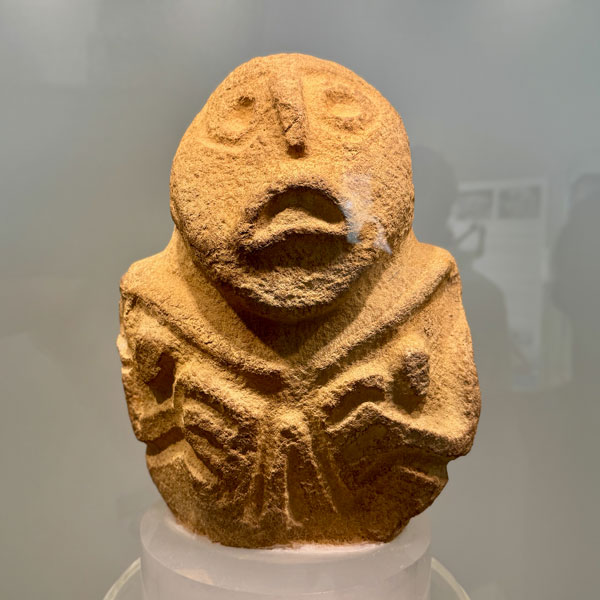
🔹 Here was the mixing of Iron Gates Hunter-Gatherers with newly arrived Early European Farmers. They developed unique buildings with trapezoidal footprints and carved monumental sculpture.
🔹 As a permanent, planned settlement with an organized society, Lepenski Vir has been called “the first city in Europe.”
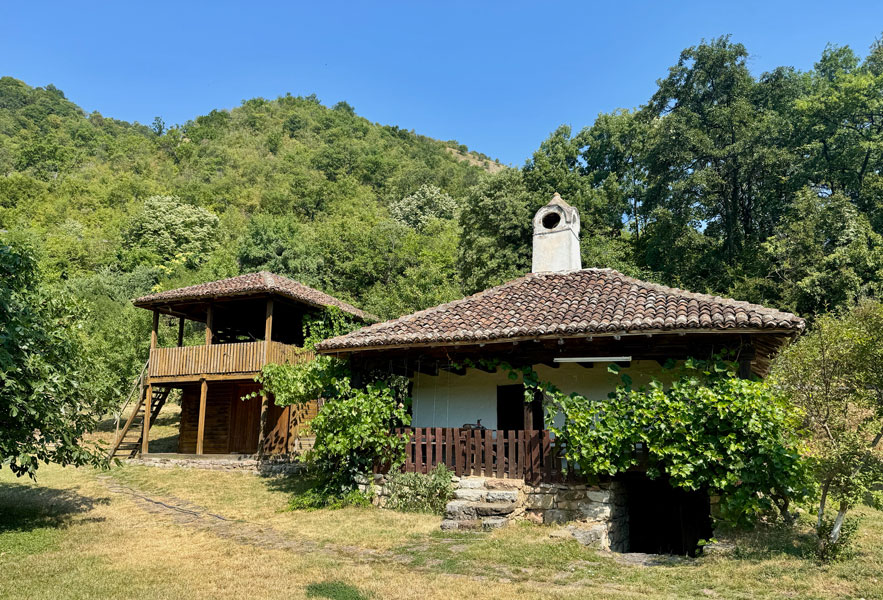
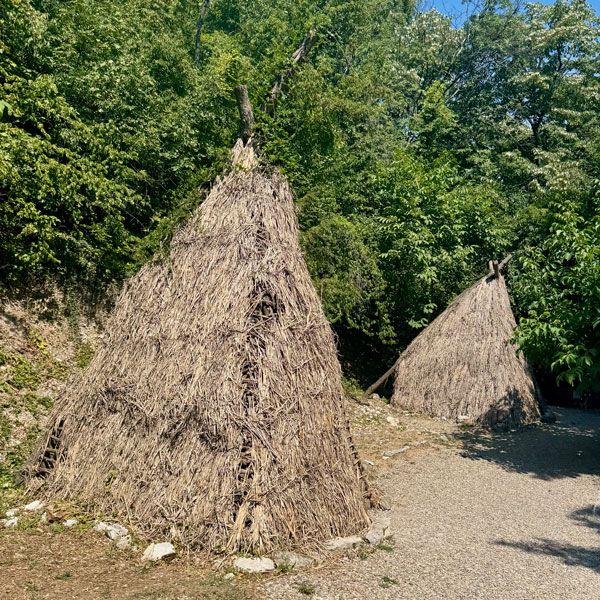
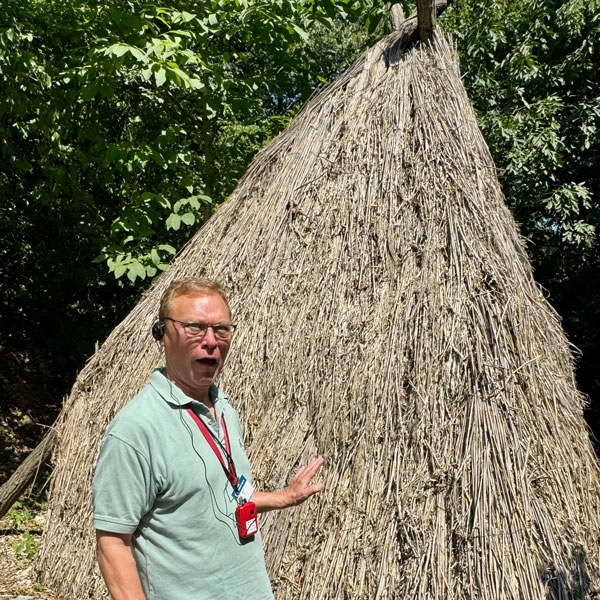
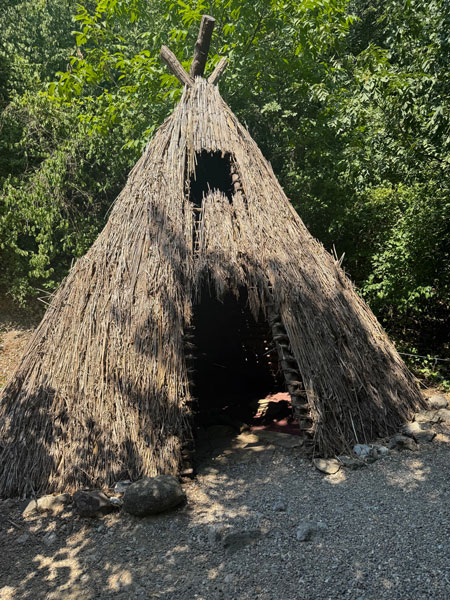
On our walk to the museum building, we passed by a series of four transplanted structures that typify early, rural Serbian village buildings. ‘Tis an amuse bouche of local history before serving us the main course from the excavation.
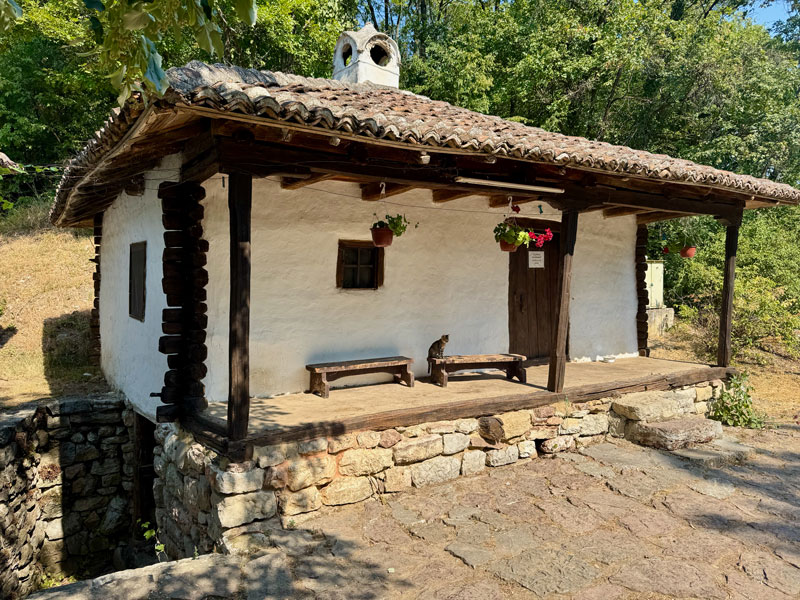
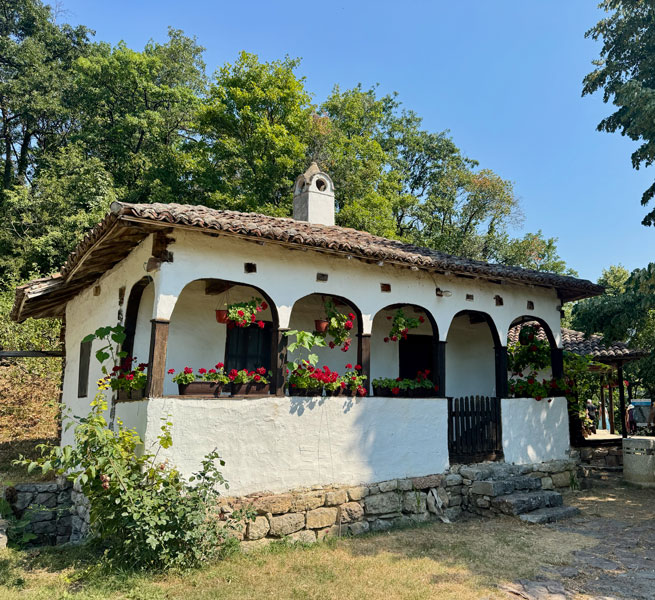
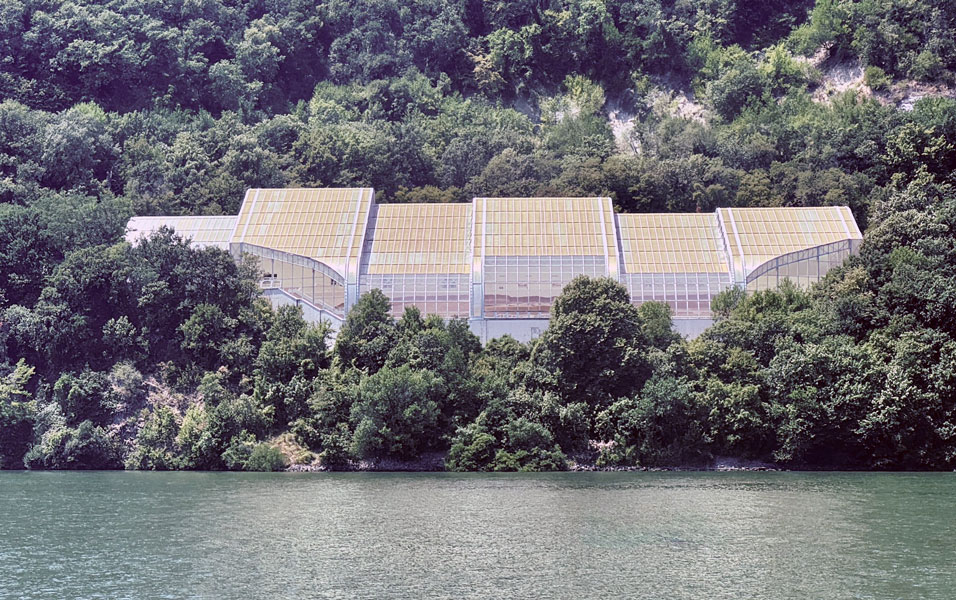
Inside the archeological museum, they have re-created the dig site under glass.
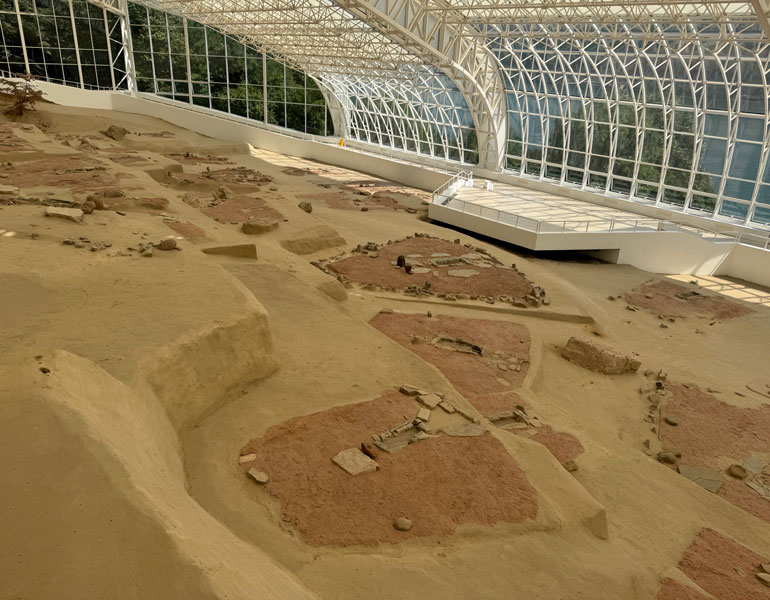
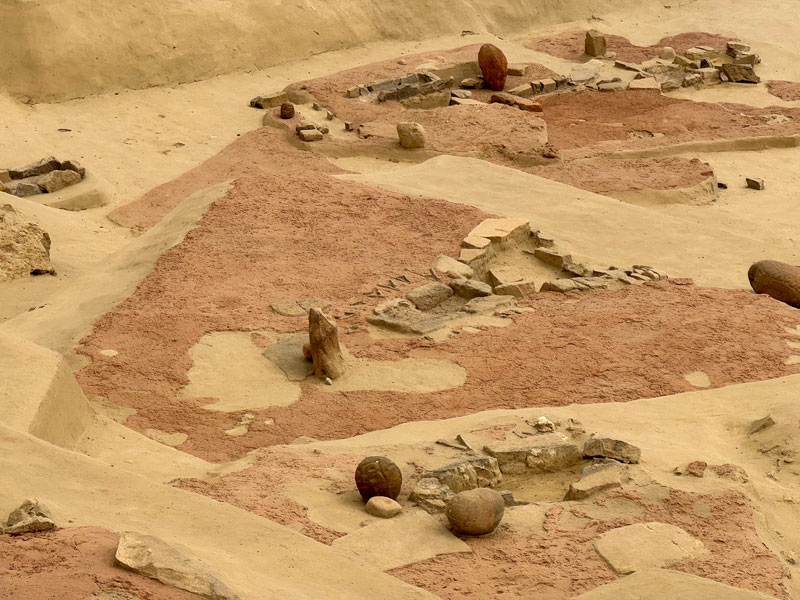
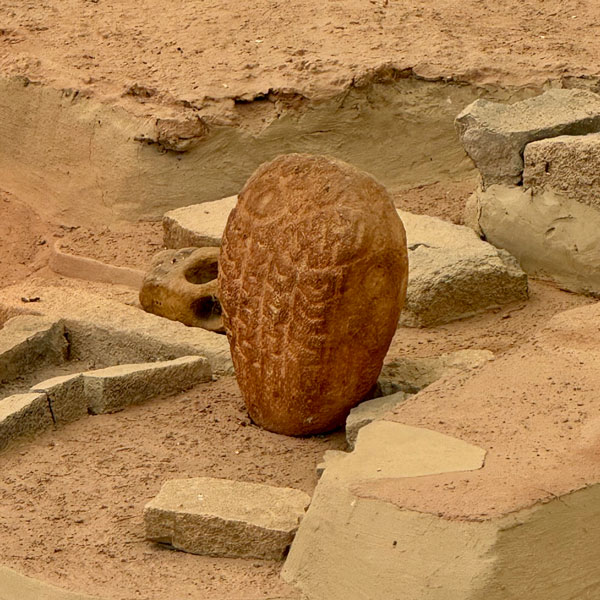
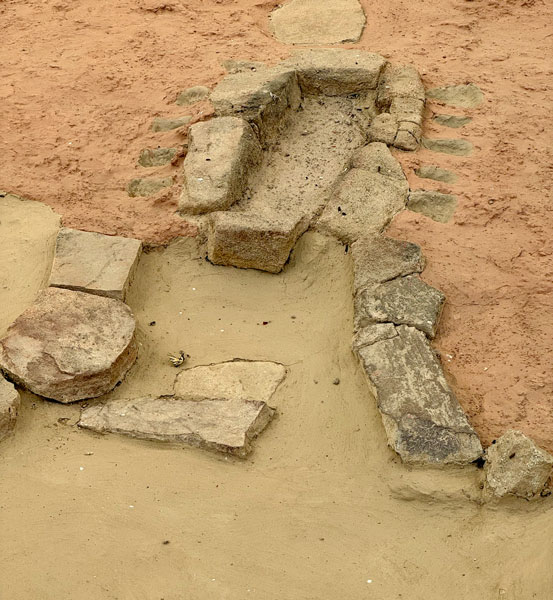
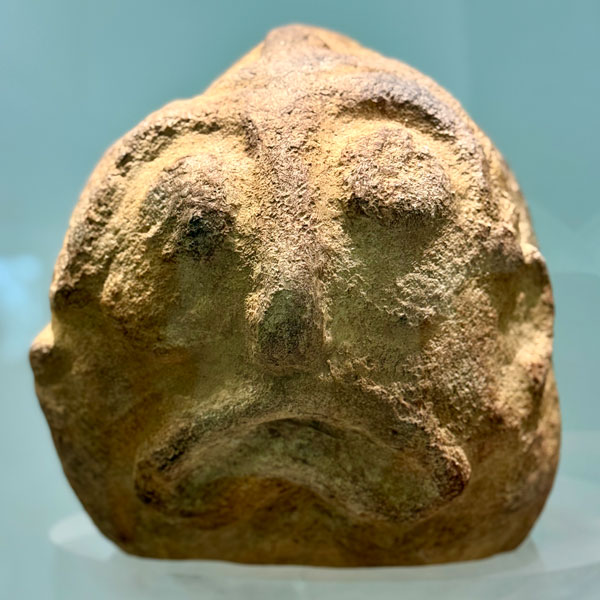
Artifacts and human remains found at the dig site.
I cannot read Serbian, so I’m not sure about this, but I believe the artifacts & bones I’ve captured below are the originals found at the excavation. Each was displayed in an individual glass case in a dedicated room above the recreated site attesting to their historic value.
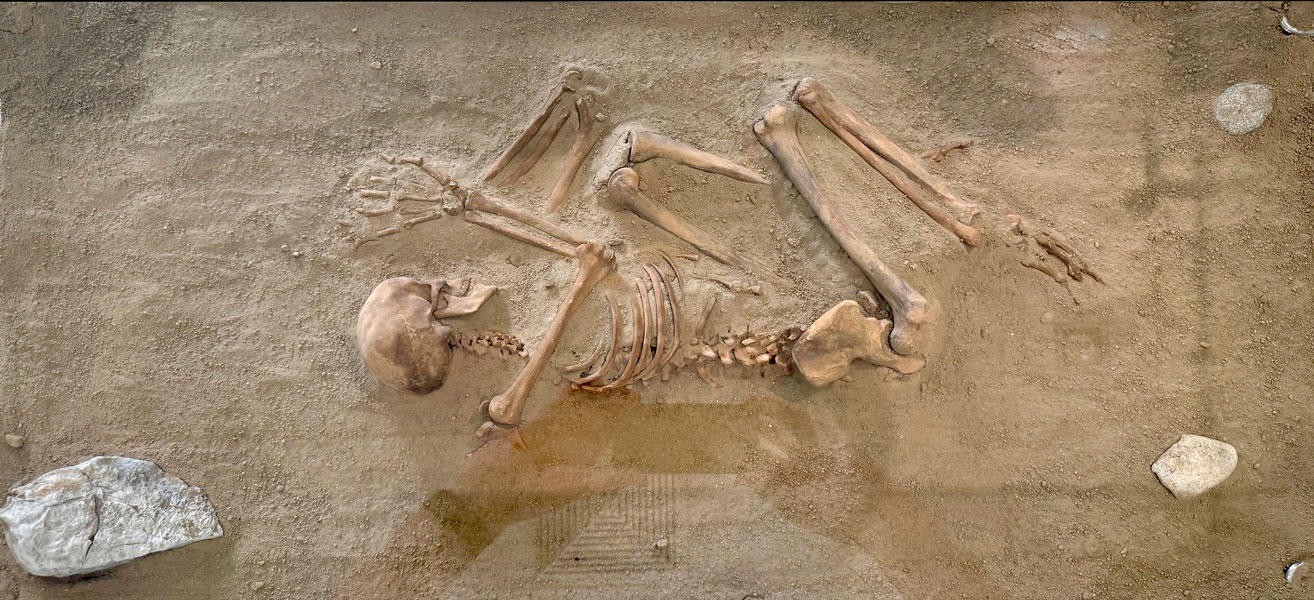
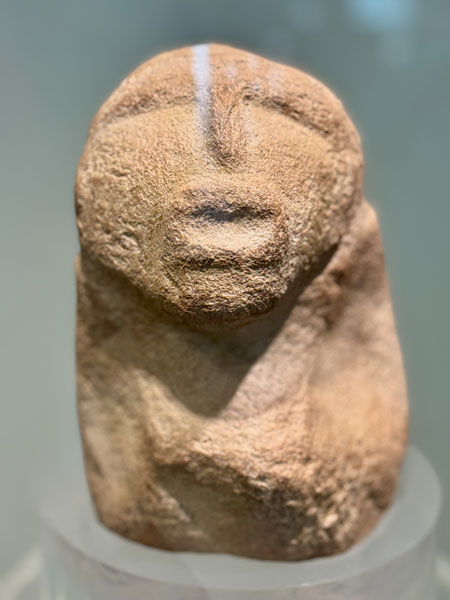
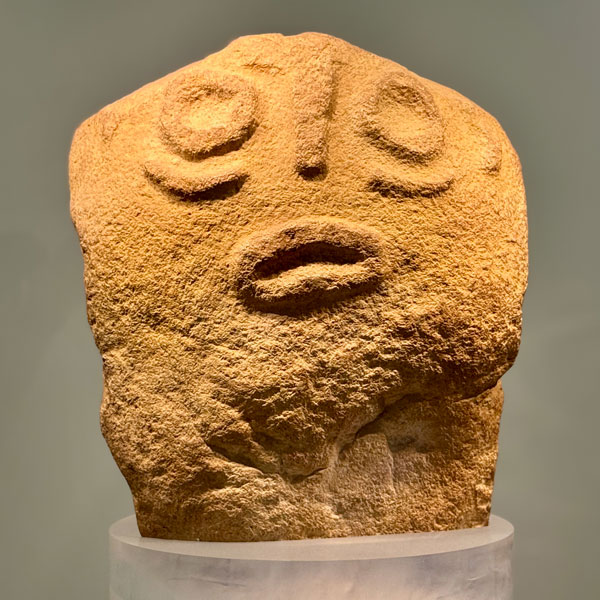
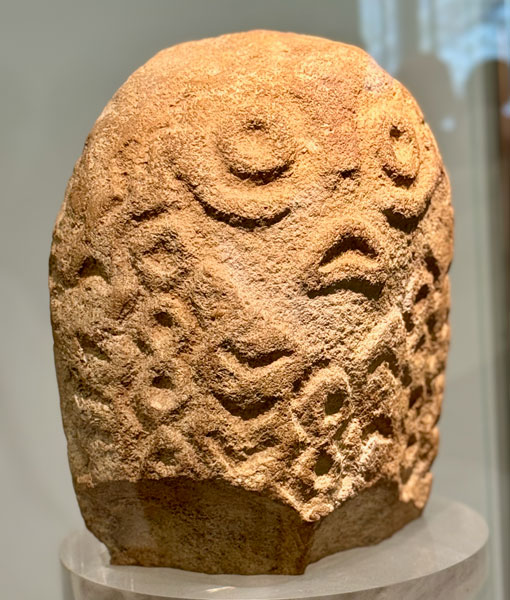
Based on archeological evidence, the museum has created two examples of the types of pre-historic dwellings that may have existed at the site.

We returned to the ship for a hearty lunch and short cool-down period (It is 94 degrees as I type this…with a projected high of 103 degrees Fahrenheit) while we sail to our next destination, Golubac.
Golubac Fortress
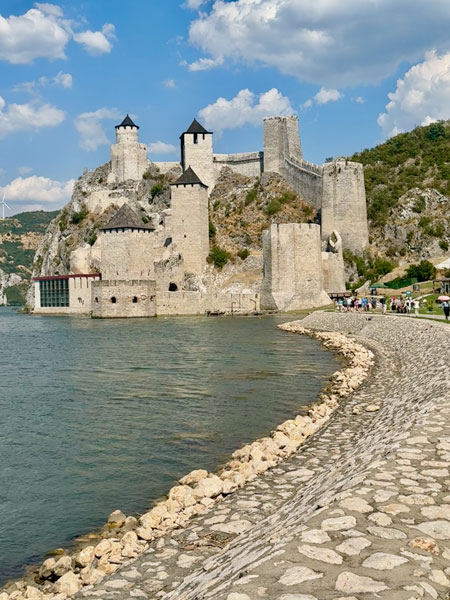
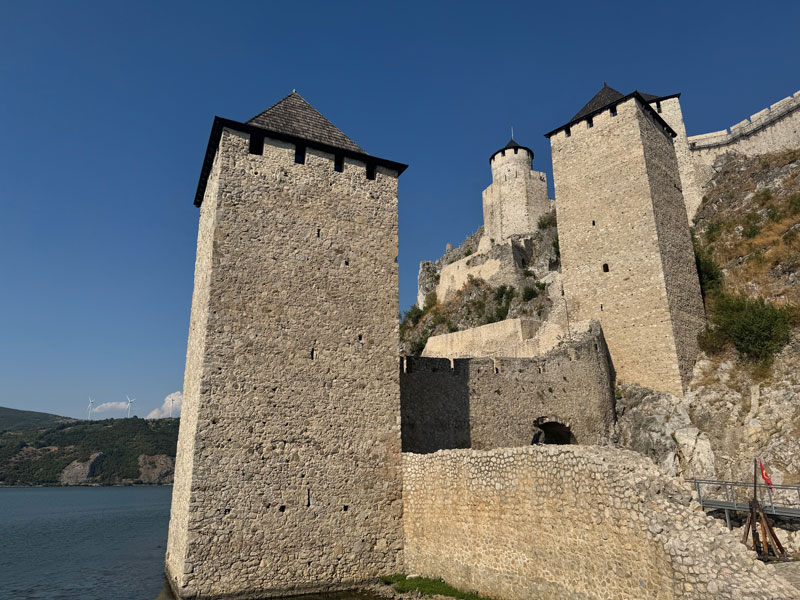
This was a pretty cool castle. It has been refurbished with support from the EU; and, history aside for a moment, it’s now like a jungle gym for adults with stairs, walkways, and rock-scaling accoutrement for those hardy individuals who like to really live the experience.
Even better, considering the oppressive heat of the day, they had a multi-leveled, air-conditioned visitors’ center complete with a media presentation of the fortress’s history and period-related exhibits.
Fun fact: the castle was so well designed that it was never “taken” in a battle. It did change hands a few times, but never as the result of a direct assault.
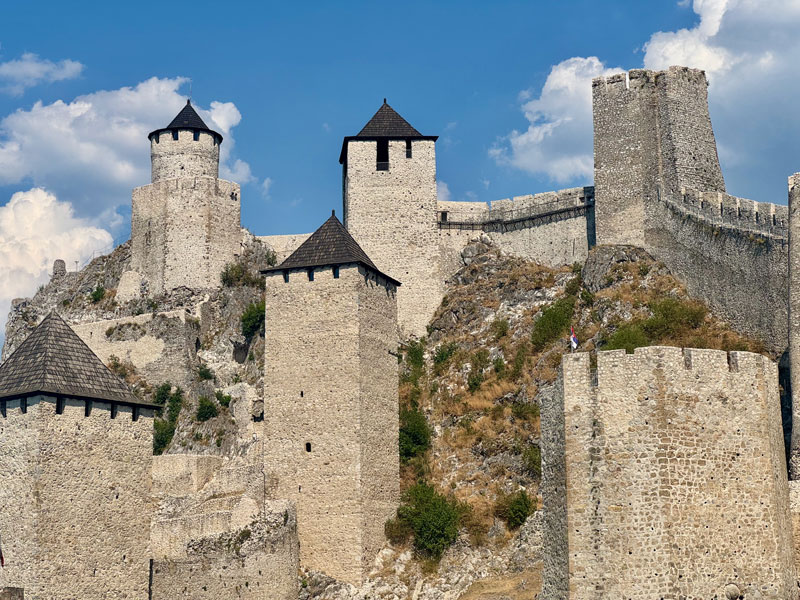
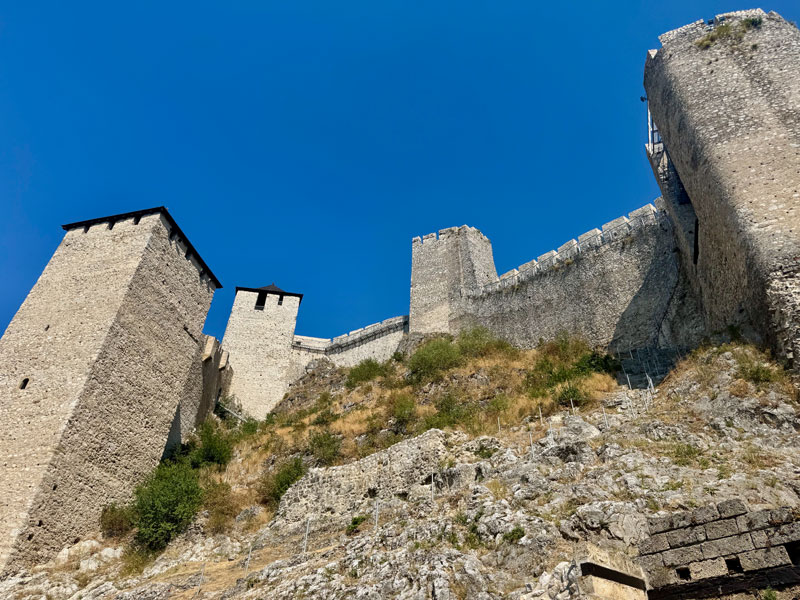
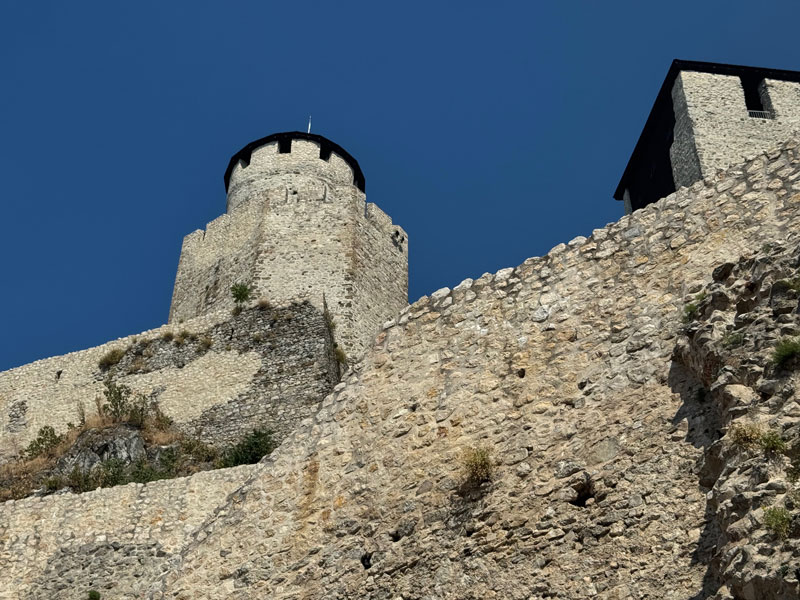
Its ten towers were not interconnected which was the brilliance of its design. An assailant may successfully overtake one tower…but then they must move on to the next one and attack anew. And so on. And so on…until all the towers were under their control. This never happened despite 120 attempts by multiple invaders.
For a period of time during the 20th century, a coastal road ran through the castle, in one gate and out another. Often, oversize vehicles were caught by the low, curved arches that supported the building above the road. Eventually, with EU support, a tunnel was cut through the hillside adjacent to the fortress and the highway was rerouted. Then the castle was refurbished and refitted for its current use as major tourist attraction.
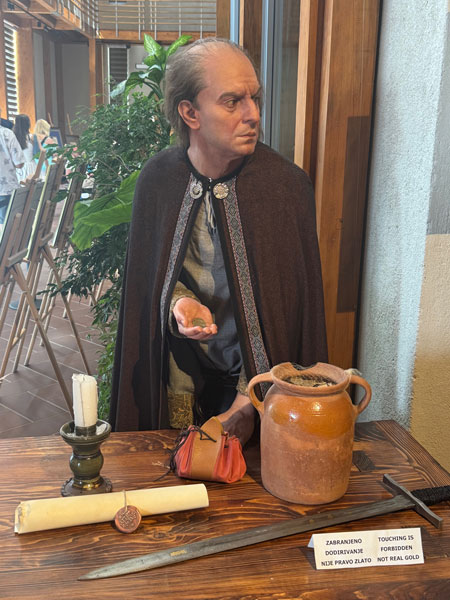
I believe the disturbingly-realistic dude below on the left is meant to be the fortress commander, Duke Jeremiah, who “sold” the fortress to the Ottomans when Hungarian King Zigmund balked at paying the Duke’s asking price of 12,000 ducats.
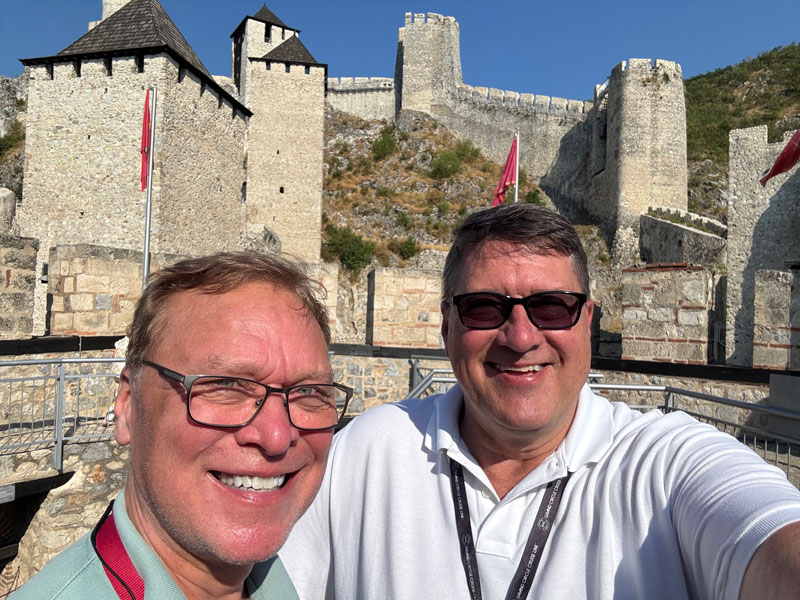
The other two dudes you know.
The day wrapped, as so many before it, with dinner and departure. Belgrade here we come!
 Eastern Europe: Black Sea to Budapest