
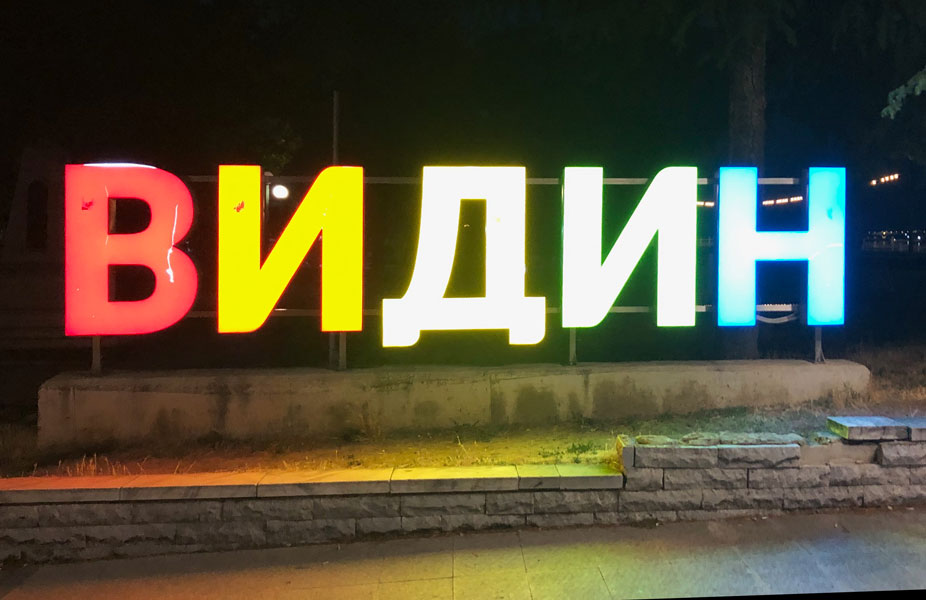
Overnight, our ship sailed from Nikopol to Vidin, the westernmost Bulgarian port on the Danube. Our ship became one of multiple river boats tied together side by side, all operating under the challenging low-water level conditions. (Of course, a Viking ship was “parked” solo at an exclusive pier further east than the rest of us, apparently a privilege afforded to first arrivals.)
Our discovery introduction to the city began with a short bus ride up, down and around the streets of the city center. Our PD, Miloš, narrated the ride with informational tidbits, pointing out the highlights as we headed to our destination: the Baba Vida fortress.
While Vidin has many pleasant and nicely-appointed areas and a solid place in Bulgarian history, it is suffering the same fate as many (most?) smaller towns and villages throughout the country.
Bulgaria is a member of the European Union. And, as such, the people of Bulgaria are free to travel, move and/or work in other EU member countries. This is an especially appealing option for young Bulgarians, who see little to no future in the villages and towns of what has been primarily an agricultural society. So they leave, seeking the better lifestyle offered in the bigger Bulgarian cities such as Sofia. Or they move away entirely to secure higher-paying positions in those EU countries with stronger, more robust economies.
Compounding this migration is a national below-sustaining birth rate level.
Vidin had been a city of over 65,000 twenty years ago. Now, the population has shrunk to less than 35,000.
Baba Vida fortress
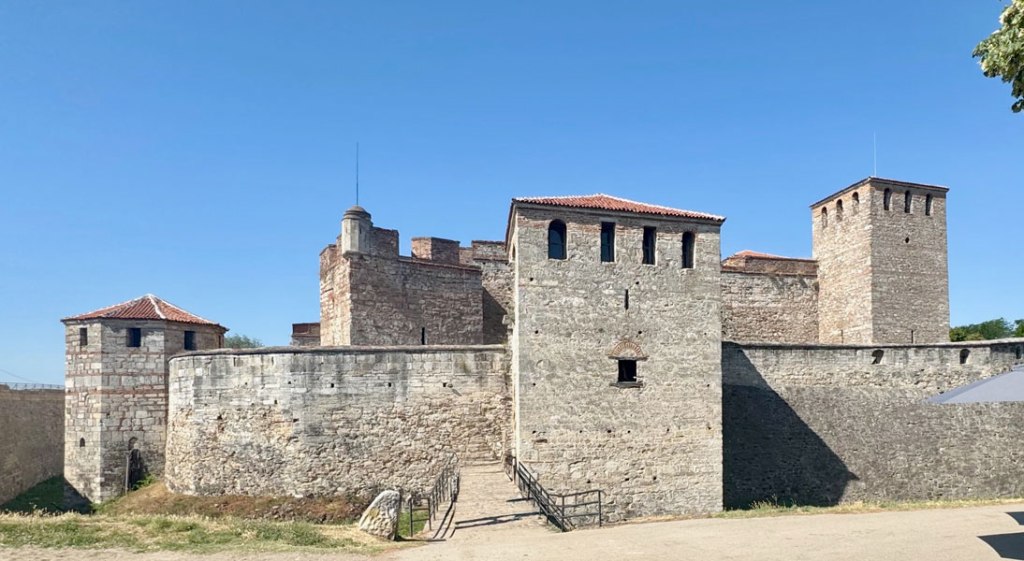
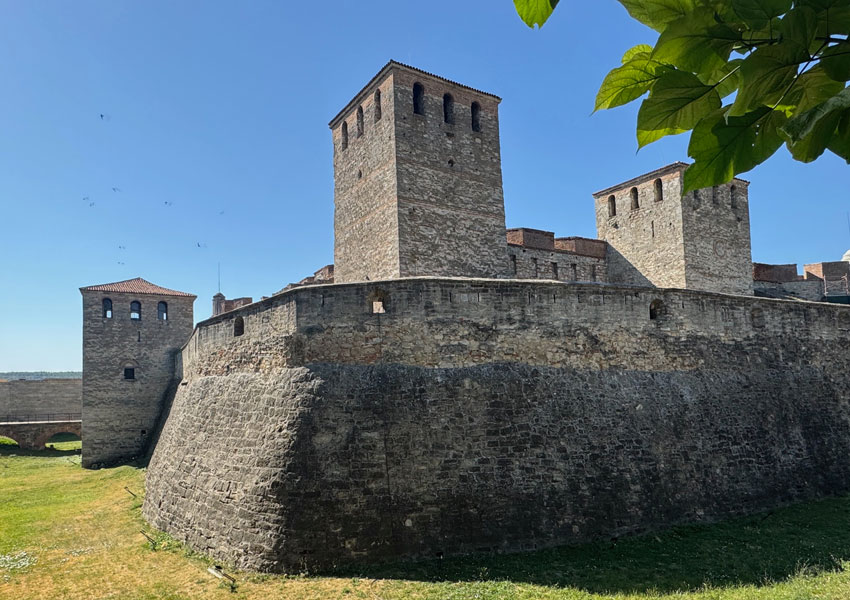
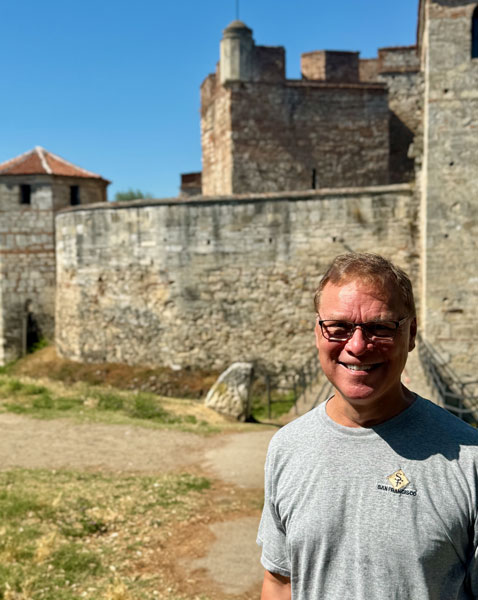
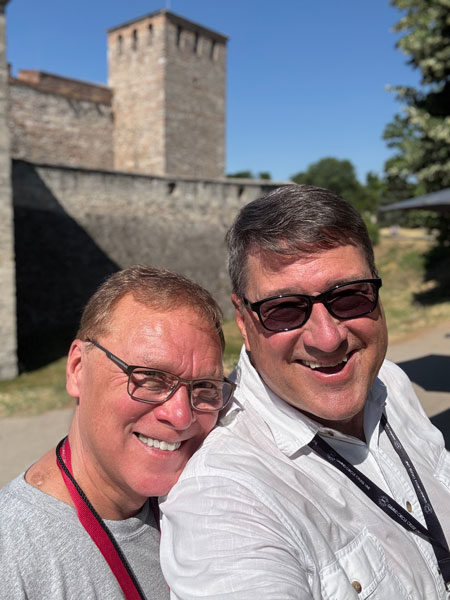
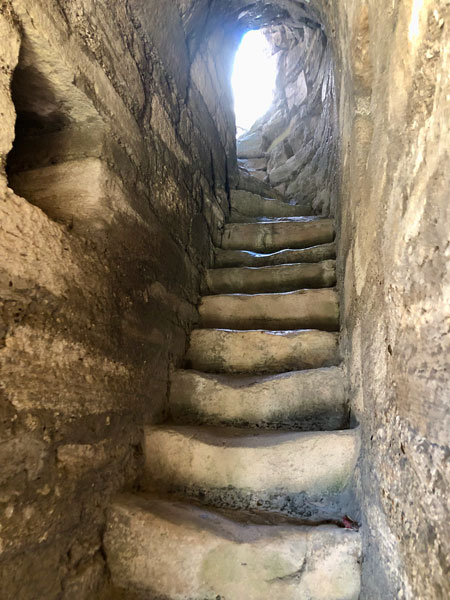
As the best-preserved medieval fortress in Bulgaria, the Baba Vida fortress is the symbol of Vidin. Built in the Middle Ages, I think the fort has become one part historic experience, one part obstacle course: loads of ramps and stairs (few hand rails); hidden staircases (lit and un-); tower rooms with huge open windows (sans guard rails); uneven terrain with uncovered, gaping holes….well, I guess you get the idea. It made the visit far more authentic. It is meant to be explored and enjoyed with the mindset of personal responsibility pervasive among Europeans (vs. the “I can sue” fallback attitude of foolhardy Americans).
Fortunately, during our 40 minutes of exploration, no injuries were incurred. Whew.
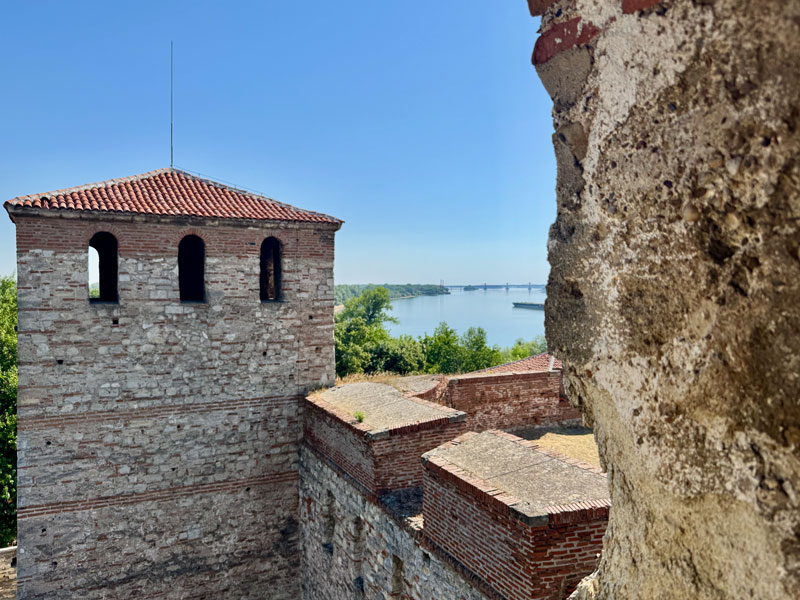
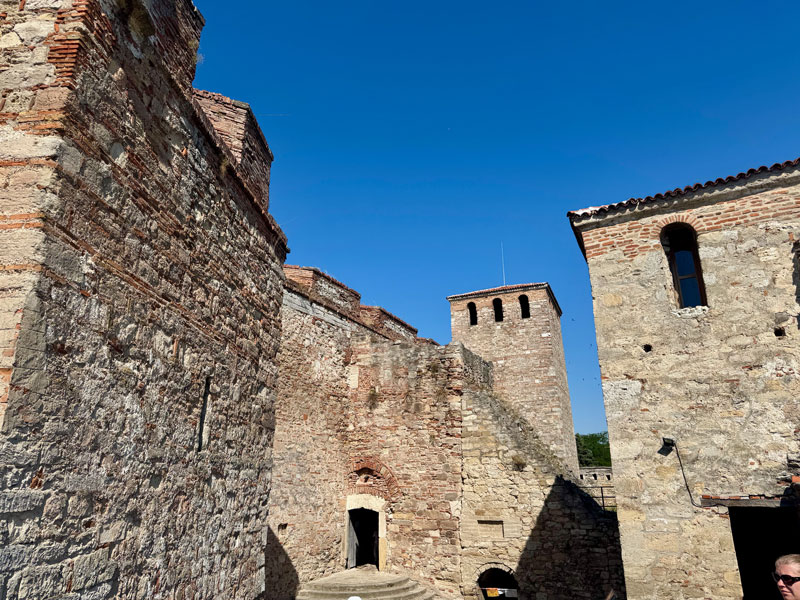
There were really cool “museum” rooms behind various doors lining the central courtyard of the fort.
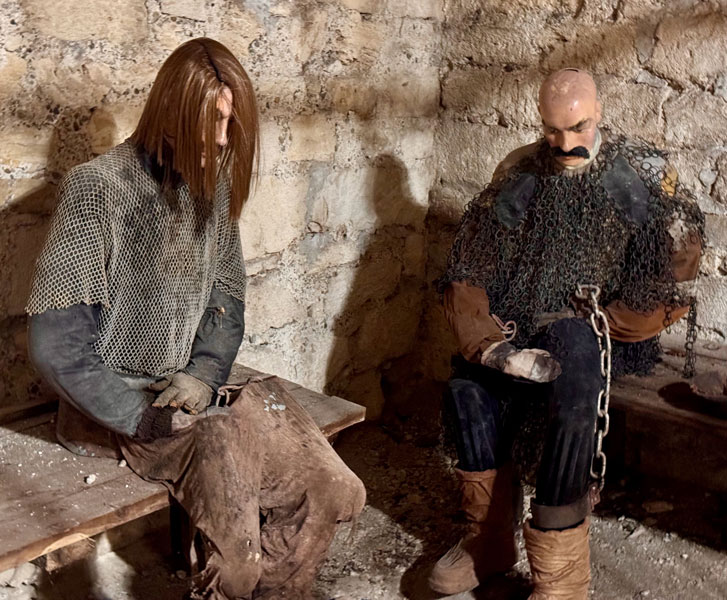
One room held two dejected, despairing “prisoners” locked behind iron bars.
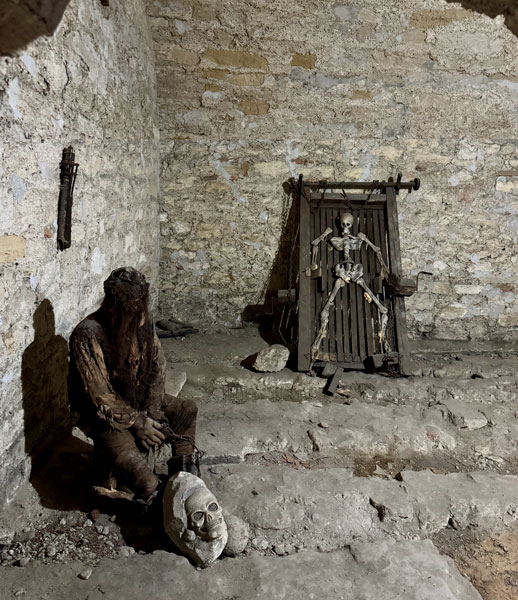
Another featured two desiccated, forgotten victims of some medieval torture session.
A pair of rooms comprised the fortress’ mini-orthodox chapel with a large (human size) crucifix handily leaning in the corner of the outer chamber…just in case.
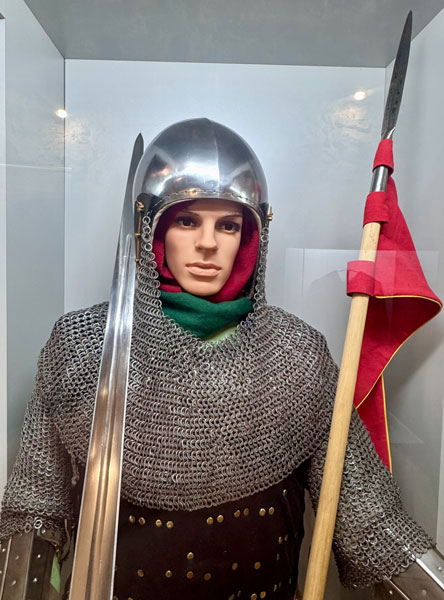
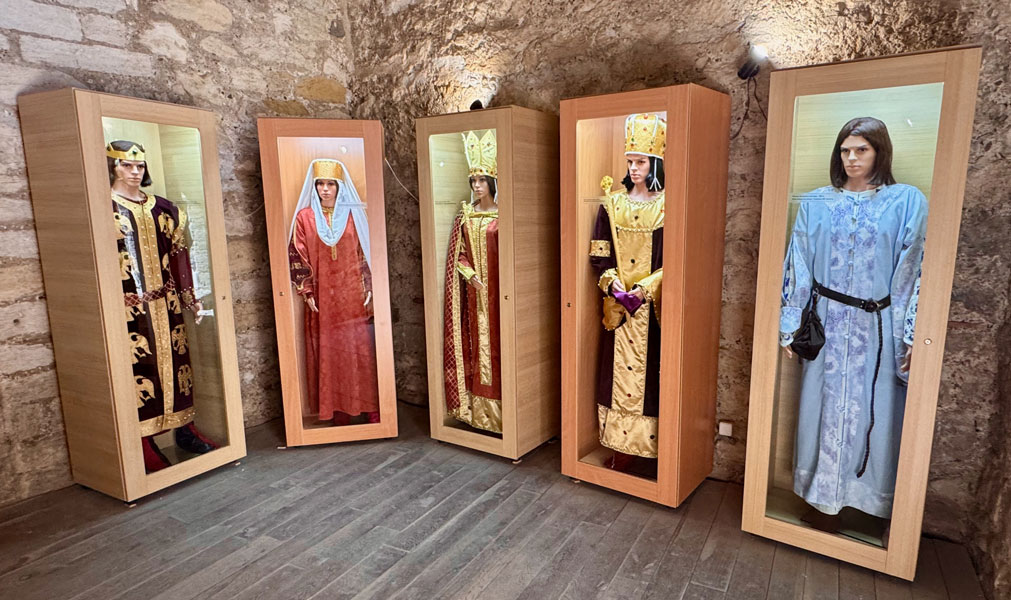
Other rooms held costumed mannequins of both civilians and soldiers from unknown periods of Bulgarian history.
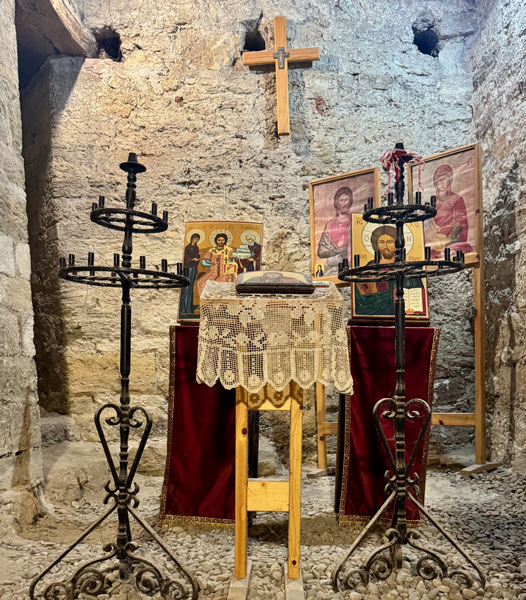
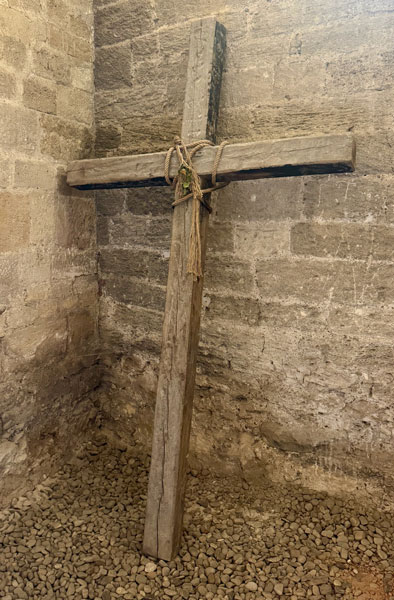
While the Baba Vida fortress is the best known structure in town, our ride and guided walkabout presented many other interesting photo-ops. Here are some of my faves.
Disclaimer: The photos are my own…with two exceptions. The final two images are of memorials that I found personally interesting. But we were in motion on the bus…and I couldn’t wield the camera fast enough. So, here’s a tip o’ the hat to the unknown photographers who captured that which I could not.
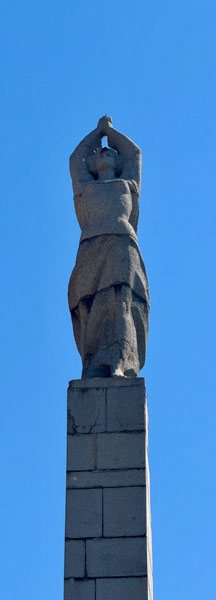
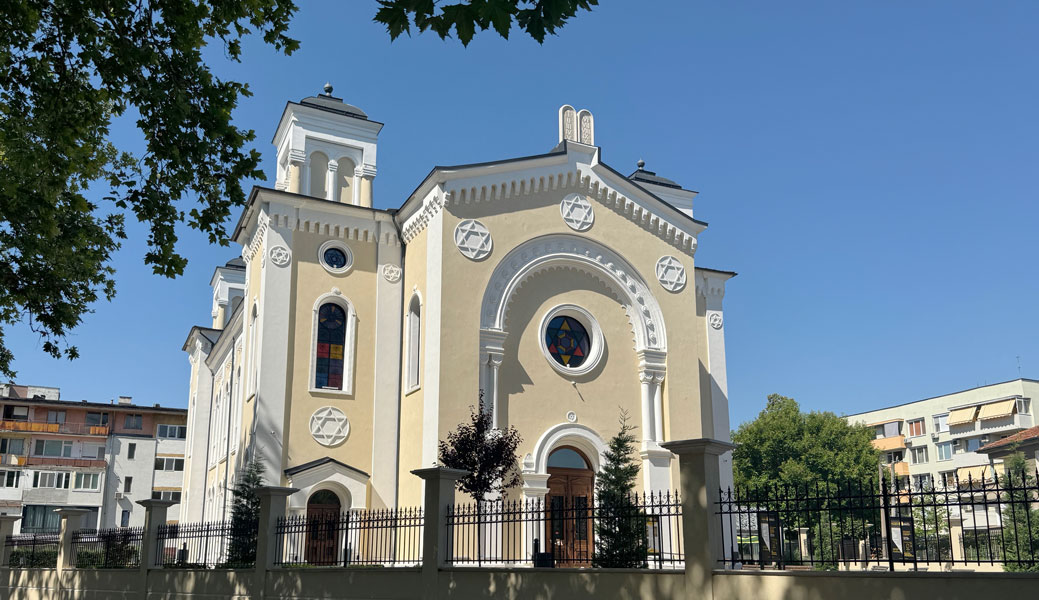
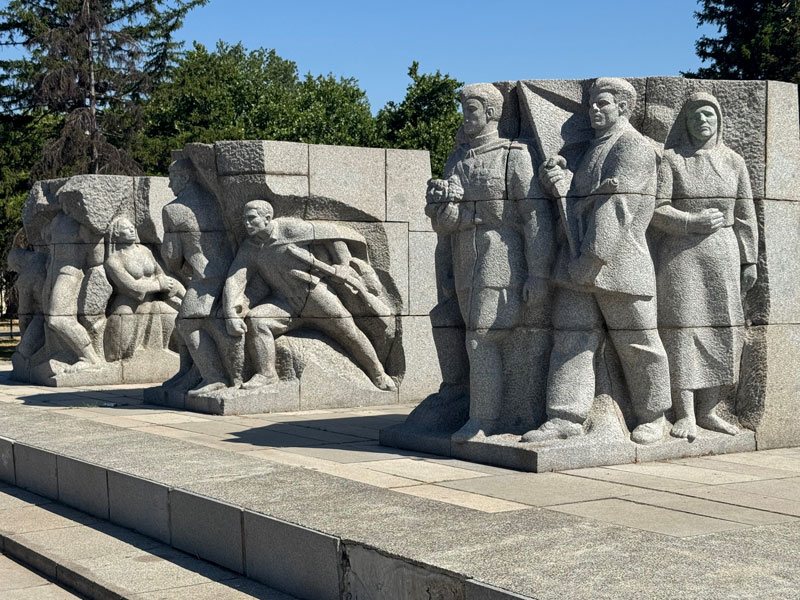
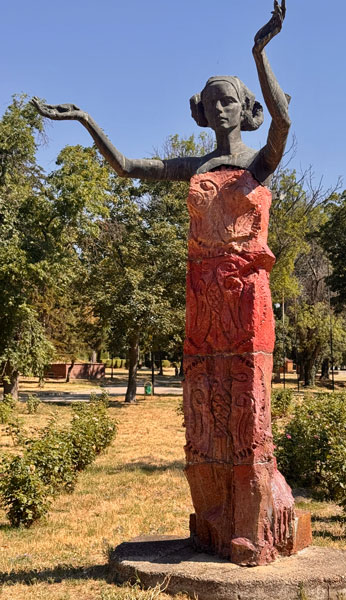
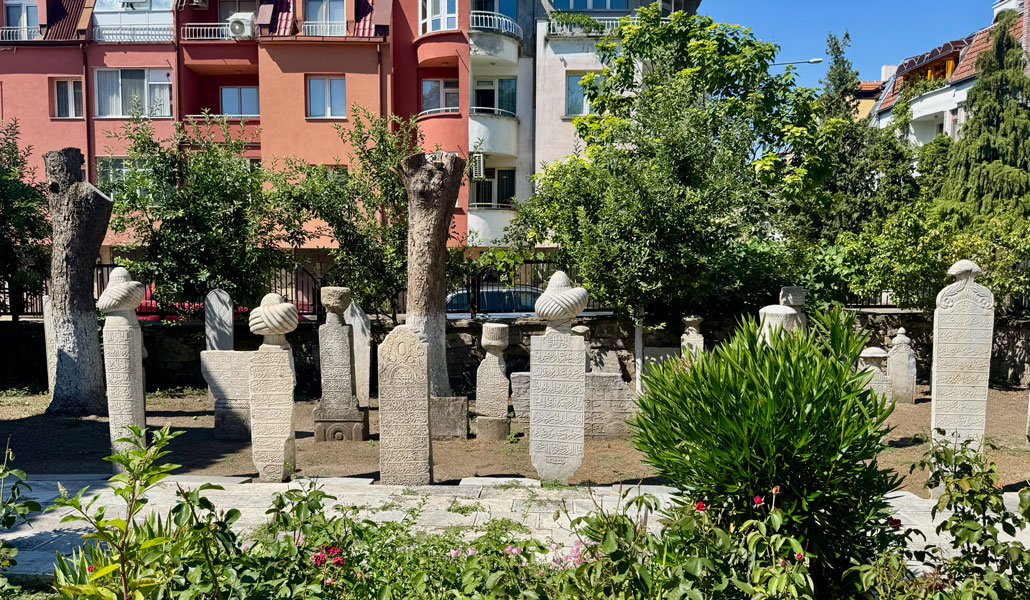
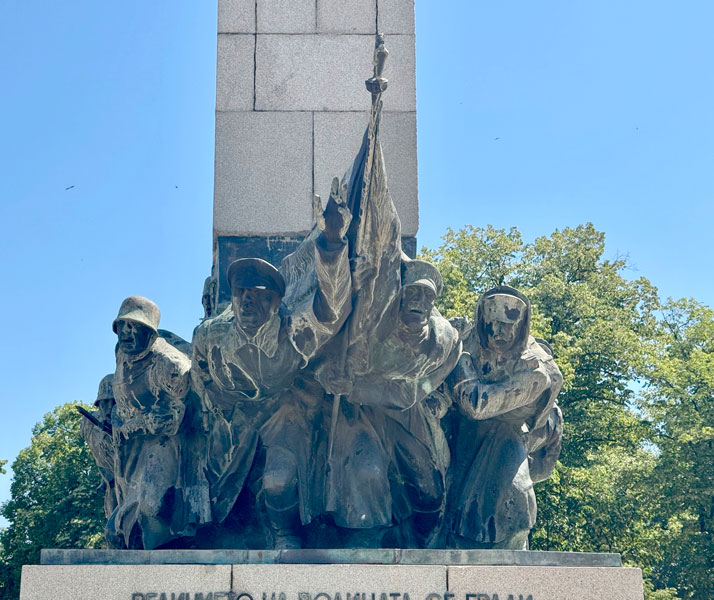
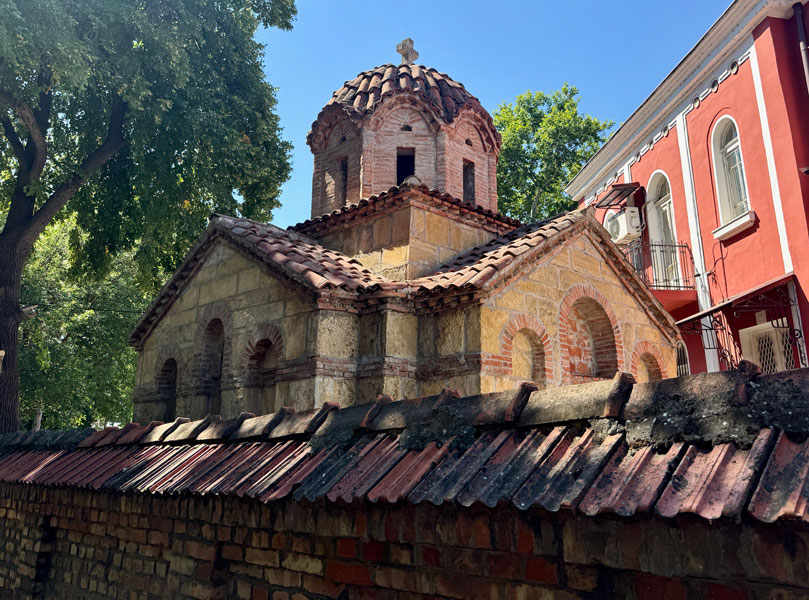
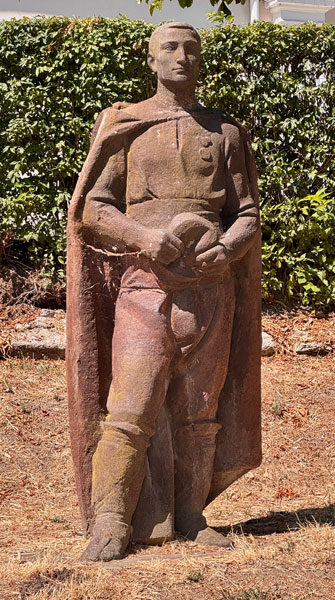
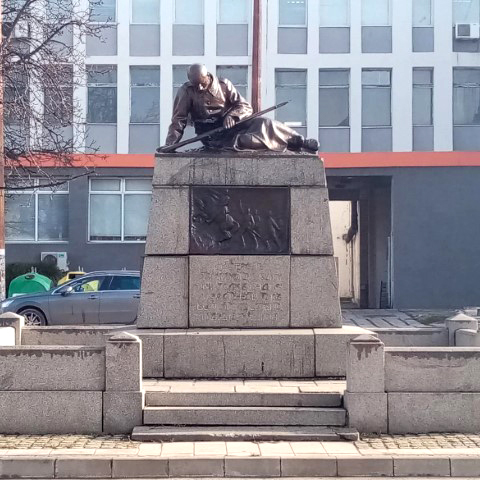
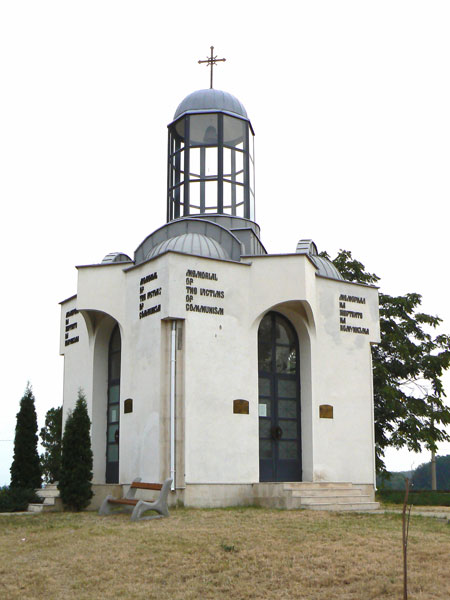
Not much else to report on our stop here. We took another little walk into the town center with one of the other “family” members…but the oppressive heat brought that adventure to a close pretty quickly.
Tonight was the Grand Circle Foundation site visit. People attended a concert by the Vidin Sinfonietta in town.
I passed. Rob said it was entertaining.
All aboard was scheduled for 11:45 PM.
We left Vidin around midnight, gaining an hour as the time changed.
 Eastern Europe: Black Sea to Budapest