
Our last day in Serbia began with a Discovery talk centered on why Serbia is not a member of the European Union.
Being a EU member would have definitely been easier on this trip. No going through Passport Control to enter and exit the country. Fortunately, the ship handles the interaction with Customs, so I can’t complain too much. But we were required to carry our passports on our person while in public. I prefer to keep mine locked up in the room safe and not subject to loss or theft.
It’s not for want of trying that Serbia’s still a lone wolf. Sentiment to join was very high after the Yugoslav Wars of the 90s. And they met the conditions required by the EU for membership consideration to the letter. However, other speed bumps arose including the world-wide financial crises, the Ukraine situation, the global pandemic and, like the proverbial nail-in-a-coffin, Kosovo.
The independence declaration of the Kosovo region in 2008 was and is not recognized by Serbia. Kosovo is seen as the cradle of Serbian civilization. It was here, at the legendary Battle of Kosovo, that the Serbs lost to the Ottoman Turks – a defining moment in Serbian history that fostered a sense of national martyrdom and sacrifice.
The world, too, remains divided on the issue. Kosovo’s independence has been recognized largely by Western nations but is considered an illegal move by Russia, China and other Eastern nations. And then there’s the big thumbs down from Spain: a member of the West and a full EU member but struggling with its own weighty separatist movement(s). The issue is messy.
The guest speaker briefly touched on today’s growing number of protests against their autocratic government, particularly among students and other youth…but then time ran out. It is a topic just too big for a 45-minute window.
Our Novi Sad Walkabout
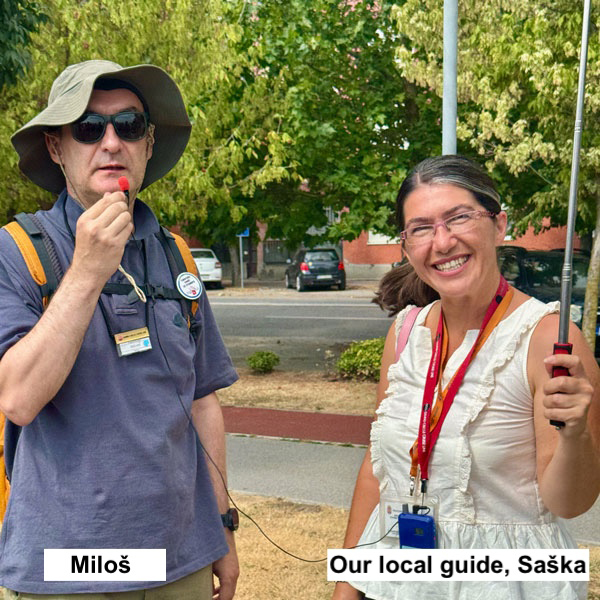
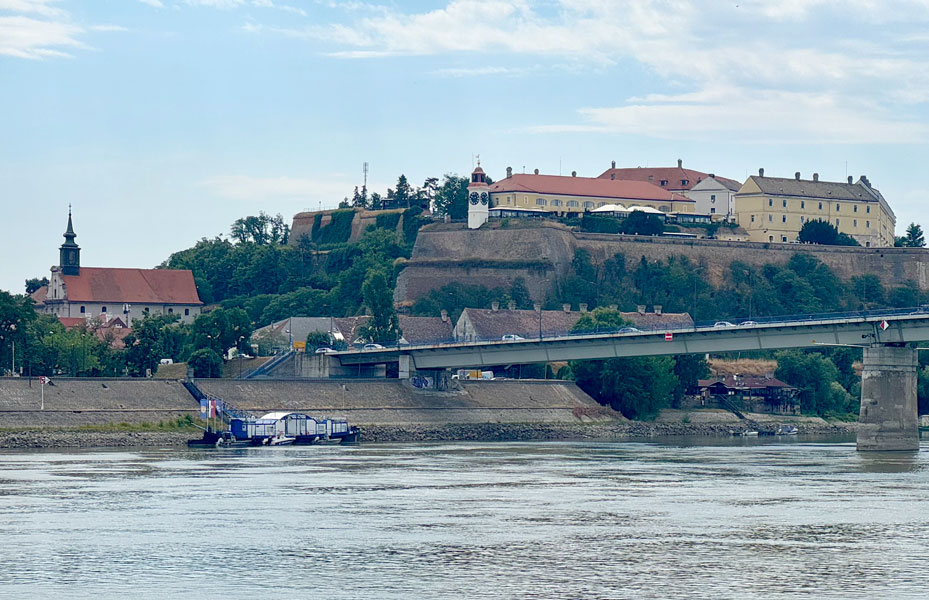
After, the Blue Group collected our Boarding Passes and climbed the ramp to begin our morning-through-lunch walk-about of Serbia’s second-largest city. We started along the river’s promenade, built as a barrier against the Danube flooding that the town experiences. We saw the Petrovaradin Fortress perched high above the opposite shore. And on several structures paralleling the waterfront, there were large murals (or mural’d ads!)
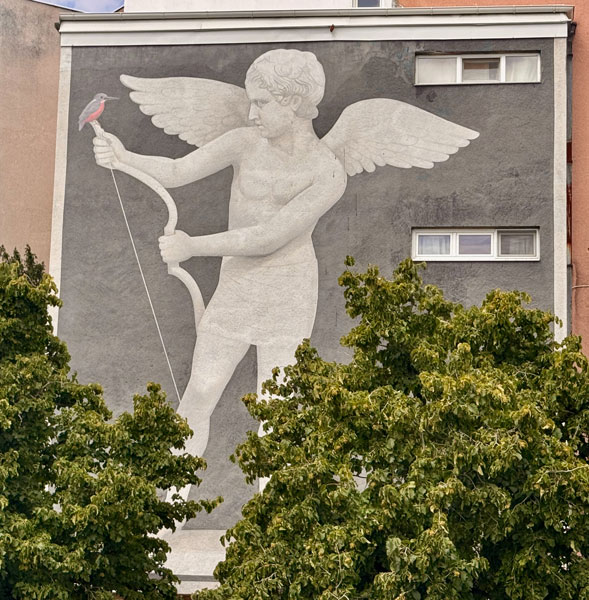
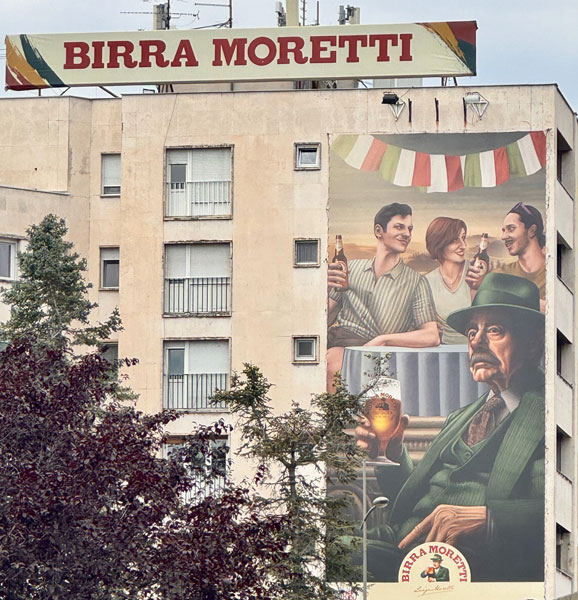
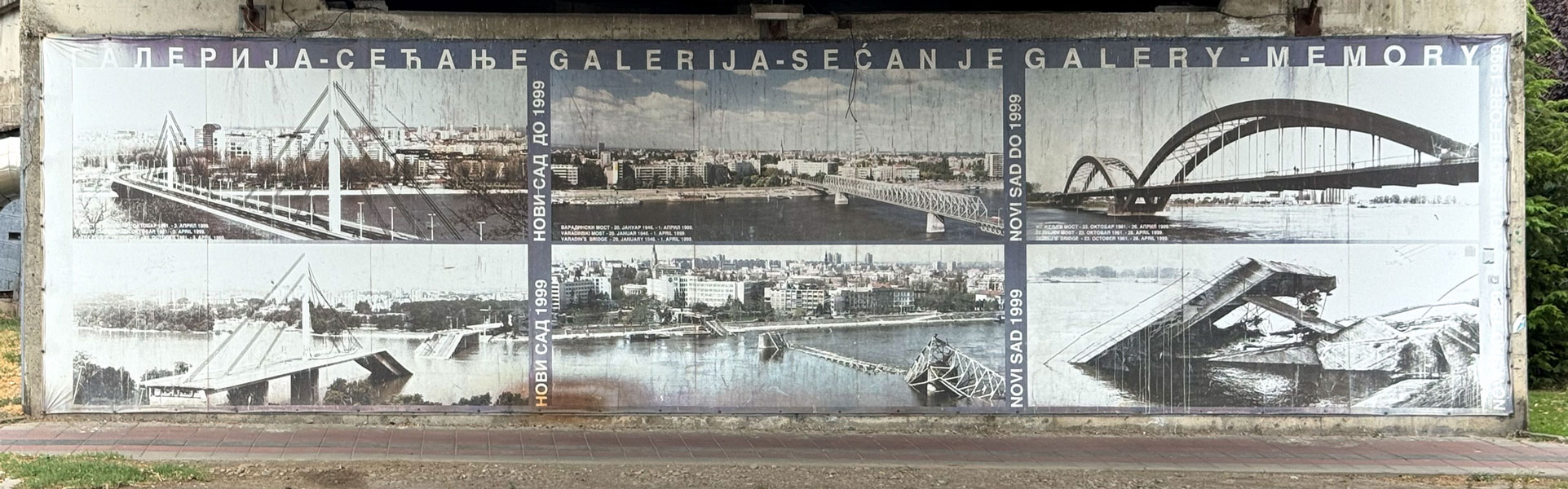
One interesting art work was a tripartite mural beneath one of the bridges that showed the before-and-after effects of the NATO bombings on the three Novi Sad bridges that crossed the Danube in the 90s.
Leaving the waterfront, we began to weave our way into the center of Novi Sad, cutting through a beautiful park until we reached Danube Street and a floral-ringed water fountain.
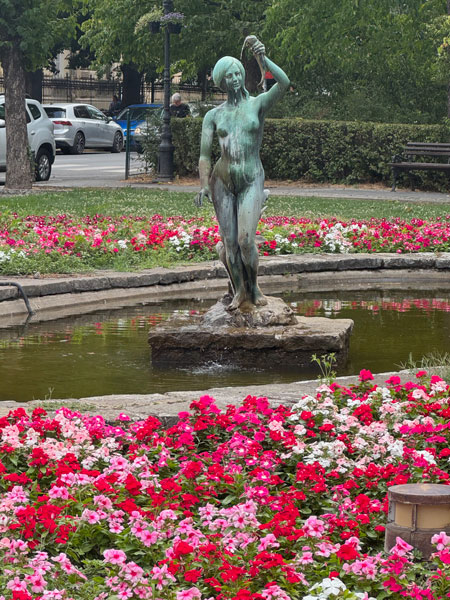
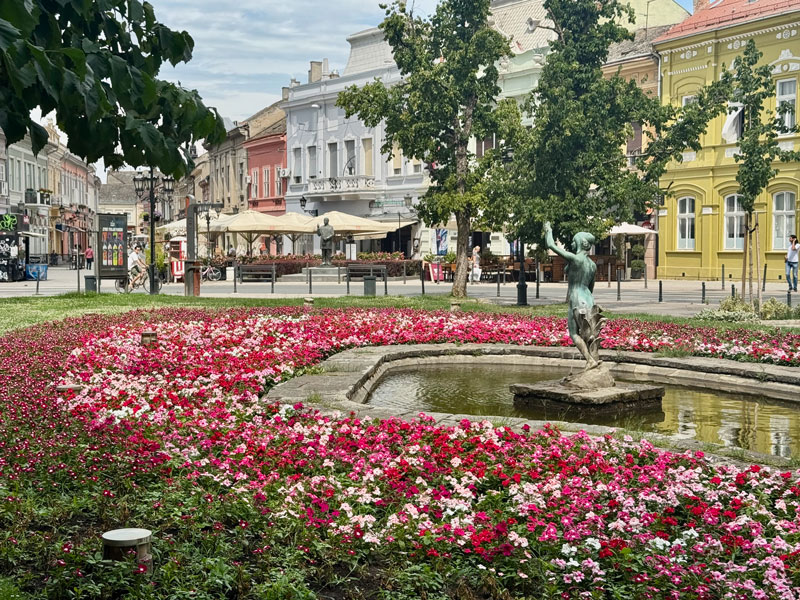
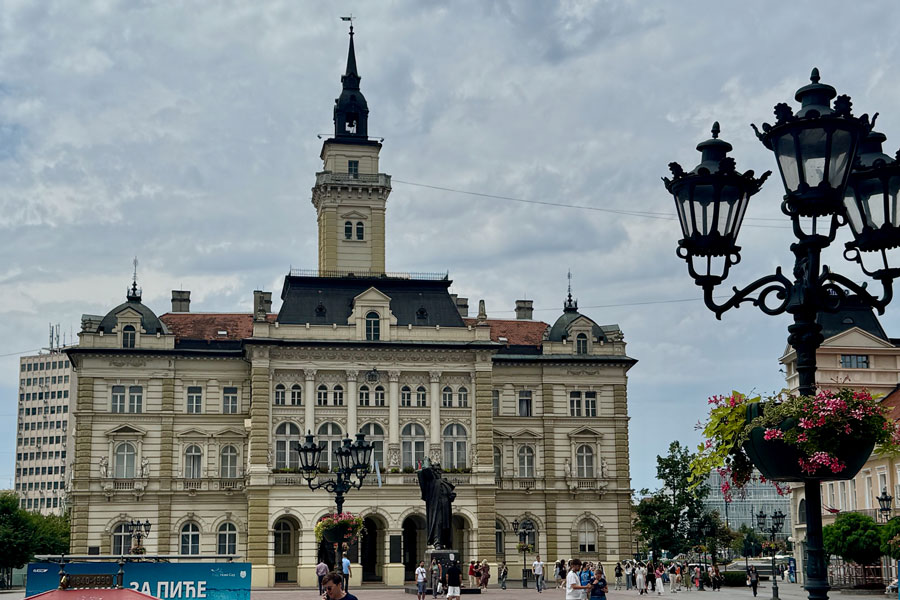
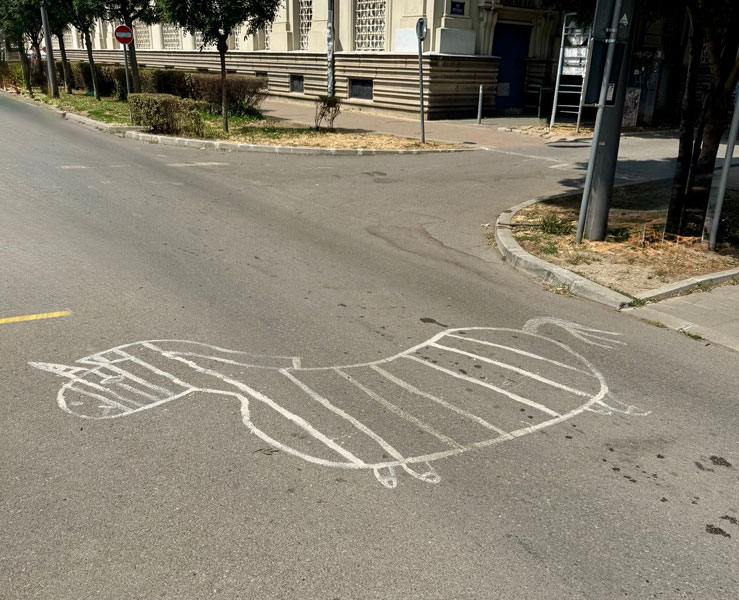
Marking this as a landmark junction for the most direct route back to the ship, our local guide continued her narration as we began a loop that ran along the art museum, across a make-shift zebra crossing (see pic below) into the market–where some leisure time was allotted for shopping, noshing and resting–before proceeding to the huge public space in front of City Hall.
With our tour of the town finished, we bid adieu to Saška before enjoying lunch at a restaurant just off the square. Here we feasted on a Serbian lunch of salad; bread & butter; chicken soup; sausages & fries; and, to cap it all off: baklava.
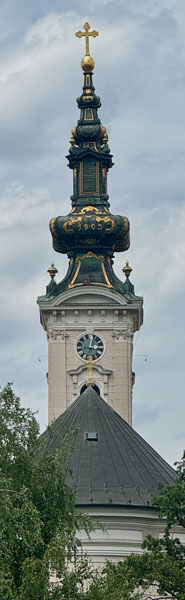
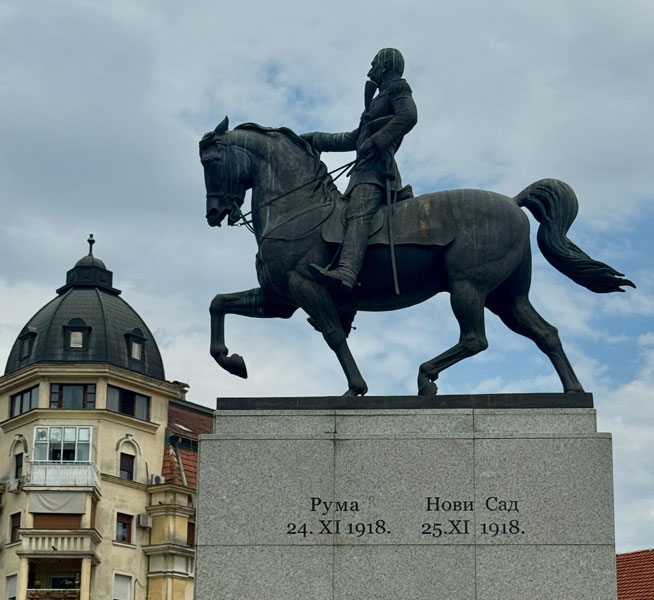
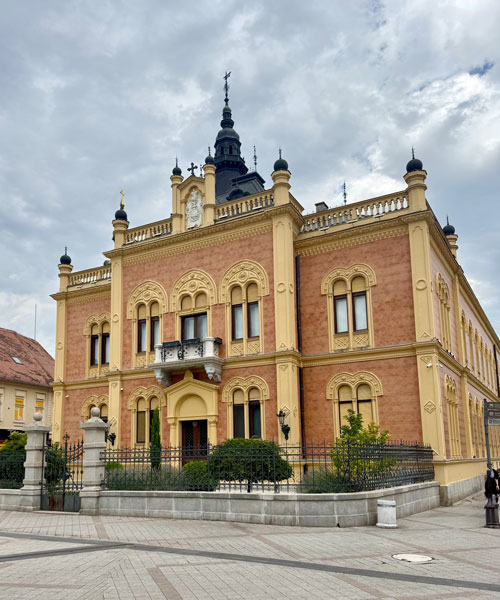
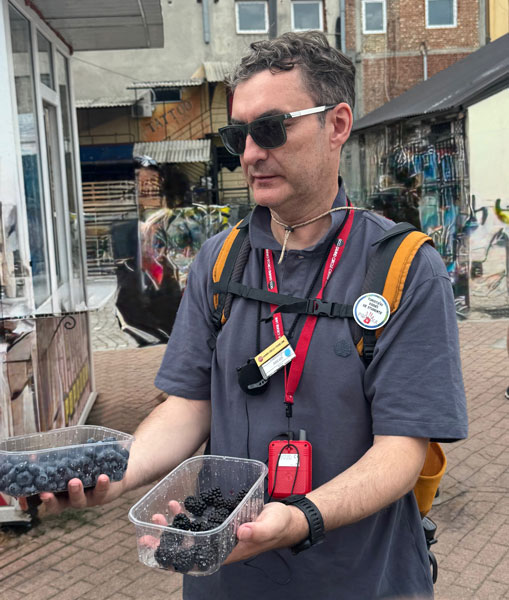
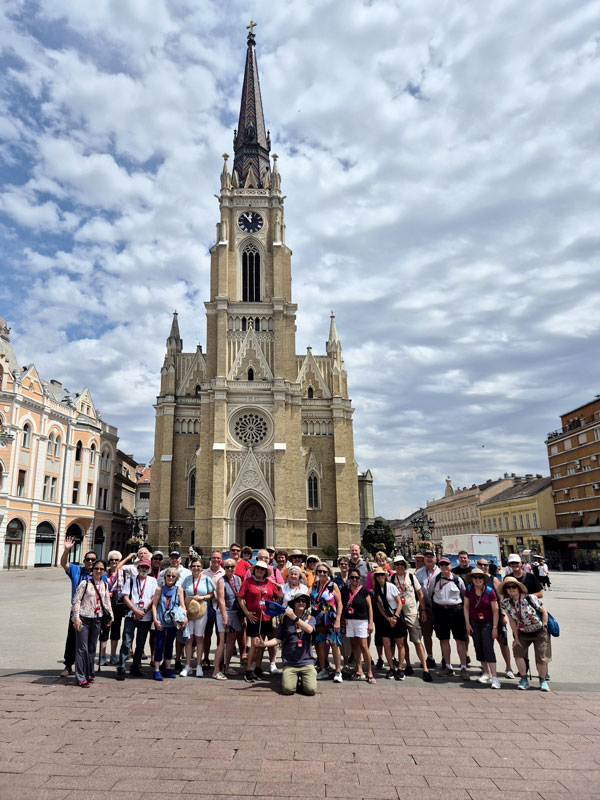
Here are some miscellaneous images from our stroll through central Novi Sad.
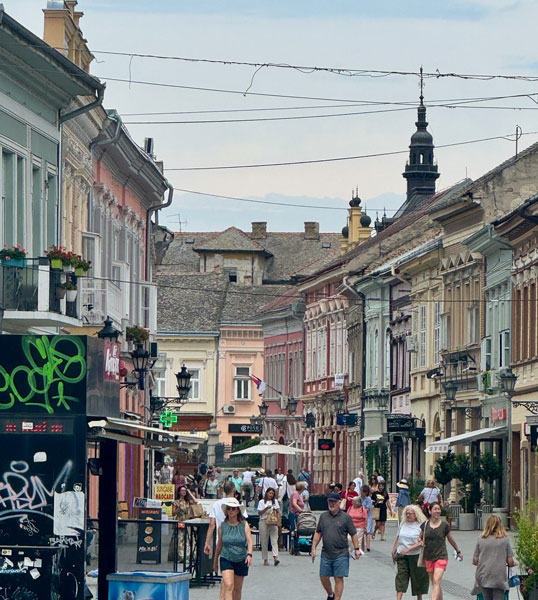
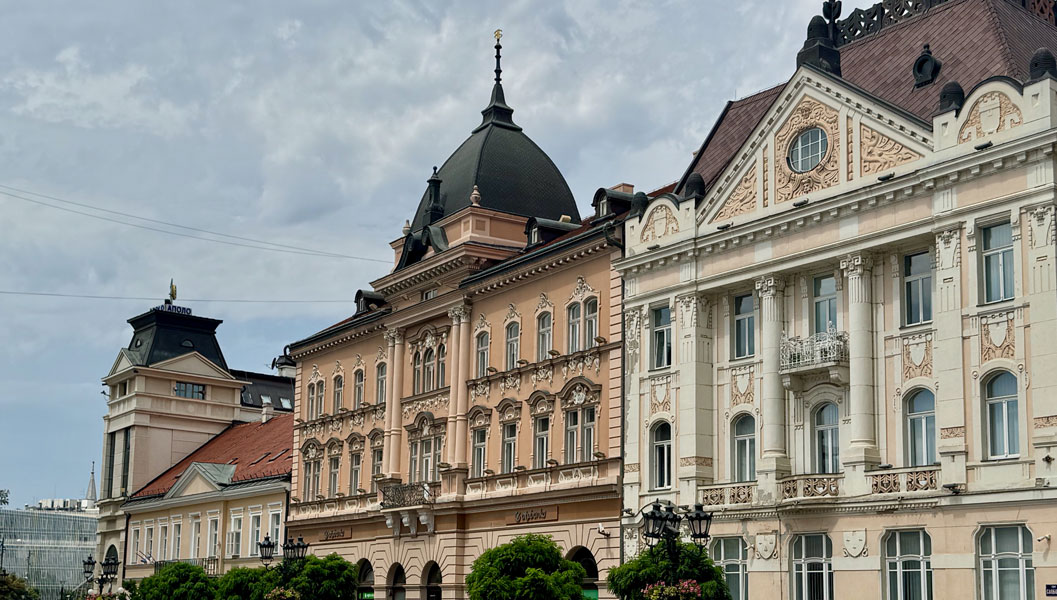
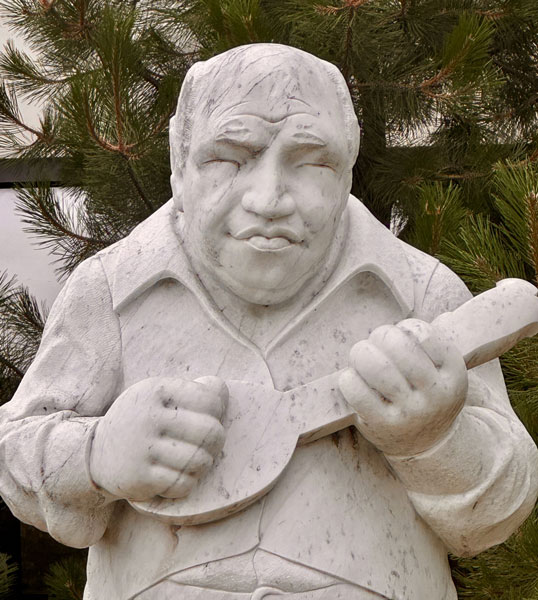
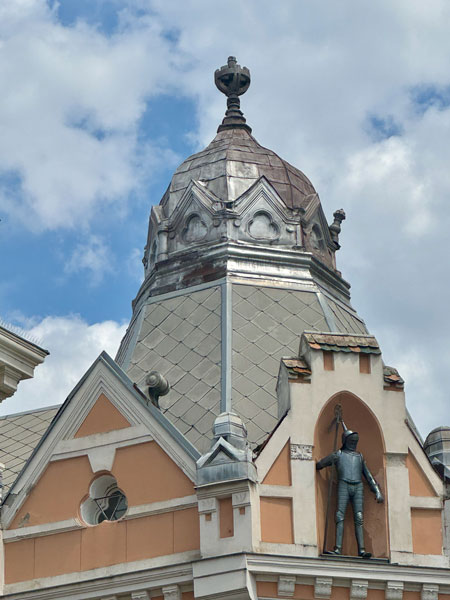
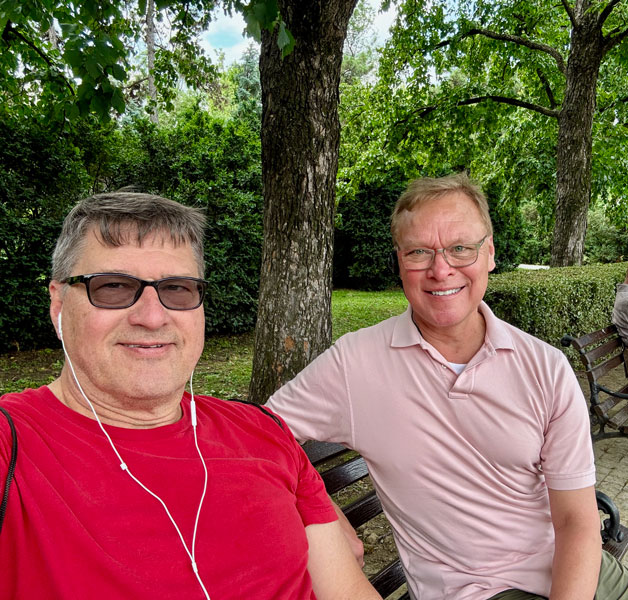
(Oh! Those bangs!)
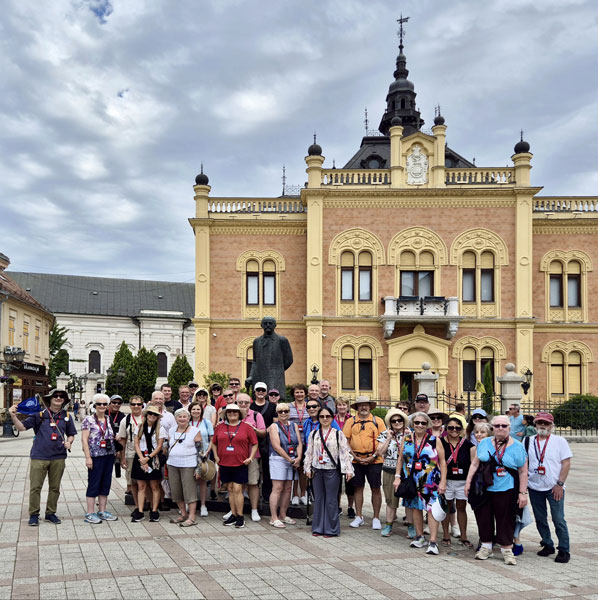
The only bummer came while we were having lunch: the darkening clouds that had been gathering overhead prior to noon finally let loose and it began to rain. The rain continued as we returned to the ship (thankfully, umbrella’d!) where we spent the rest of the day.
 Eastern Europe: Black Sea to Budapest