
What war hath wrought
In Vukovar, we came face-to-face with one of the Yugoslav wars: the Croatian War of Independence.
Some consider a Serbian act of aggression that took place here to be the start of the conflict. Whether true or not, Vukovar paid a severe price at the hands of the Yugoslav army, being on the Serbian/Croat border. Formerly a town of 45,000 people, only 22,000 reside there today.
Results and impressions of the Homeland War 1991-1995
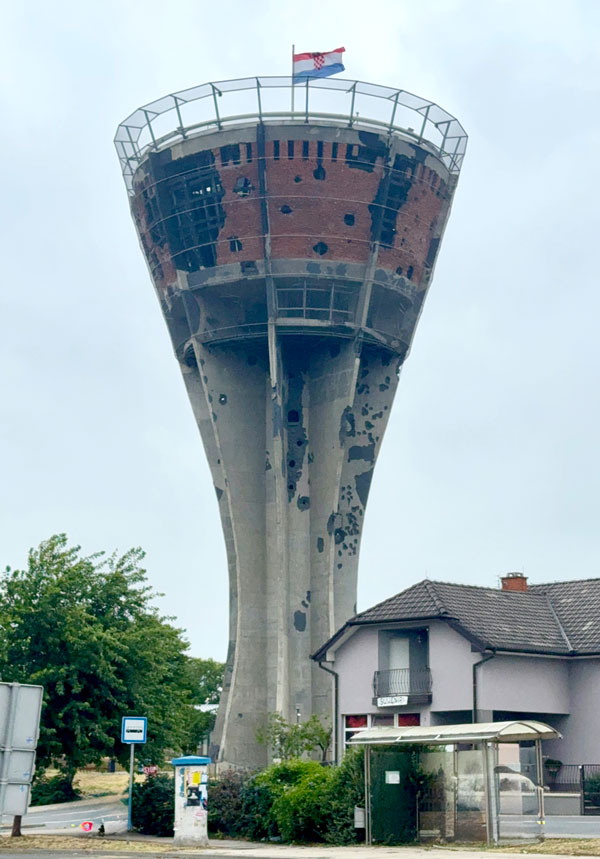
The Battle of Vukovar was an 87-day siege that was launched in August, 1991 by the Yugoslav People’s Army upon this once-prosperous, ethnically-mixed community of Croats, Serbs and others. The city fell in November. It was completely destroyed. And, following the defeat, hundreds of soldiers and civilians were massacred by the Serbs and at least 20,000 residents were expelled.*
The water tower was a frequent target of enemy artillery during the siege, enduring over 600 hits. Despite each day’s assault on the tower, two men would climb the tower at night and replace the Croatian flag, taunting the enemy. It remained standing throughout the battle, becoming a symbol of not only the city’s unwavering resistance against the aggressors but of the suffering, resilience, and unity of all Croatian people.
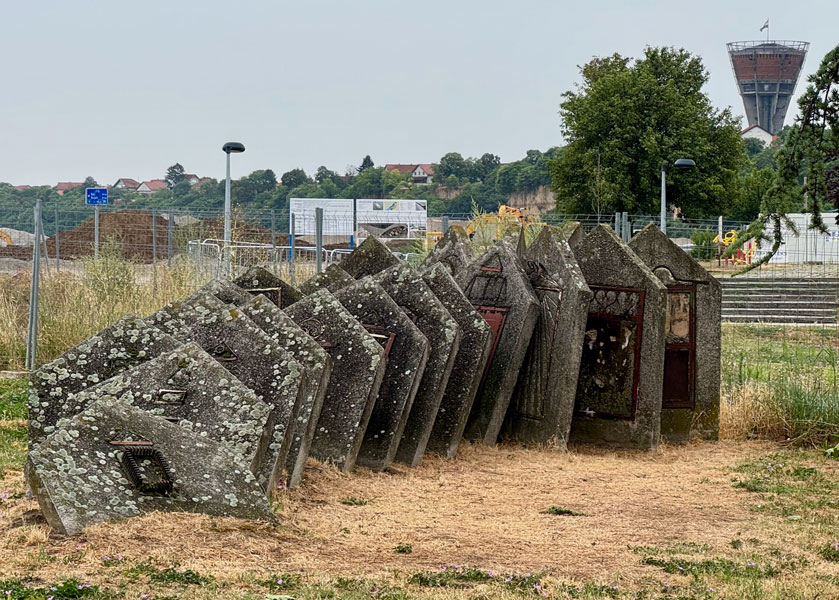
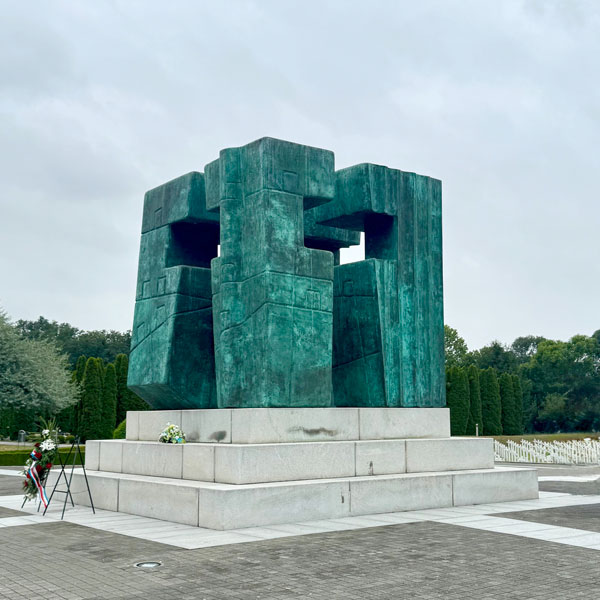
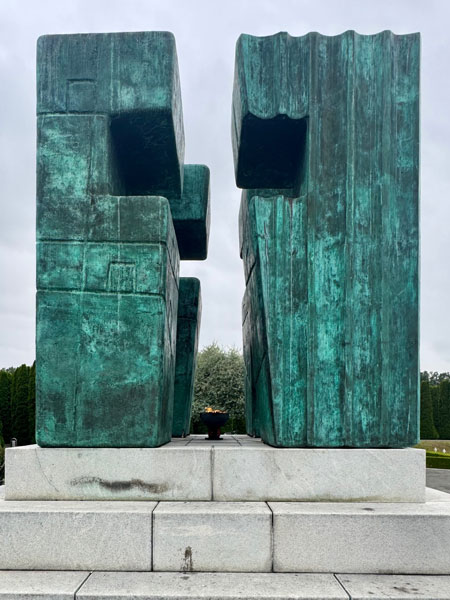
The Phoenix Monument, by a Croat artist, depicts the city rising up from its destruction, like fallen dominoes righting themselves.
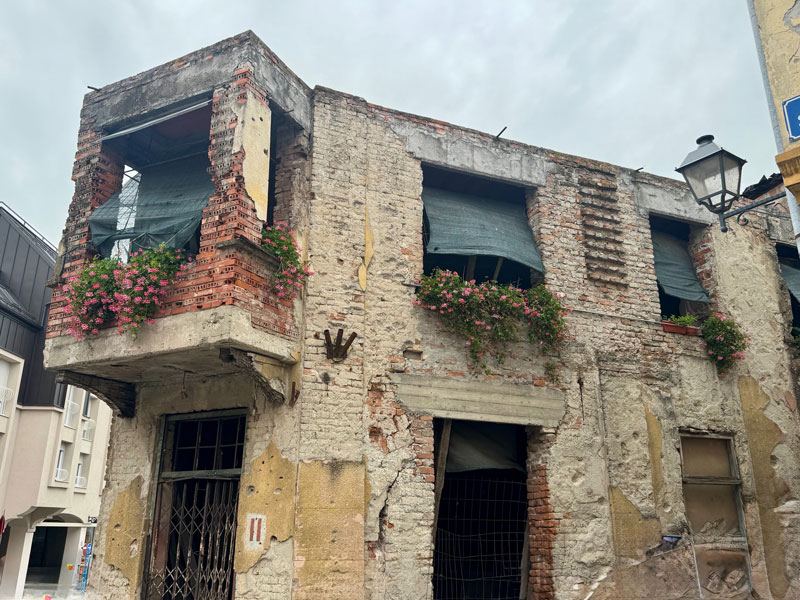
Known as the Flower House, the corner building was left unrestored as a reminder that war may destroy – but life in all its beauty, as represented by the flowers, will arise from the ruins.
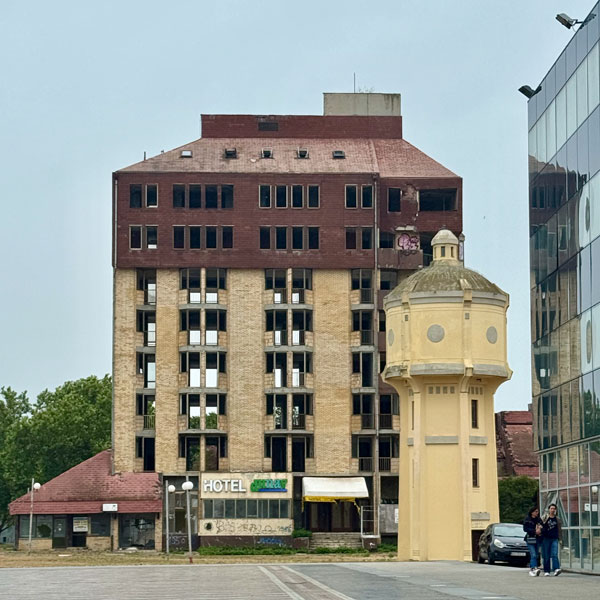
I liked the juxtaposition of the vacant former hotel on the left and the mirrored facade of new construction on the right with the solid squat tower between them.
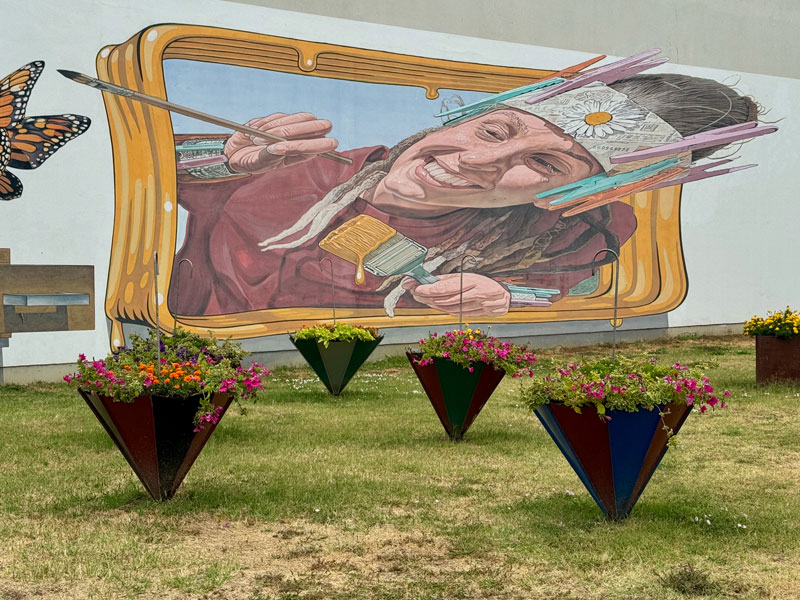
When a building’s destruction was irreparable, the site would be cleared and umbrella planters scattered about as a reminder of what had been. The colorful mural points to a brighter future.
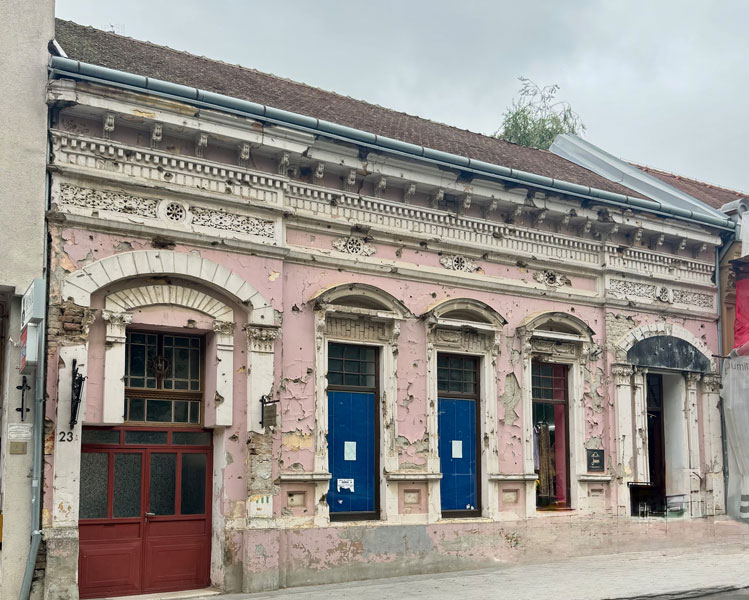
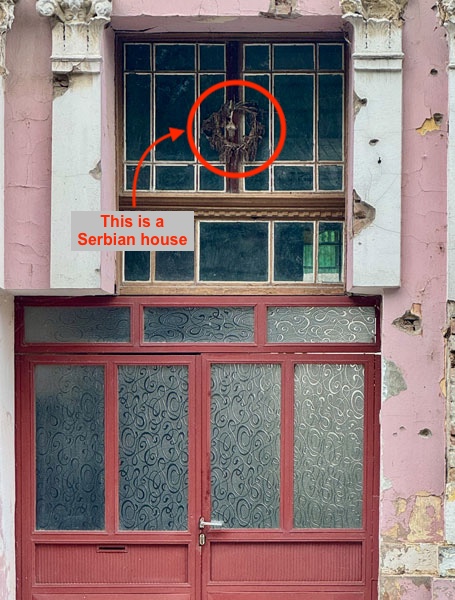
The shrapnel-marked pink house had been a Serbian home. The give-away was the wreath of branches, leaves and flowers (here, it dried out and withered long ago) that was traditionally hung over every Serbian’s door during religious holidays as a sign of greeting. During wartime, it marked the occupants as either friends or foes.
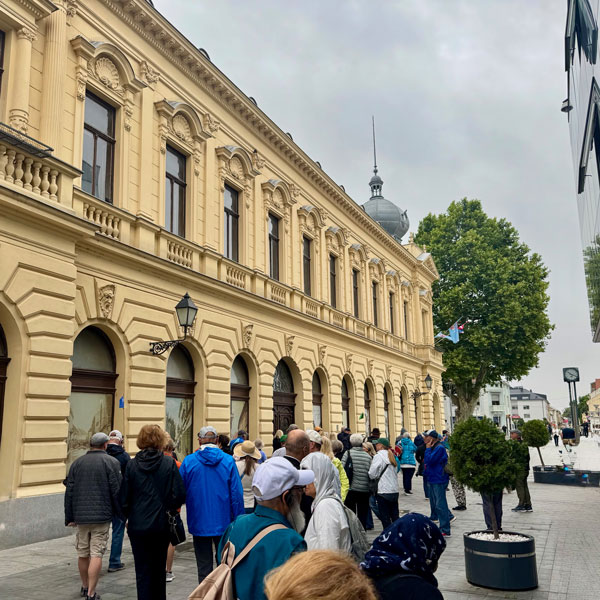
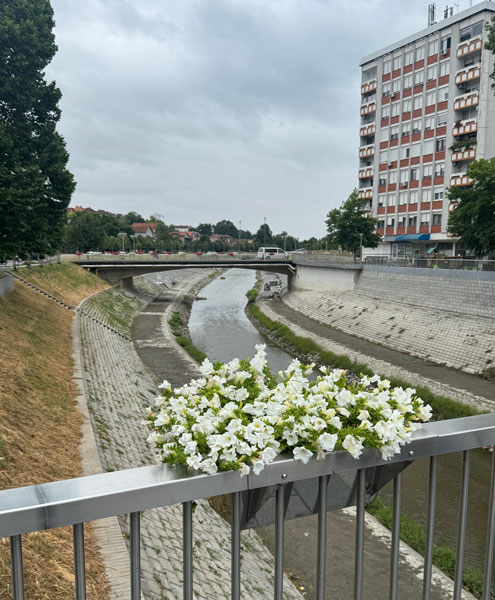
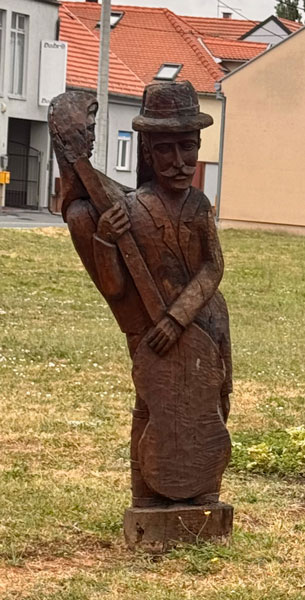
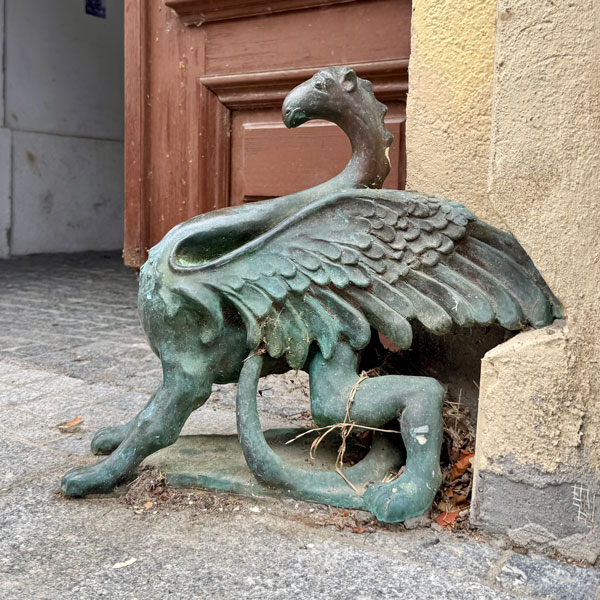
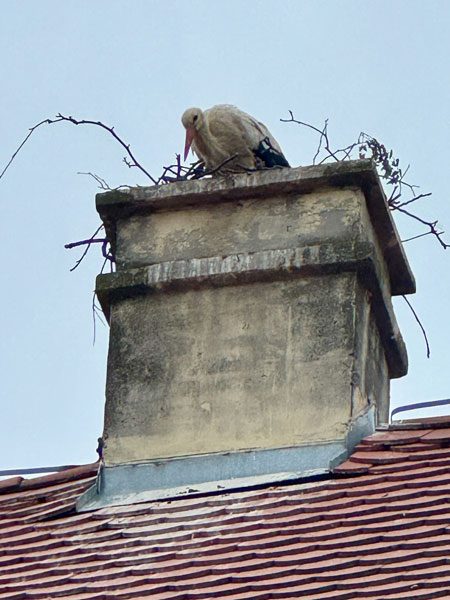
Random images from our walking tour of central Vocavar
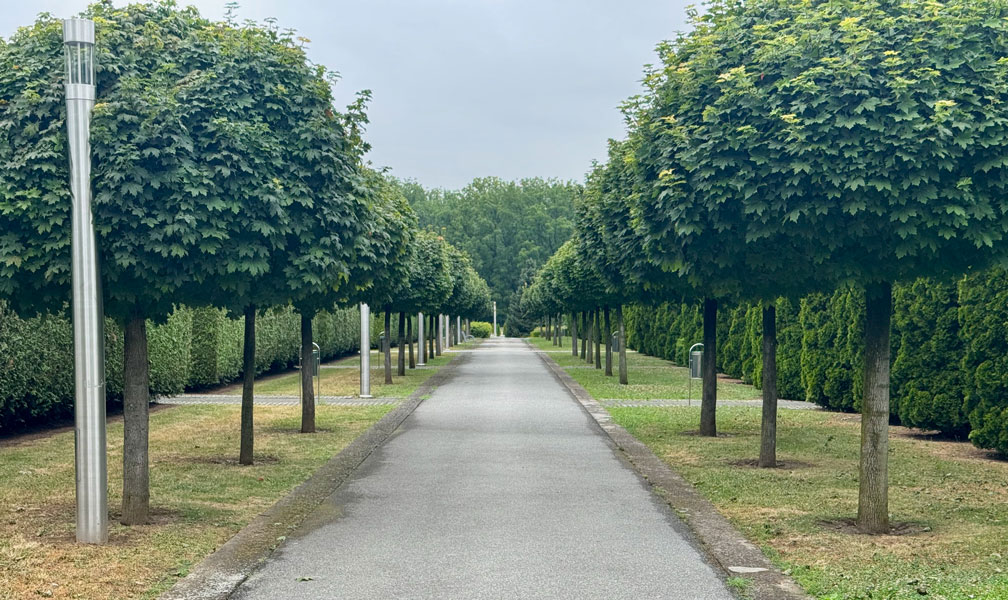
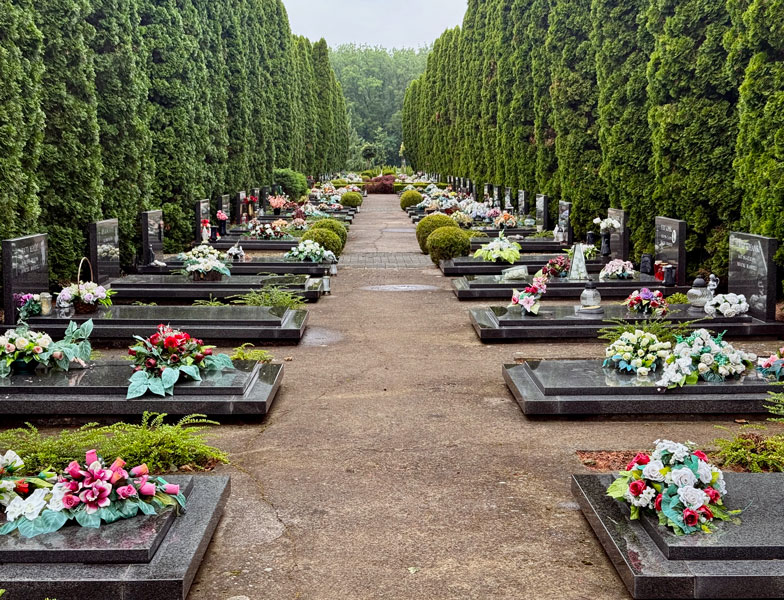
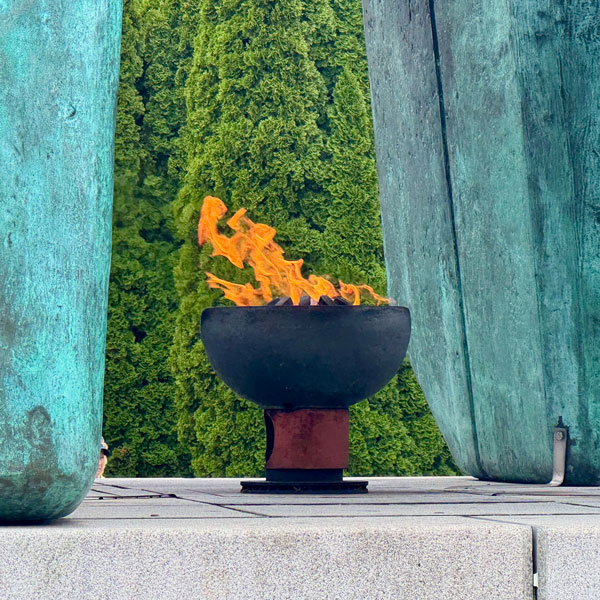
National Memorial Cemetery of the Victims of Homeland War
Here is the final resting place for soldiers and civilians alike who gave their lives for Croation independence. The dark gray tombs are for the fighters, mostly men; in parallel sections, there are light gray tombs for civilians, mostly women and children. A third area is ready to accept the still-missing victims from mass graves yet discovered.

On that somber note, we left Vukovar and headed to the Croatian village of Erdut (population: 400) for a home-hosted lunch.
Our hostess had prepared a traditional farmer’s meal of cevapi (pork meat patties, seasoned and cooked), cucumber salad, pickled red peppers & garlic, rice with peas and freshly-baked bread. And I almost forget that the meal started out with a shot (or two) of a home-made quince liquor. Yum!
Our hostess runs the local coffee shop/tavern, one of the three commercial establishments in this small Croatian farming community. (The other two are a grocery store and the Catholic church.) She recounted some of her experiences as a refugee during the war. She and her children spent 7 years in Germany before returning home, only to find it had been emptied of its belongings by the retreating Serbs.
After lunch, the bus made its rounds to collect each group and carry us back to the ship. We had an early departure (3:45 PM) for Budapest.
Tonight’s post-dinner entertainment was “Saturday Night Fever” – a dance-fest of disco and disco-adjacent music. The crew added to the fun by donning the most outrageous outfits culled mostly from the 60s and 70s. Oh, and wigs. Lotsa wigs! As one could say, they “looked like they were having fun!”
* Information acquired from Wikipedia
 Eastern Europe: Black Sea to Budapest