
Jewish Heritage Tour
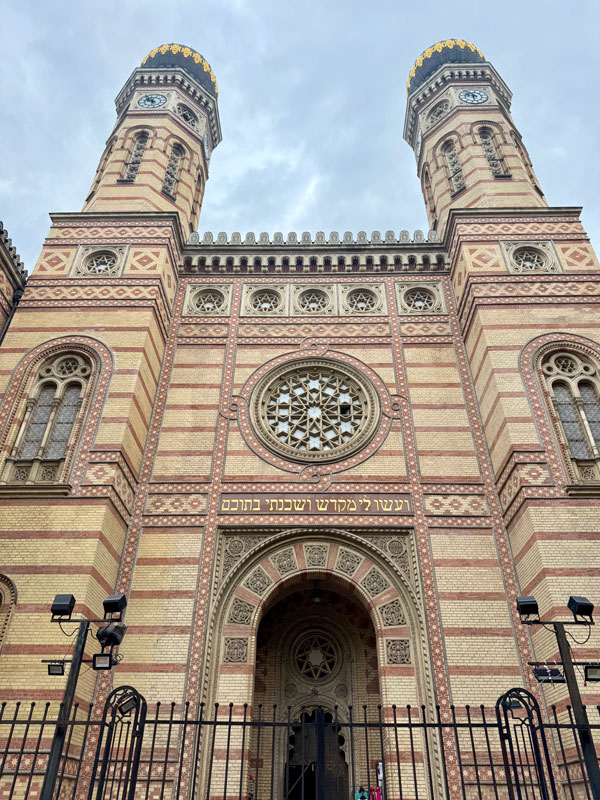
Today, Rob and I signed up for the Jewish Heritage Tour conducted in the former Jewish Quarter of Budapest. The focus was on two temples, a few blocks apart from each other, of which only one is still used regularly for services.
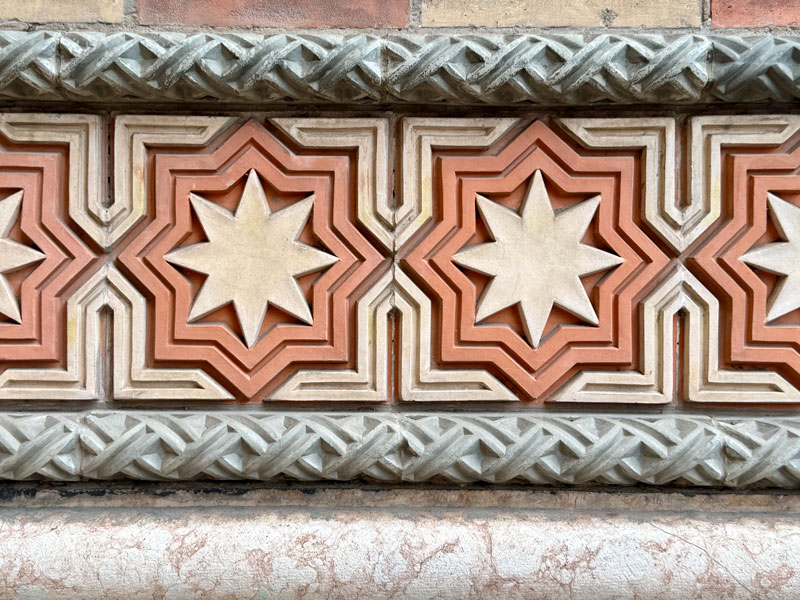
The Dohány Street Synagogue is the largest active synagogue in Europe…and the third largest in the world. Built in the basilica style, with a central nave flanked by aisles on each side, the temple was designed to hold 3,000 worshippers. Men were seated on the ground floor and women sat in the upper galleries above the side aisles. (Today, there is a mixing of sexes seated on the ground floor.) The architect mixed Byzantine, Islamic and Gothic elements with Star of David and tablet iconography throughout.
Temple interior
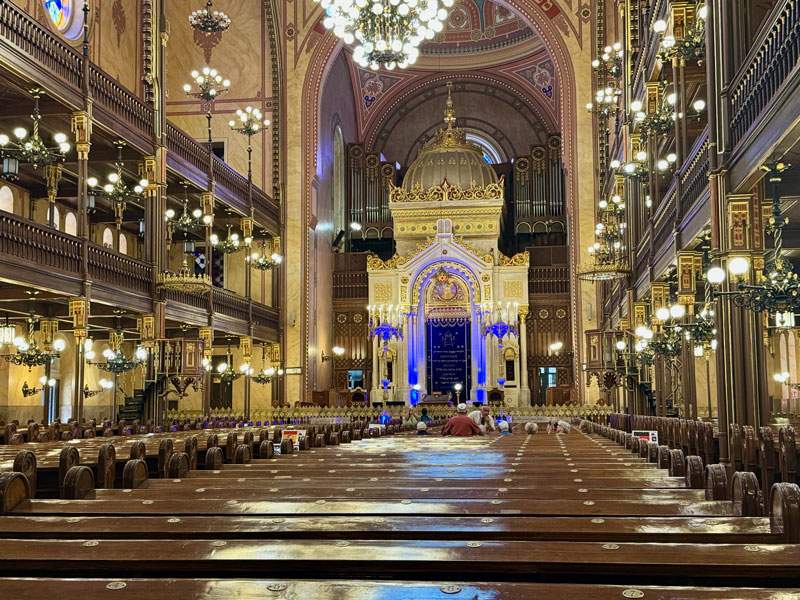
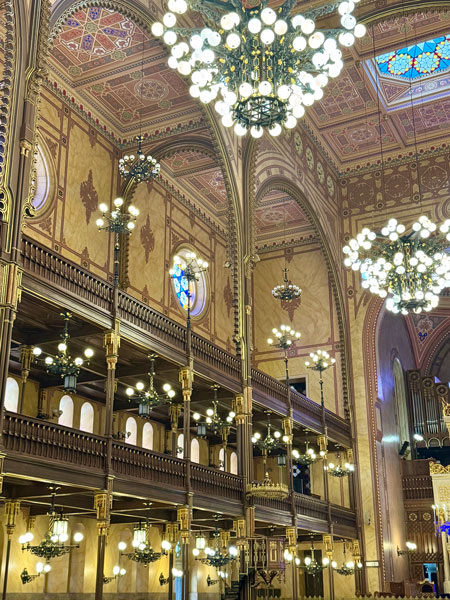
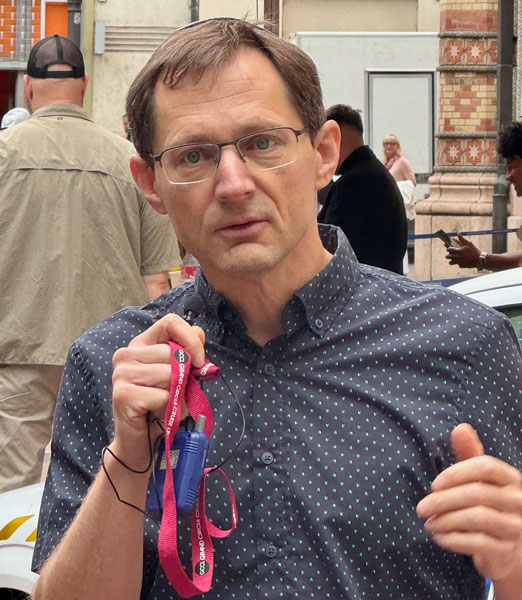
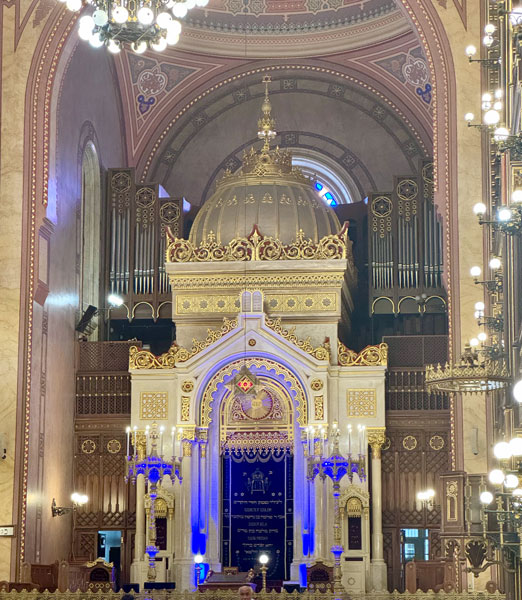
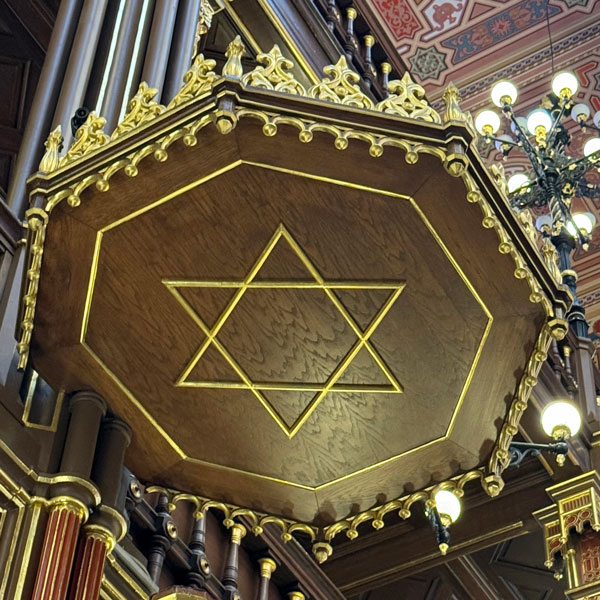
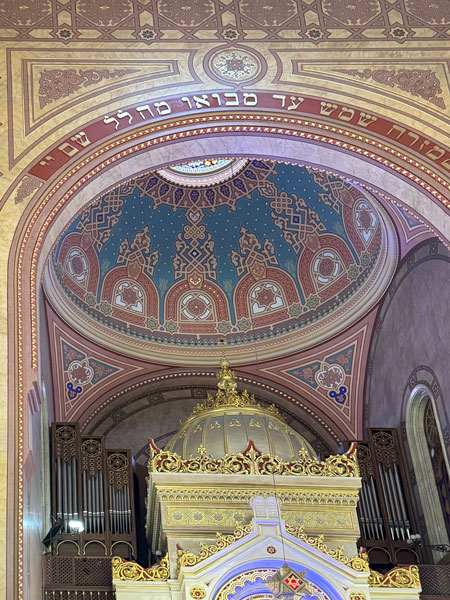
Once inside the building, our tour guide seated us left of the center aisle (there were numerous tour groups in seated clumps, scattered throughout the temple’s pews) under the carved bimah. He spoke for about 20 minutes on the building, its history and the significant place this temple holds in the overall story of the Hungarian Jewish people.
Among the interesting features of the temple is the pipe organ. Its presence here reflects the synagogue’s status as a Neolog temple, which has different practices than Orthodox Judaism. The row of organ pipes can be seen behind the ark. (The original organ had 5,000 pipes.) Composer Franz Listz was one of the distinguished musicians who played it during its inauguration in 1859.
We exited the sanctuary and headed outside behind the building.
Memorials to the Hungarian Holocaust victims
Located in this rear courtyard is the Raoul Wallenberg Holocaust Memorial Park. The most striking memorial here is the Memorial of the Hungarian Jewish Martyrs (aka the Holocaust Tree of Life Memorial). The memorial depicts a weeping willow tree, its metallic leaves stamped with the names and tattoo numbers of the dead and disappeared. The emblematic trunk and splaying wire branches wrap around a tall, dark monolith with arched open spaces representing the missing stone tablets of Moses.
There are a number of other memorials including a large stained glass window honoring Sir Nicholas George Winton. The British humanitarian saved 669 mostly Jewish children before the war by organizing a Kindertransport program that resettled children from Czechoslovakia with foster families in England.
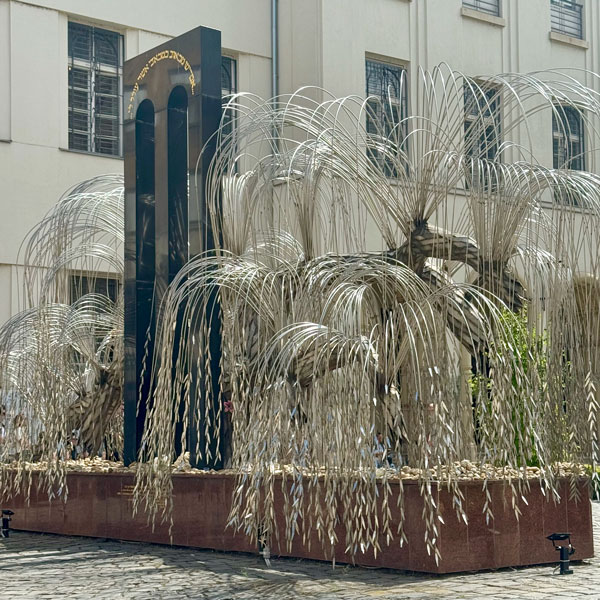
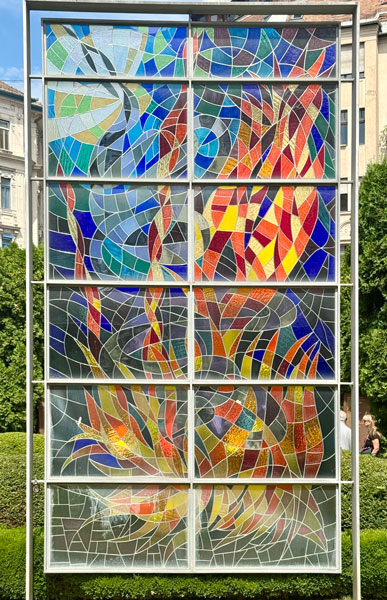
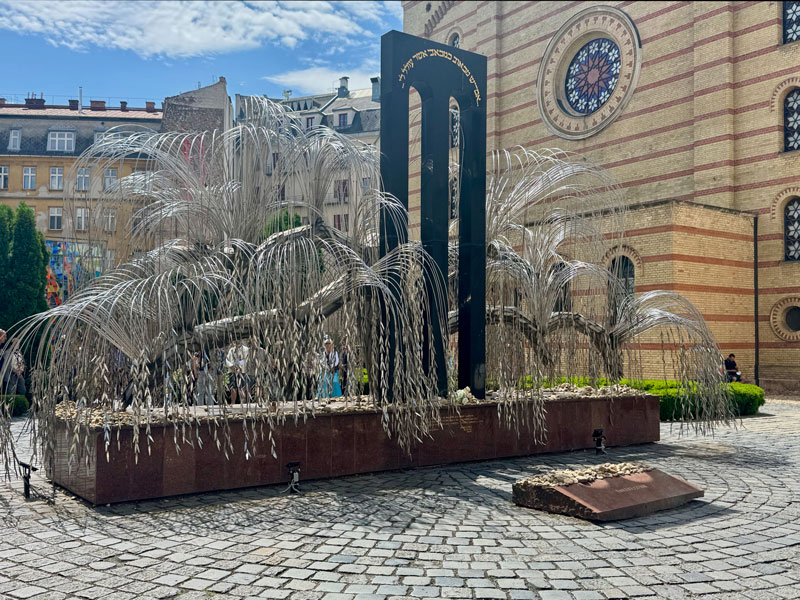
Leaving the Dohány Street Synagogue grounds, our group headed for the Rumbach Synagogue building. En route, we came across two interesting street “scenes.”
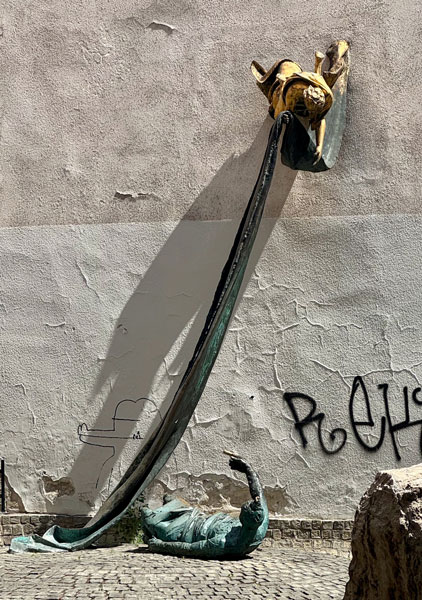
The Carl Lutz Memorial commemorates Swiss diplomat Carl Lutz who saved tens of thousands of Hungarian Jews. It depicts Lutz as a golden angel descending to help a fallen victim. Interestingly, he was initially reprimanded by the Swiss government for overstepping his authority. Now, he is recognized as one of the Righteous Among the Nations.
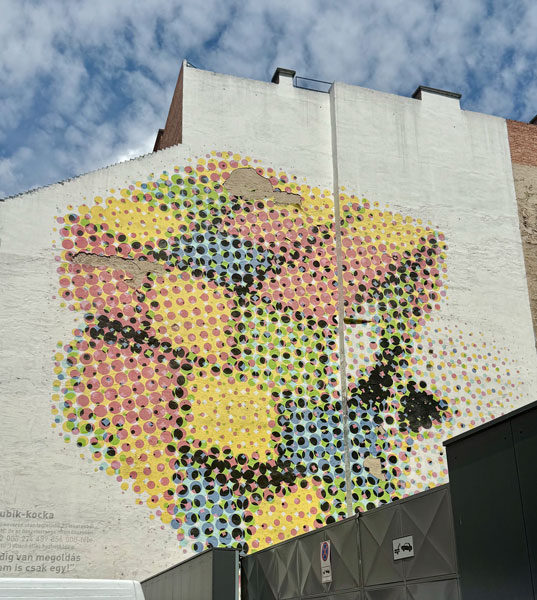
On a less somber note, Rubik’s cube was invented by a Hungarian. One public mural, between the two synagogues, celebrated this honor in an illusionary way. Seen with the eye from the street, it looked like a mess of colored blobs. But when captured by a camera phone, the many blobs reveal their true identity: a Rubik’s cube in play.
Rumbach Synagogue
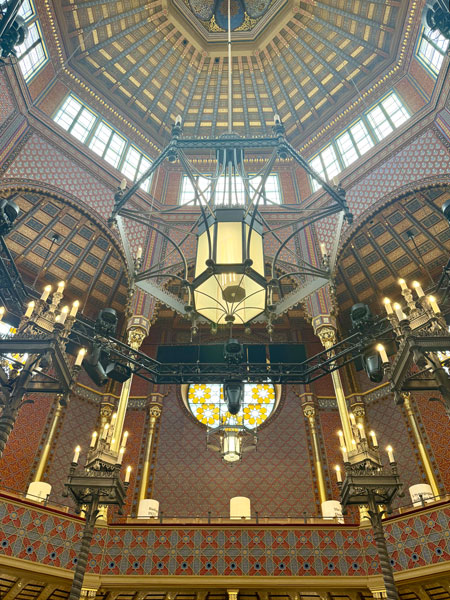
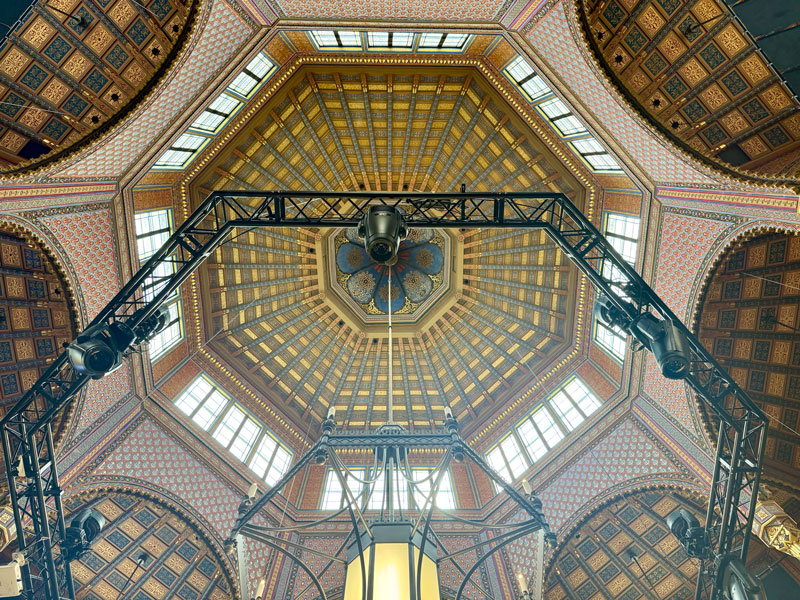
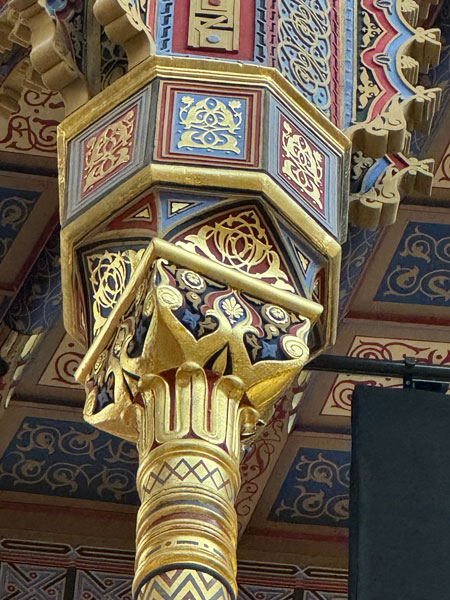
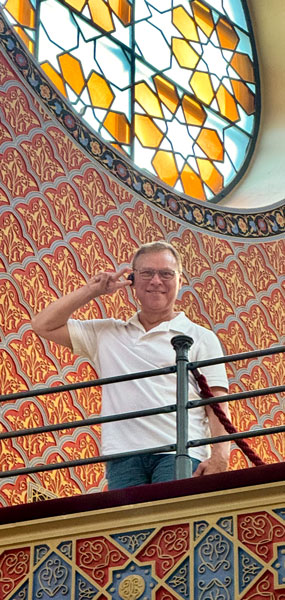
This was an interesting stop. Built as a synagogue in 1872, it now functions as a concert hall and cultural events venue while remaining available for religious use. However, it has no active congregation, the last one having merged with another temple. After much damage, neglect and mismanagement over the years, it was finally renovated with government funds to its current state.
Built in the Moorish Revival style, its octagonal floor plan and soaring dome pay homage to Jerusalem’s Dome of the Rock.
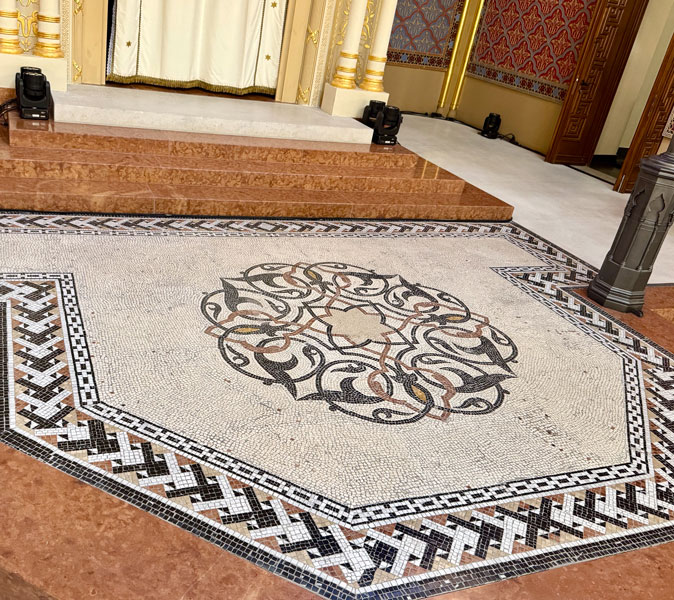
The current Torah ark is an empty re-creation of the original; however, the inlaid tile floor in front of this is original, having been saved by the man tasked with removing it decades ago.
The bimah, located directly under the great dome, is now on a hydraulic lift that allows it to be lowered beneath floor level. Once below, sliding floor panels glide in and cover the opening, creating an open floor space for concerts, etc.
The formal tour concluded. We got back on the bus, returning to the ship for lunch…and to prepare for this afternoon’s excursion to Castle Hill.
Castle Hill on the Buda side of the Danube
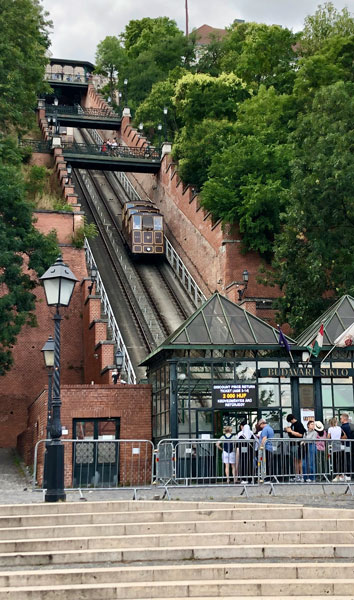
There are several ways to get to the top of Castle Hill. The most unique (and fun) way is probably the funicular – an obvious tourist favorite. There are also the usual buses, trams and tuk-tuks as well.
And then there’s one’s own two feet…our transportation of choice!
The ascent was brutal, mostly because of the afternoon heat. Two-thirds of the route was walking on sidewalks along the moderately-steep roadway. (As if to taunt us, half-empty buses zipped by a little too frequently.)
Then we reached the stairs – 197 of them. Fortunately, every 10-20 steps led to a landing which offered some respite (and oxygen) as we climbed.
Yes, MDR, we made it. (Or, more to the point, I made it! Whew!)
BTW, we took the same route back down. Somehow, it seemed shorter…and definitely less taxing.
Views from atop Castle Hill
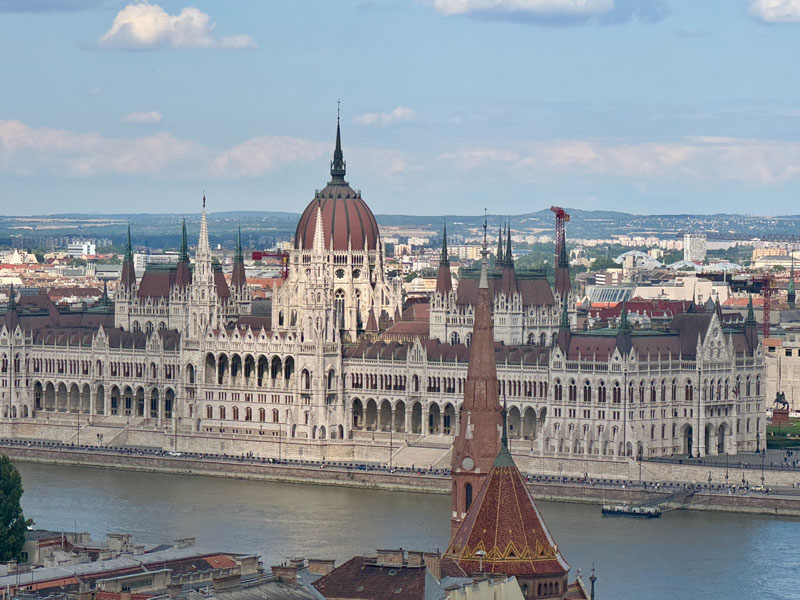
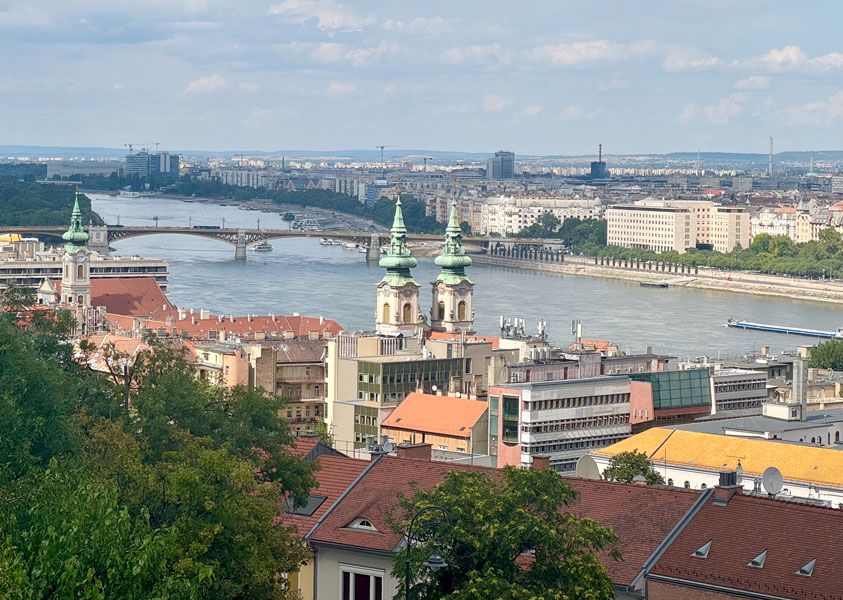
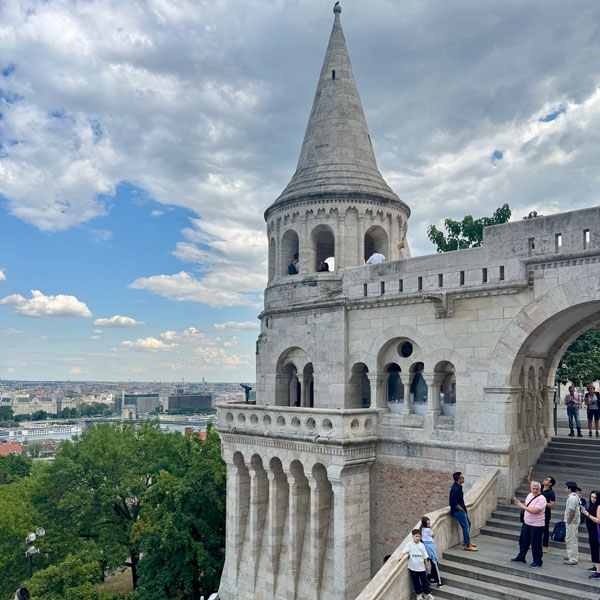
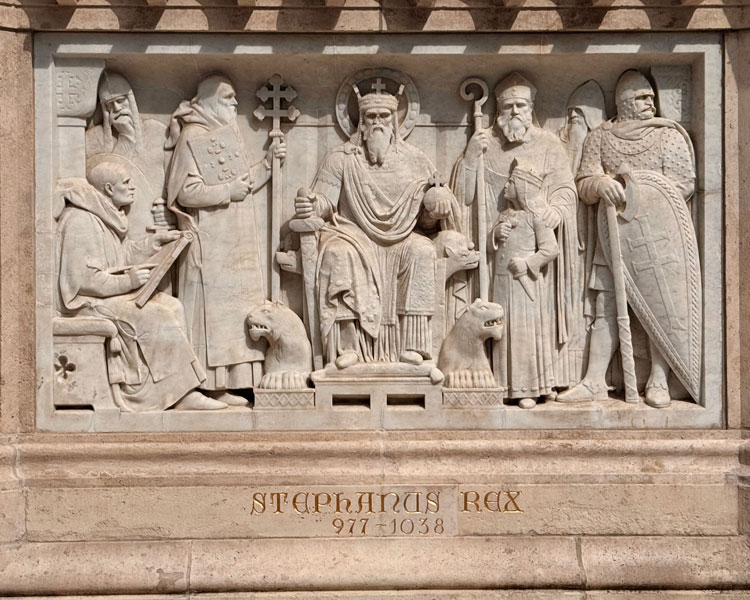
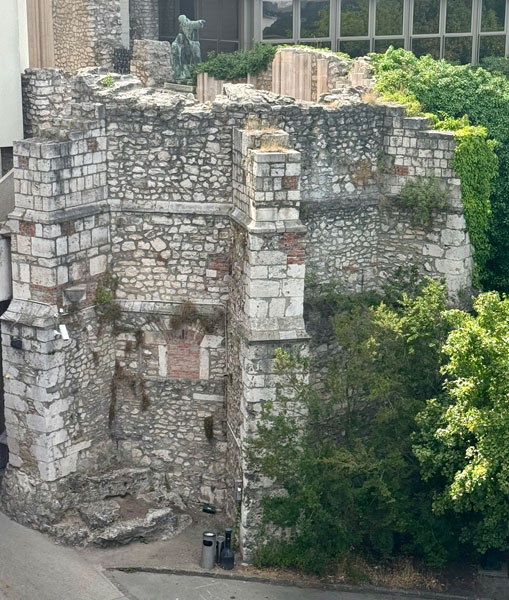
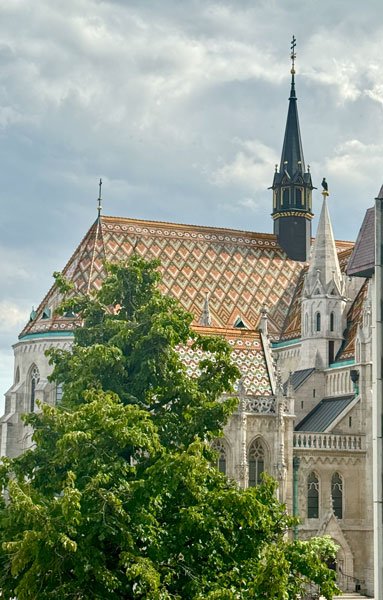
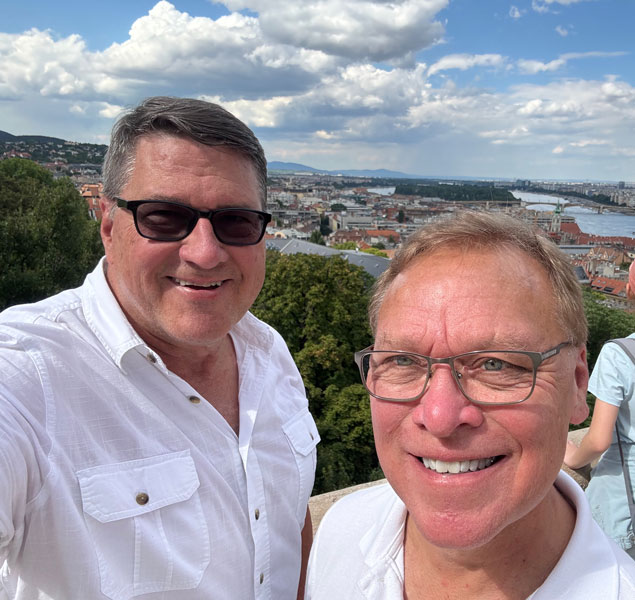
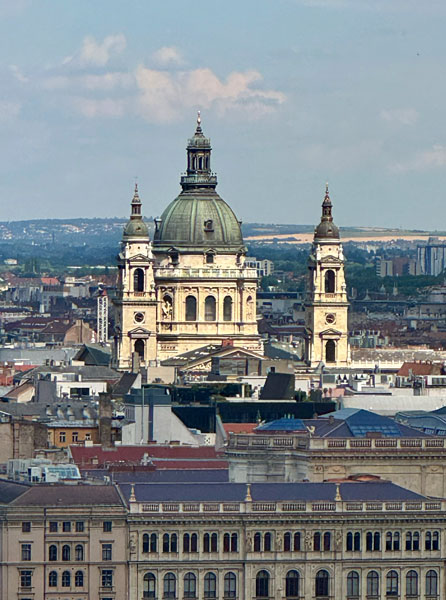
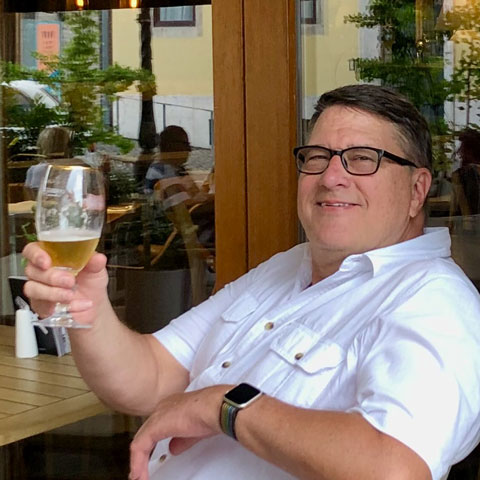
After capturing the views of Pest from the Fisherman’s Bastion, we ventured out into the side streets of Castle Hill, away from the tourists and influencers. Thirst, the call of nature, and a light drizzle drove us to a remote sidewalk cafe where we found refreshment, release and a roof before our time on the royal hilltop came to an end.
A Night Light Show!
For our final night on the M/S River Aria, the captain is treating us to one last memorable moment: a night time cruise through an illuminated Budapest.
Ironically, considering the excessive heat we had experienced during most of this trip, it was damn cold up on the Sun Deck where people gathered to ooh, aah and snap at the beautiful light show that unveiled itself on both banks of the Danube. Surprised by the chilly air, I retrieved a blanket from the cabin and enjoyed the sights wrapped in a cozy faux-woolen cocoon.
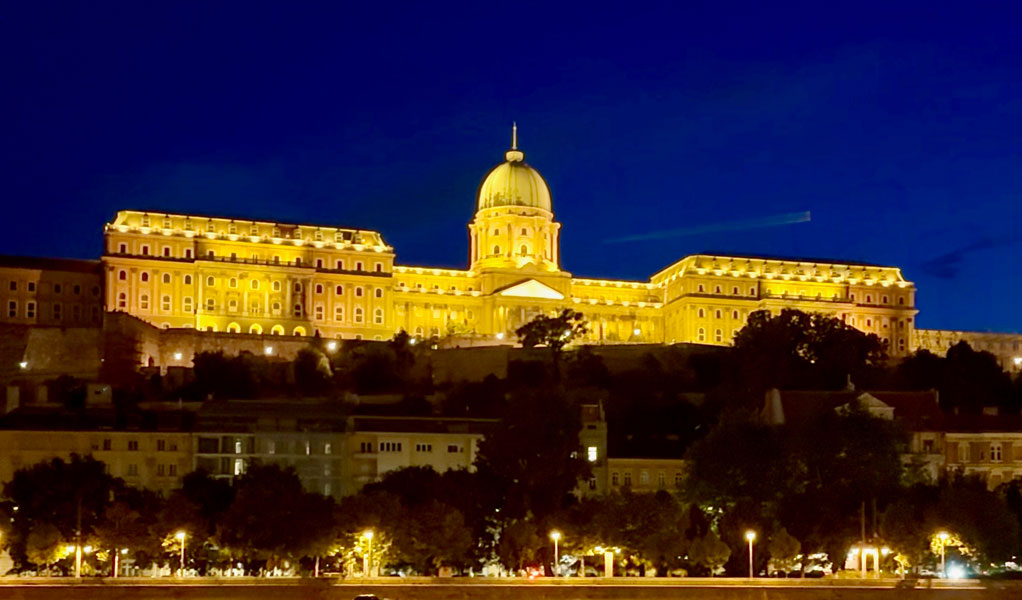
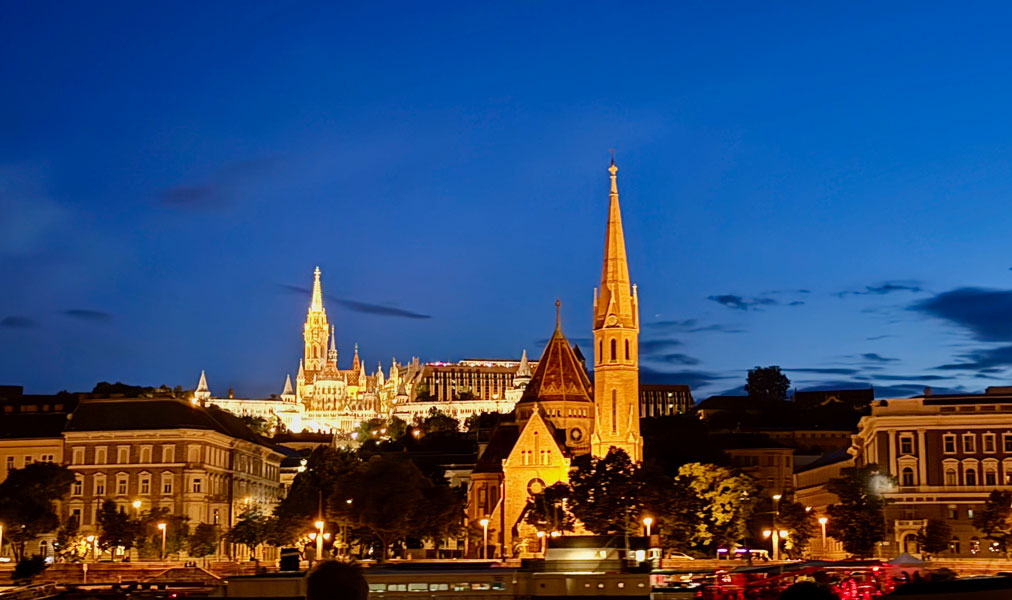
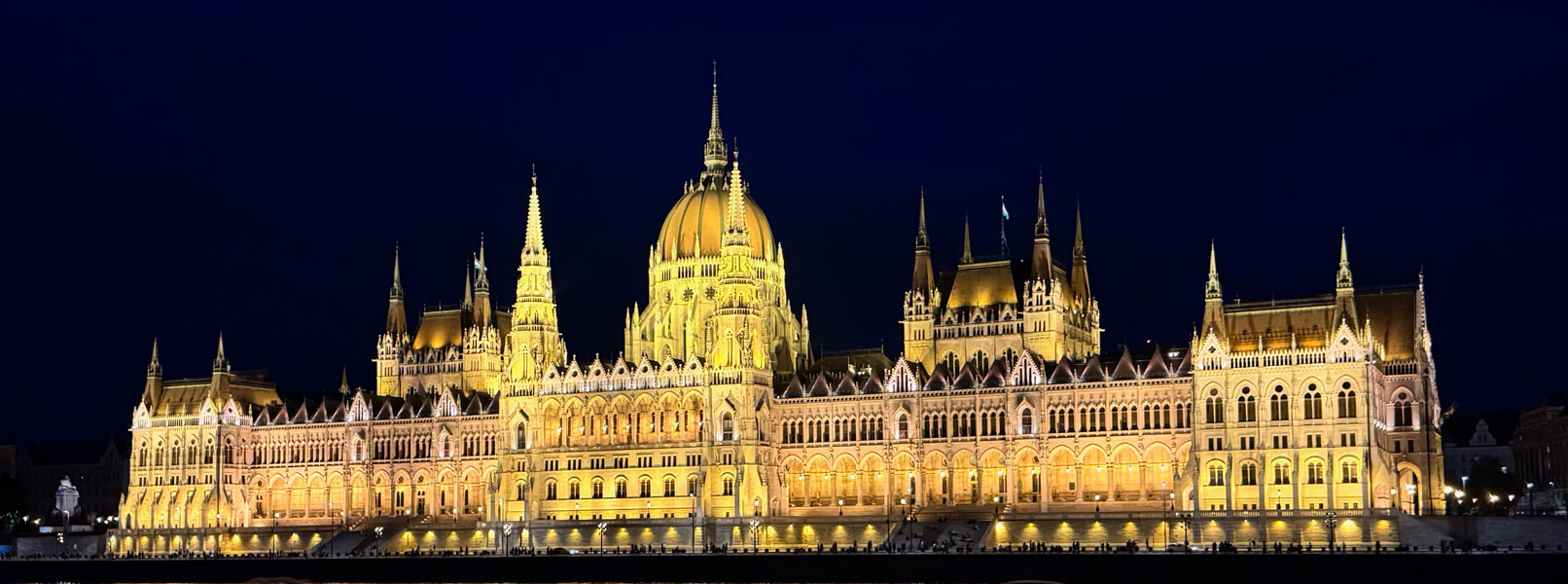
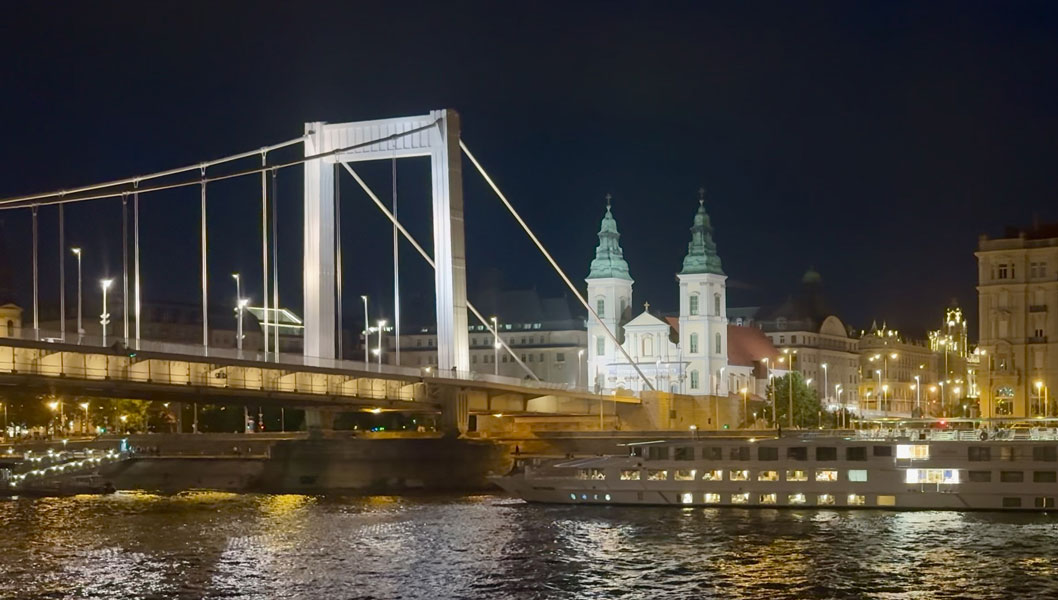
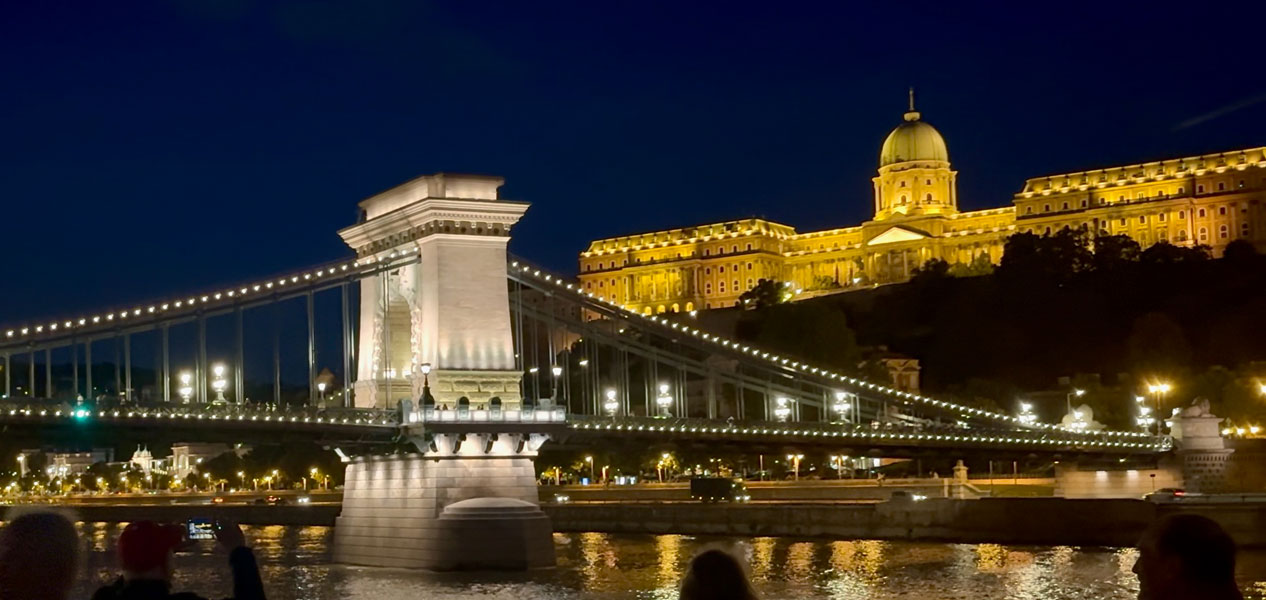
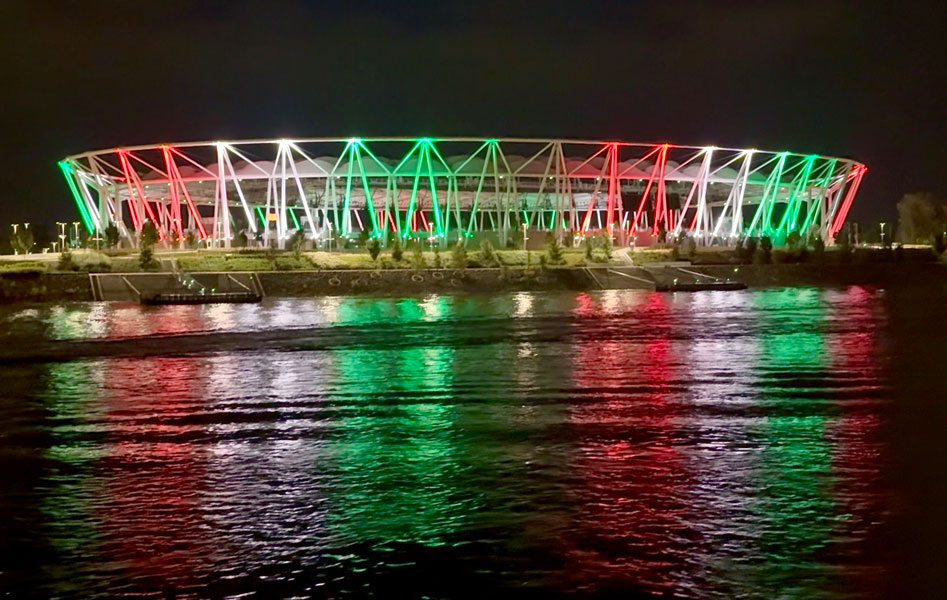
The illuminating cruise ended at the perfect moment: as our ship began to turn back towards the dock, the lighting on the stadium shut off.
Since we had to get up in less than 4 hours to start our trip home, we called it a night and headed back down to our cabin.
 Eastern Europe: Black Sea to Budapest