
Our first full day in Bucharest began with each group taking a bus tour through the traffic-choked streets of Bucharest with play-by-play narration provided by a local guide.
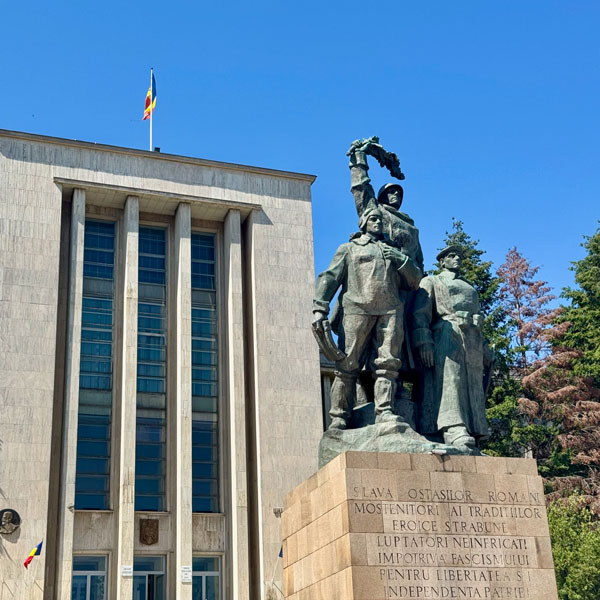
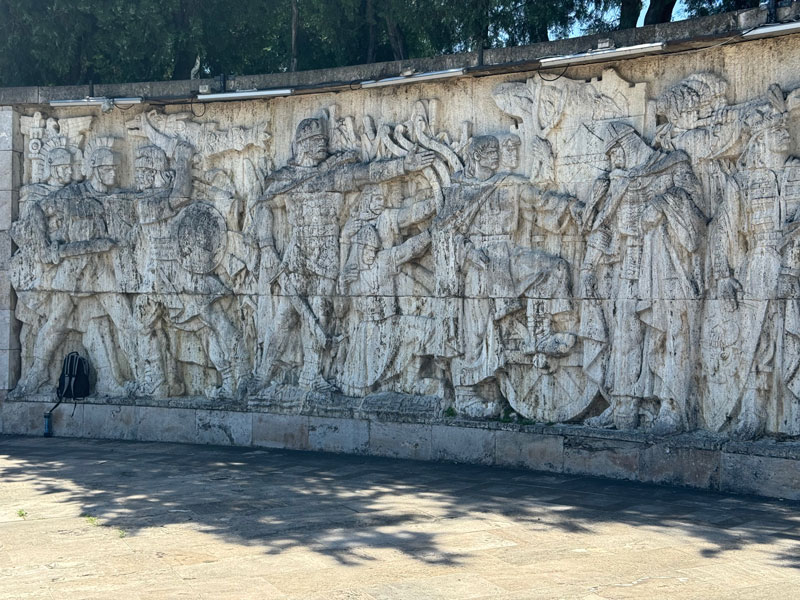
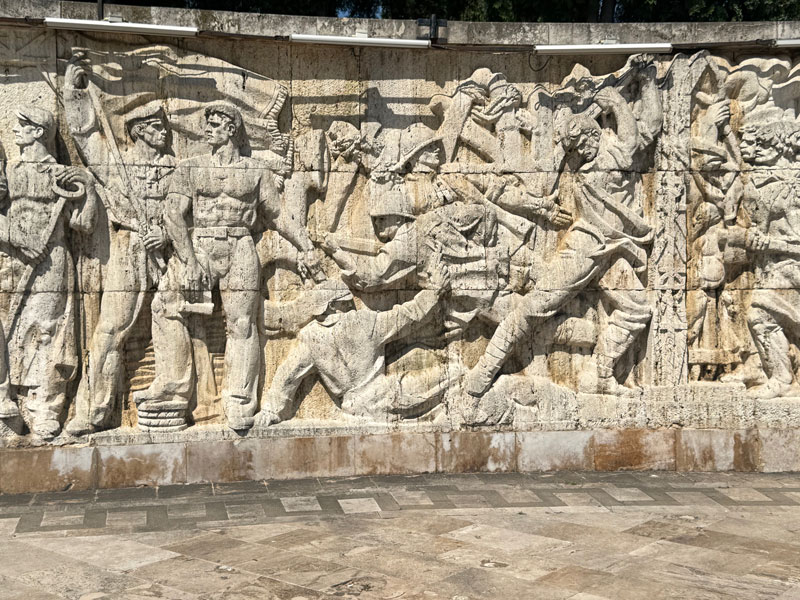
Our first destination was the Carol I National Defense University…or the School of War. We did not enter the campus itself; but, rather, we explored a grand monument-ed square that served as a formal entry to a school administrative building. The half-moon plaza and grand staircase that leads up to the building is flanked by two large bas-relief sculptural walls that depict momentous Romanian armed conflicts from the Dacian times of the Roman Empire to the modern era.
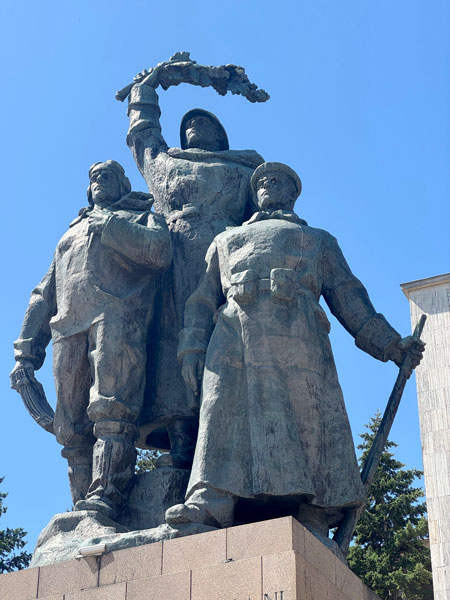
In the center, the large, pedestaled bronze trio surveying the square represent servicemen from the Romanian army, navy and air force respectively. The inscription reads: “Glory to the Romanian troops, inheritors of ancient heroic traditions, undaunted fighters against fascism for the fatherland’s liberty and independence”.
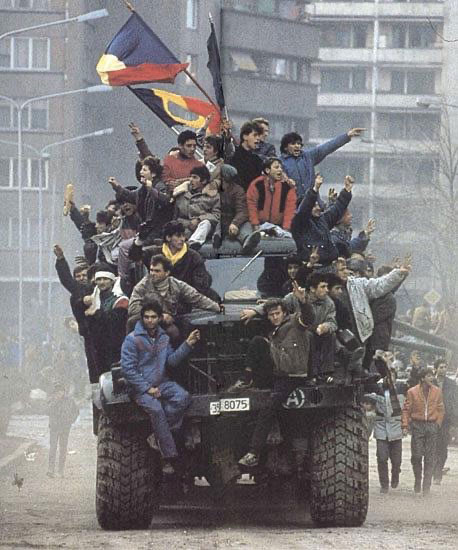
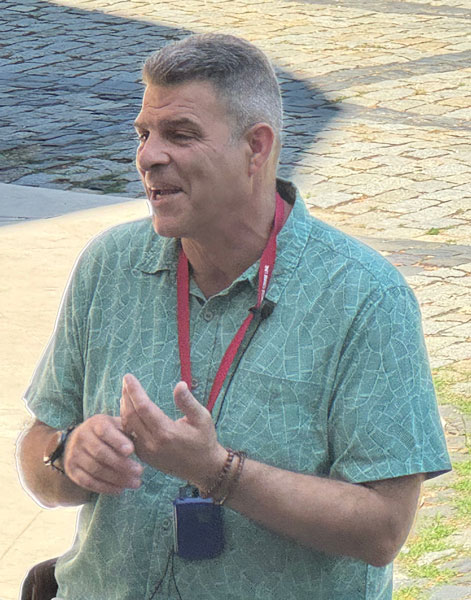
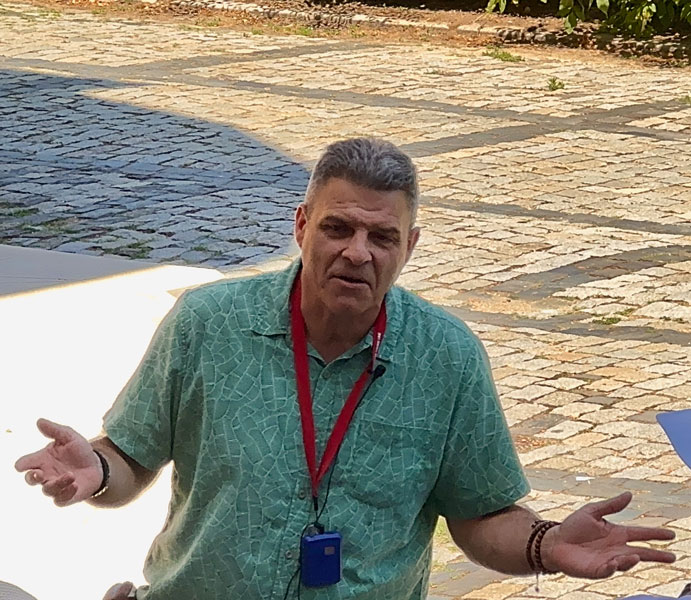
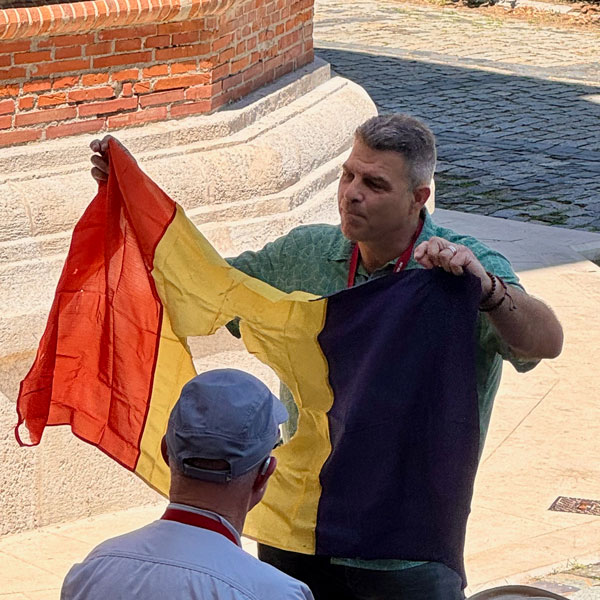
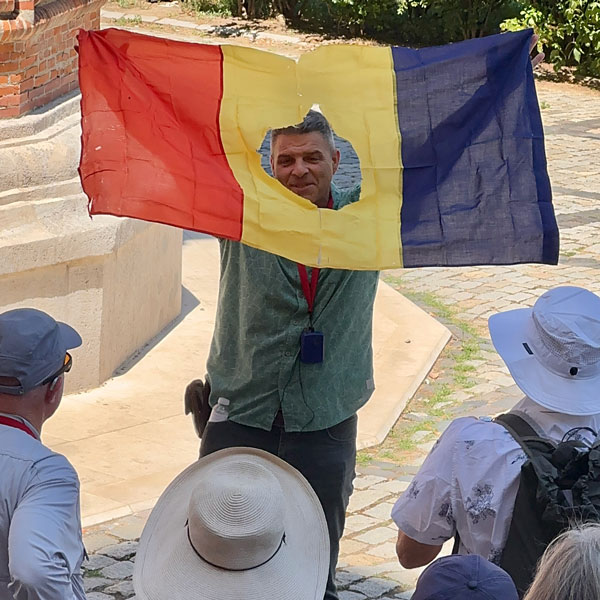
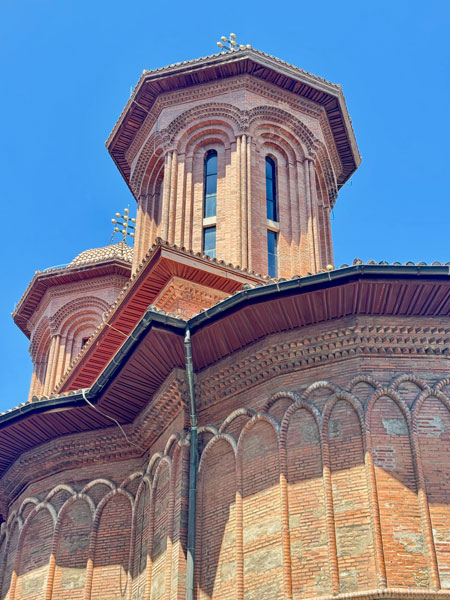
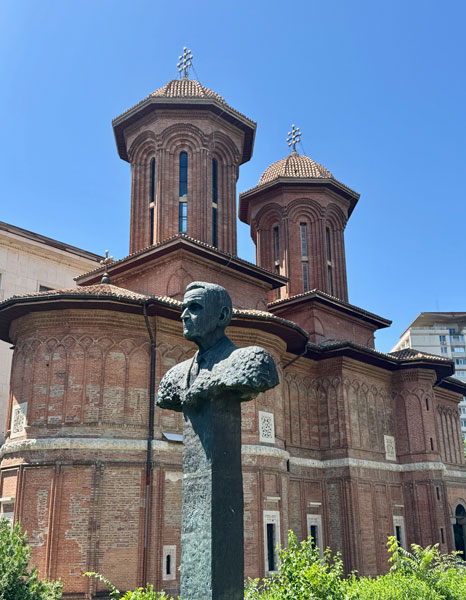
After re-boarding the bus, we continued fighting traffic and touring the city until reaching the Kretzulescu Church. Here, we gathered in the shaded plaza behind the small red-brick church, to meet Egmont Puscasu, one of the many freedom fighters who helped bring down Nicolae Ceaușescu and the Communist regime in December of 1989.
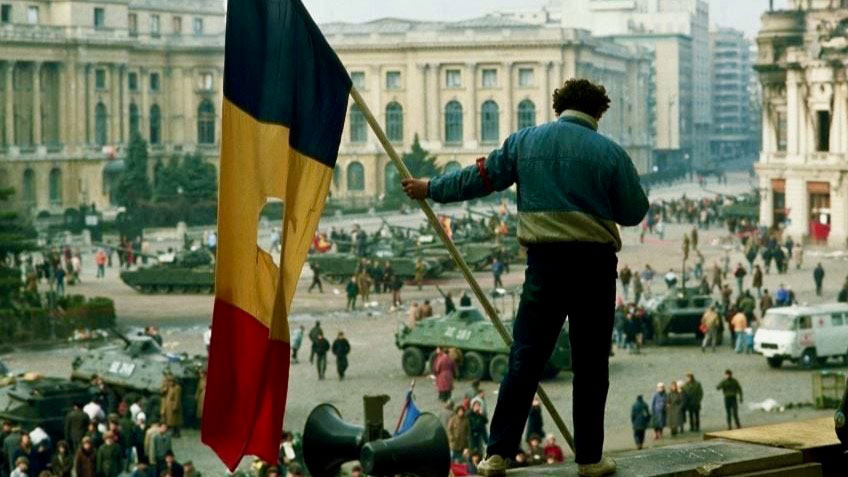
He was a young man at the time and very passionate about the need for governmental change. That passion has not diminished as he told us his story of fighting with little or no real weapons; losing close friends to the trigger-happy military; narrowly escaping capture; and yet never losing the courage to continue fighting. He proudly showed us his prized possession from the struggle: a Romanian flag with the Socialist Coat of Arms excised to mark the end of communist rule. In the adjacent photo, Egmont is top center, wearing a black t-shirt, on the vehicle roof.
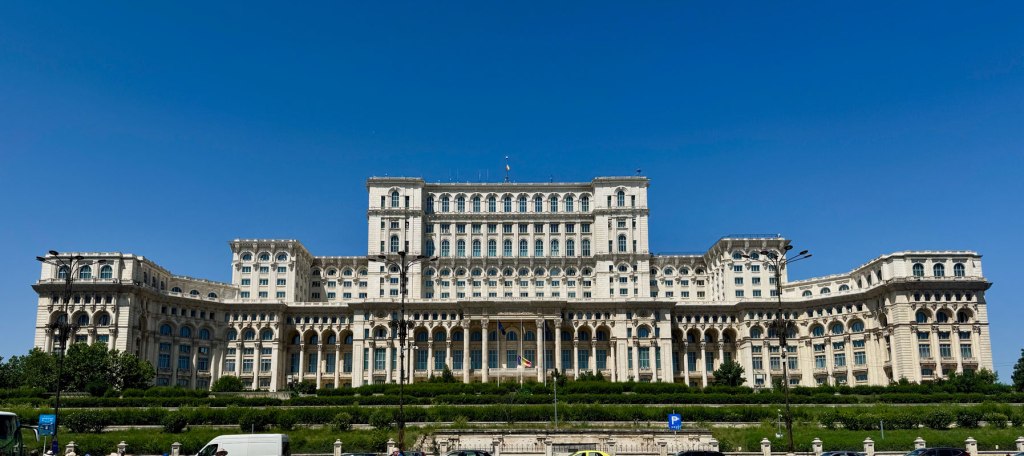
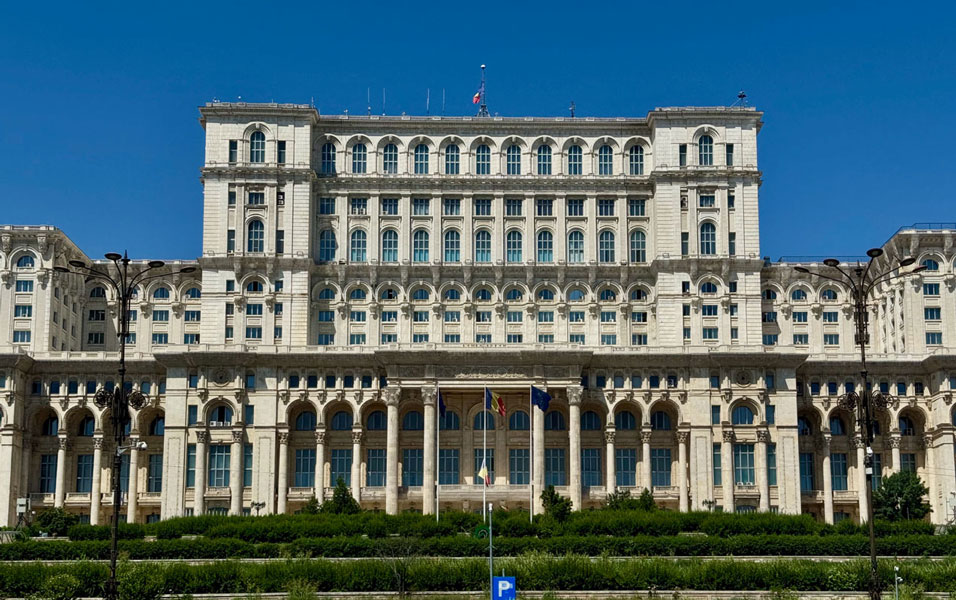
After our history lesson on the fall of communism in Romania, our bus made a stop in Constitution Square, the terminus of Union Boulevard as it reaches the colossal Palace of the Parliament.
Construction of the boulevard and the palace began simultaneously as components of a larger urban project envisioned by Ceaușescu. Now it is the unmistakable grande dame of Bucharest and the largest remaining symbol of Ceaușescu’s communist regime.
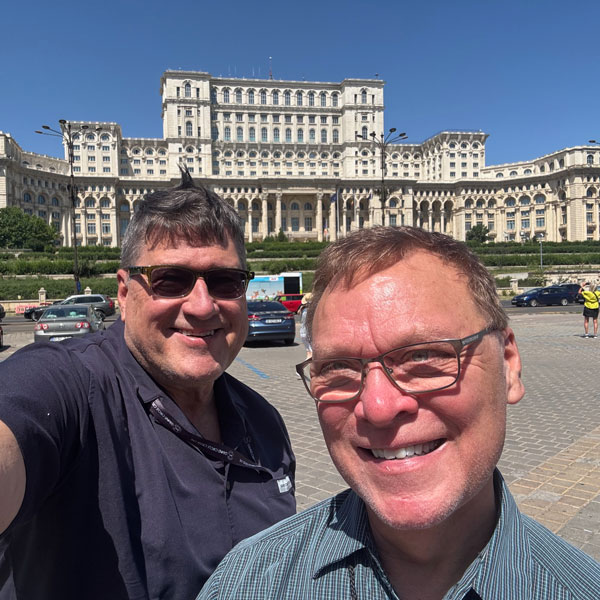
For us, this was purely a photo op of Bucharest’s primary tourist attraction. (We tour it tomorrow.)
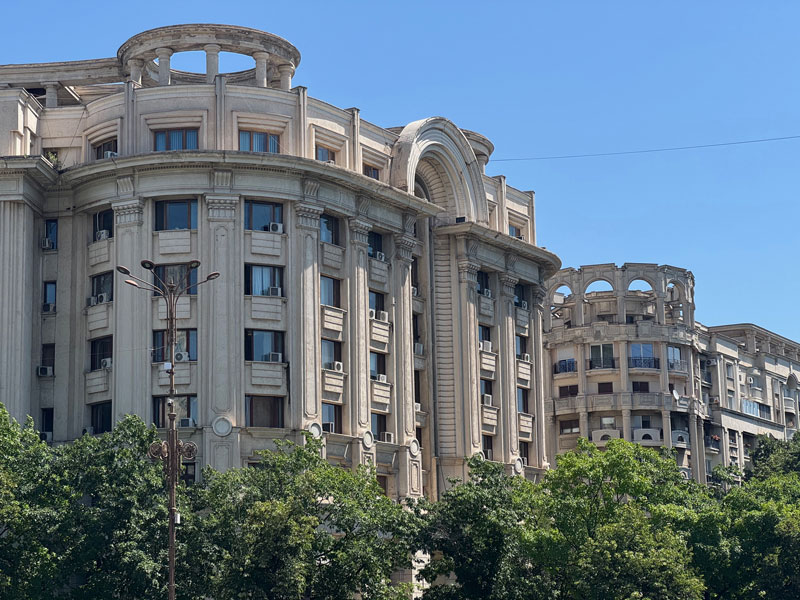
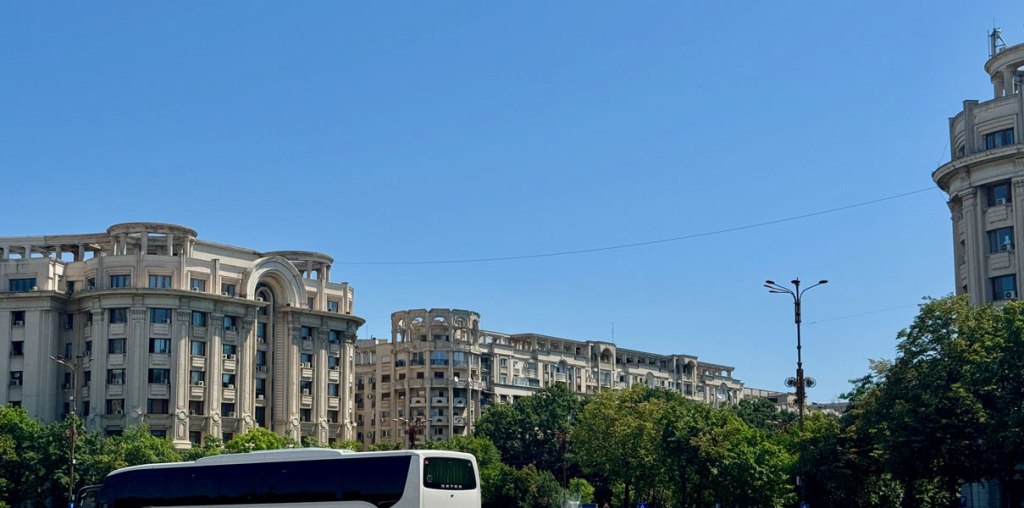
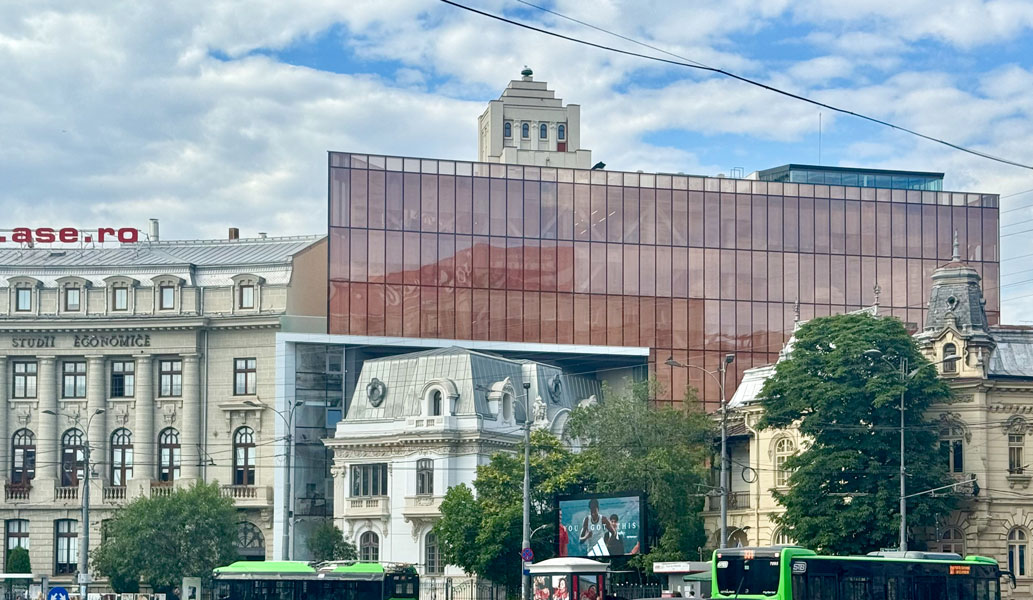
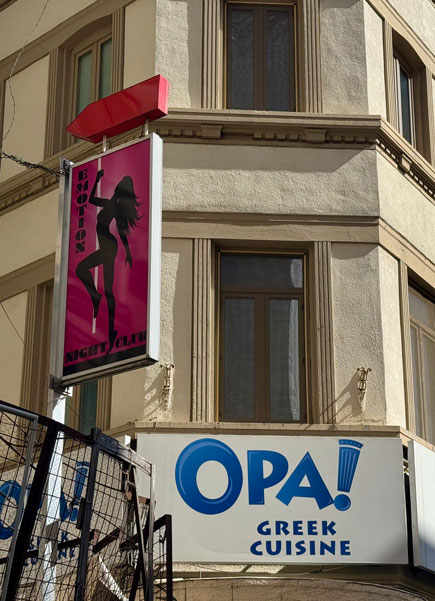
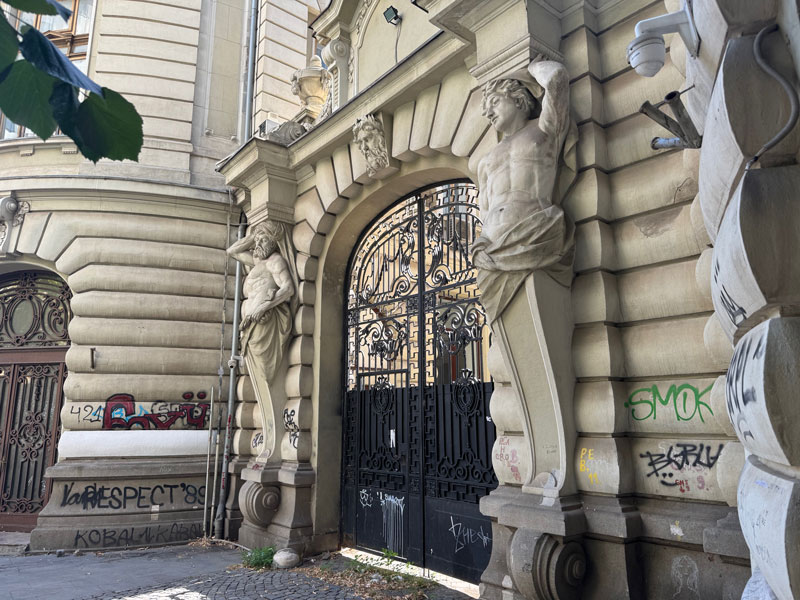
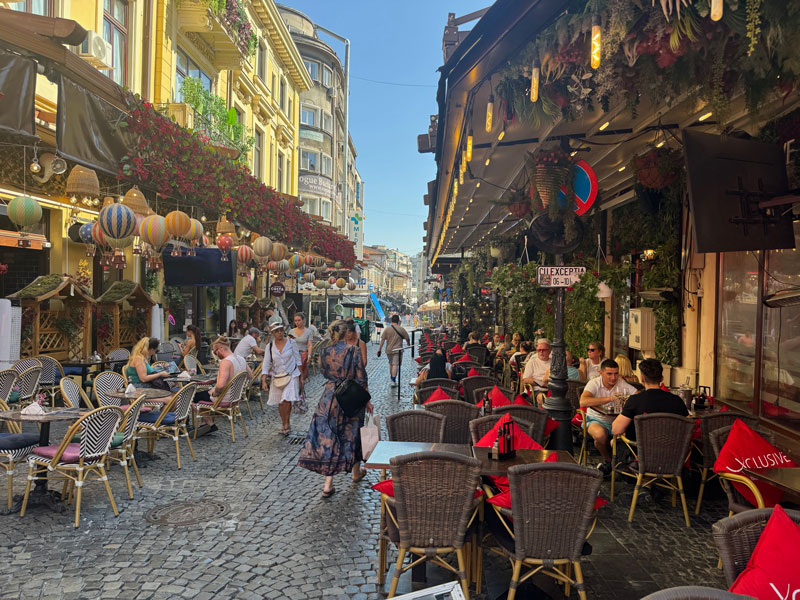
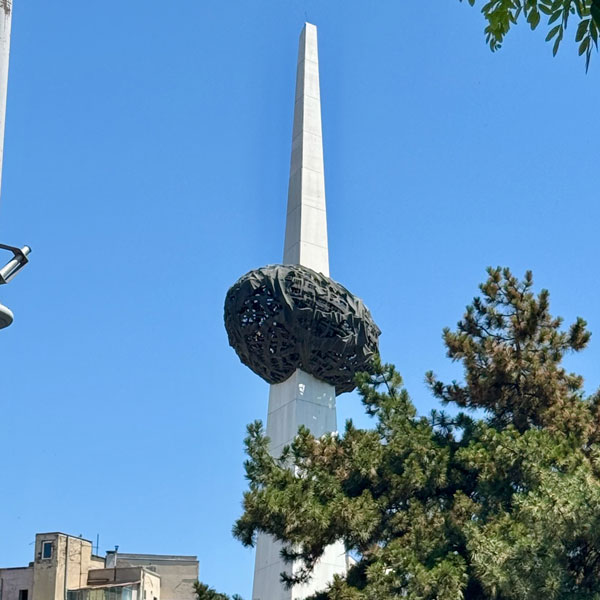
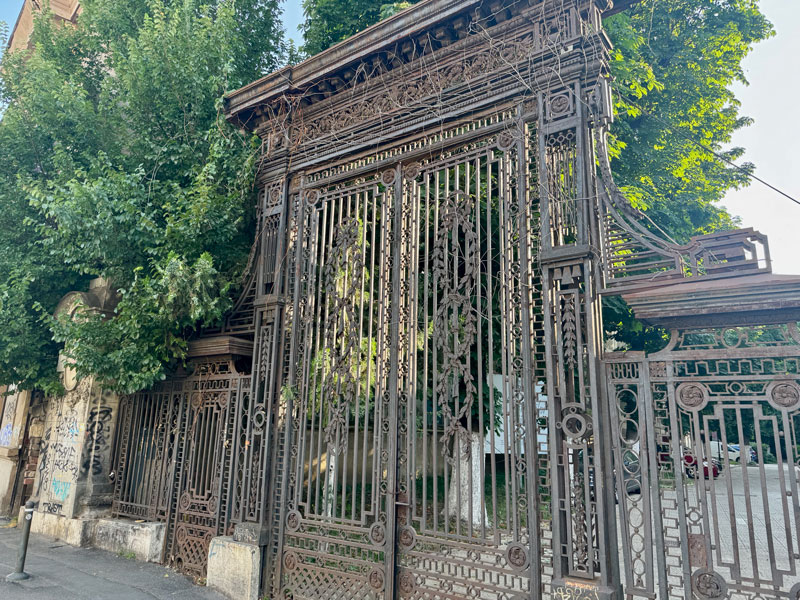
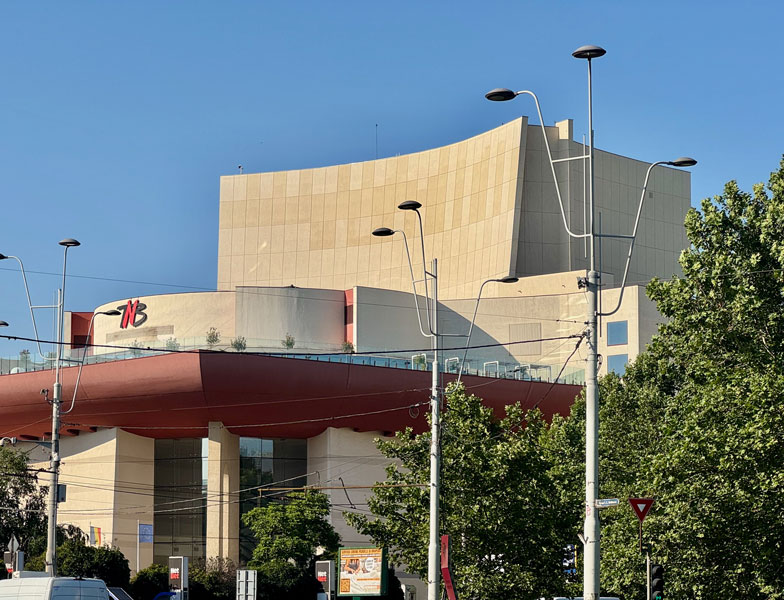
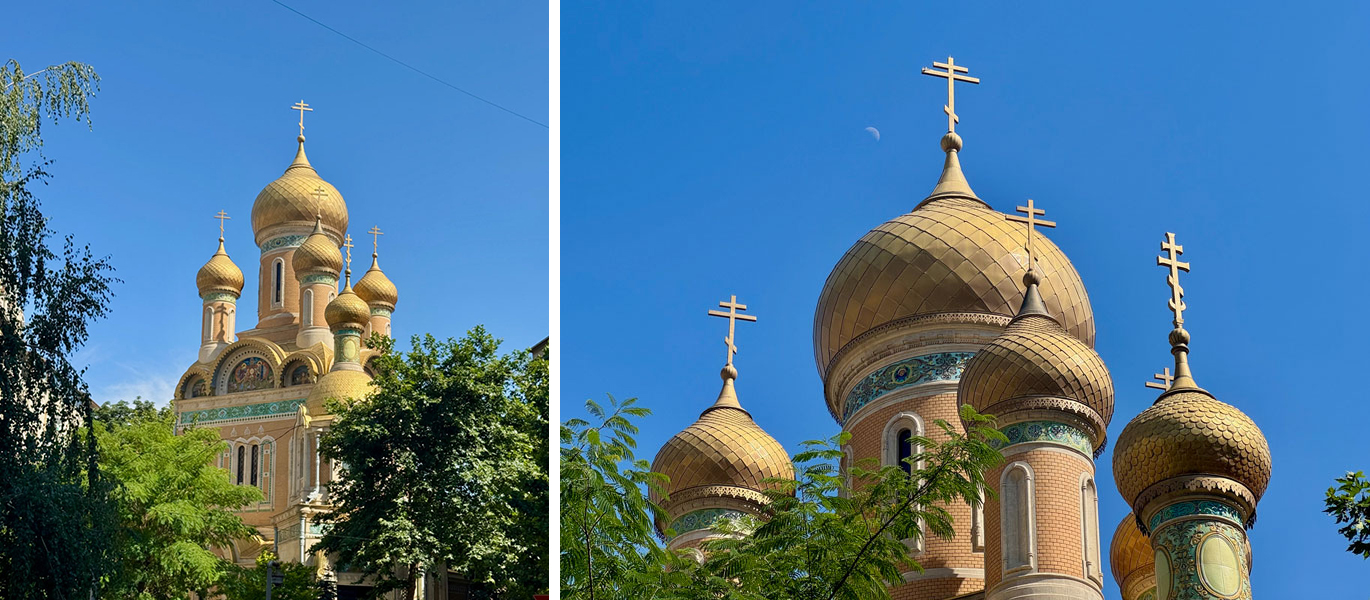
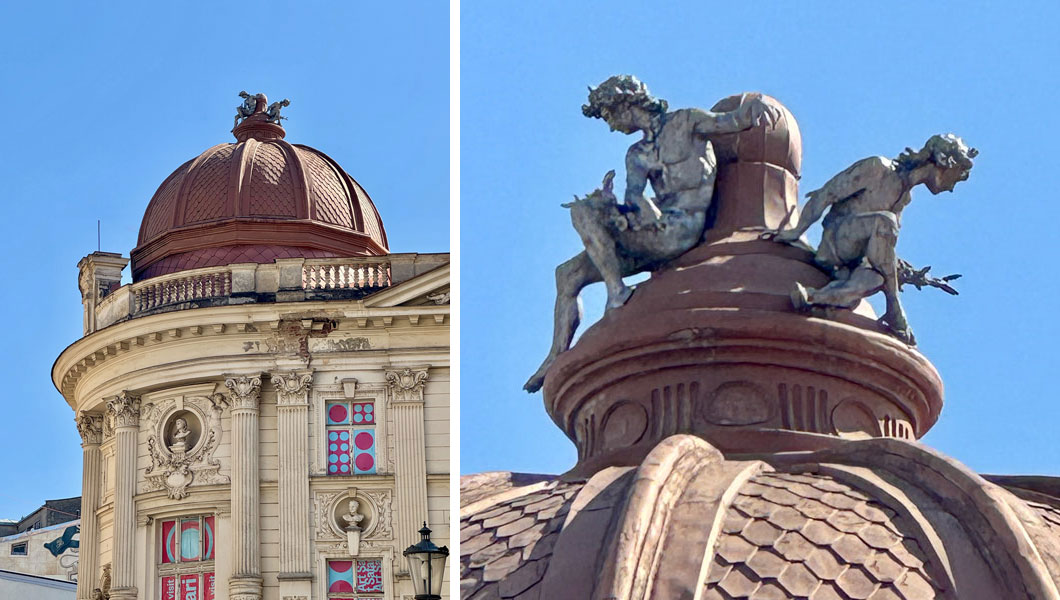
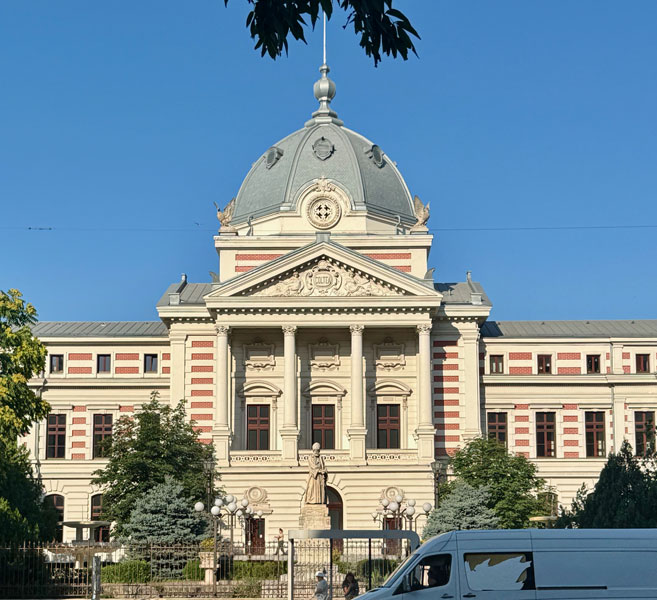
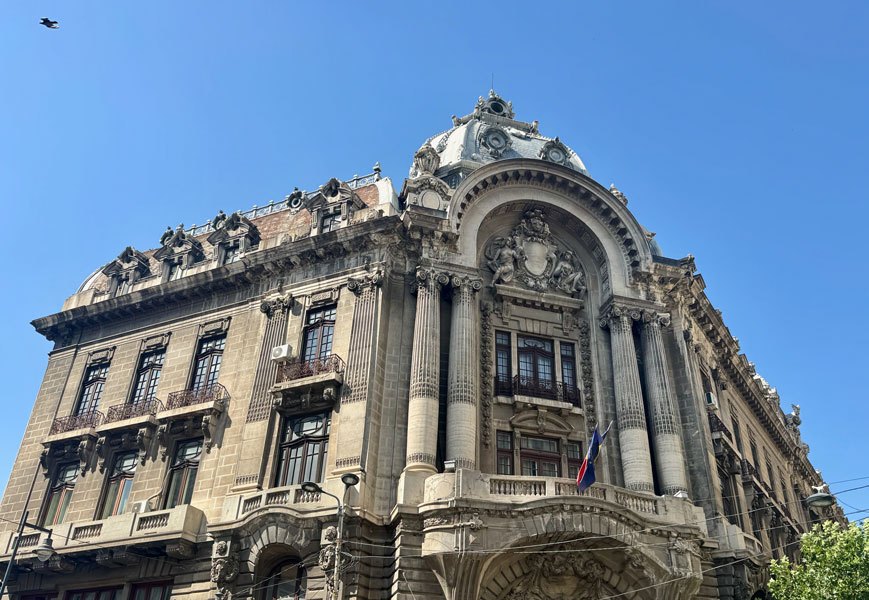
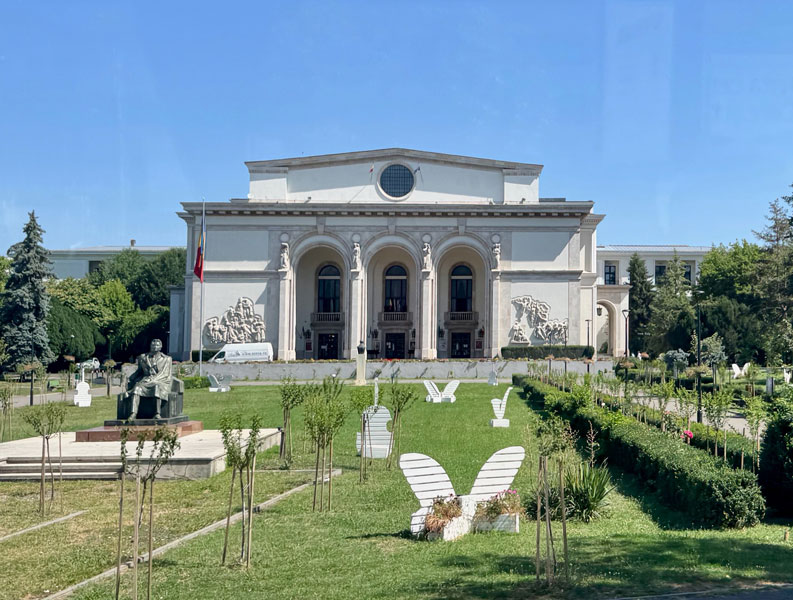
Random images of Bucharest taken as we walked and rode through the city.
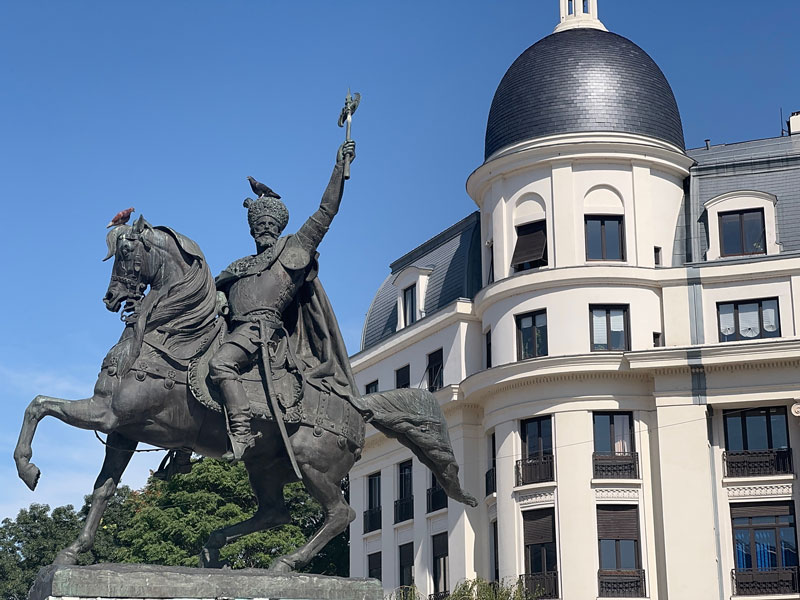
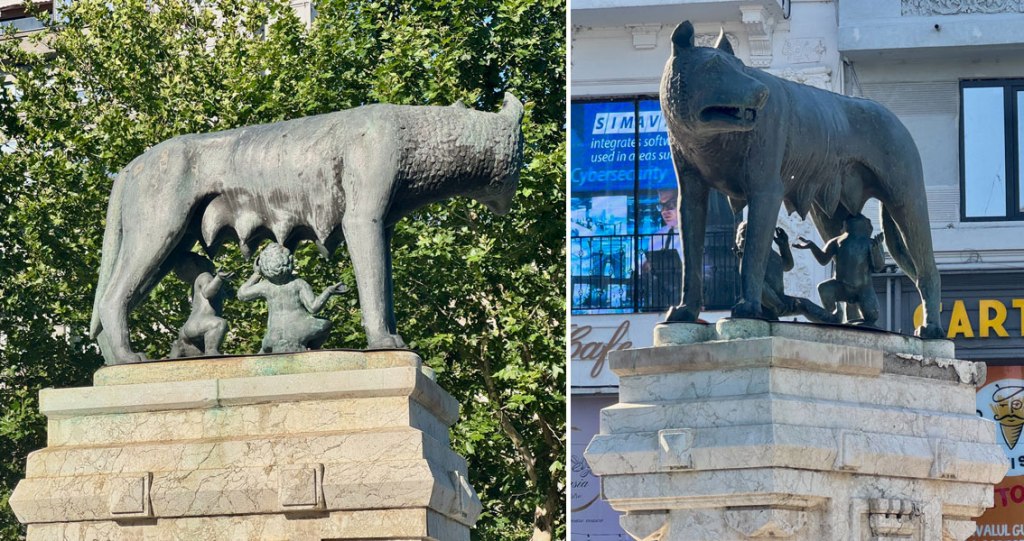
Why in Bucharest? Gifted by Rome in 1906, it symbolizes
the Latin heritage shared between Rome and Romania
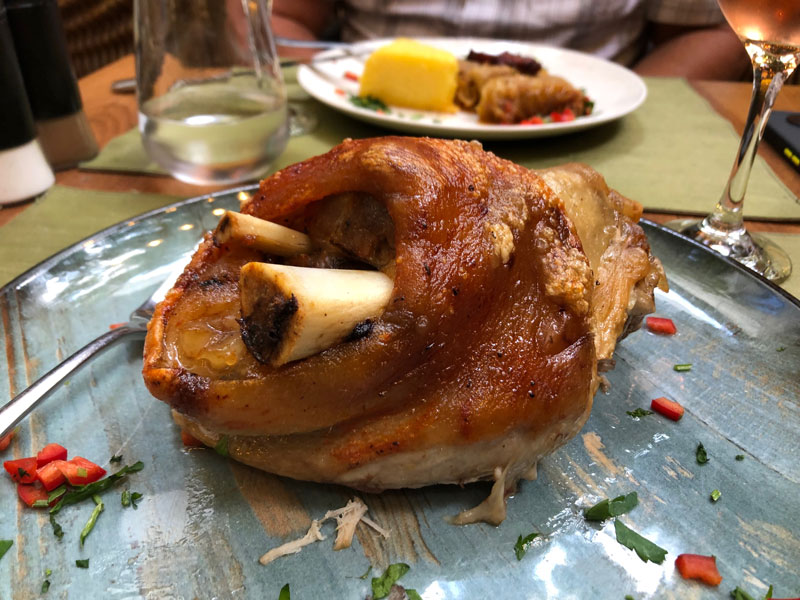
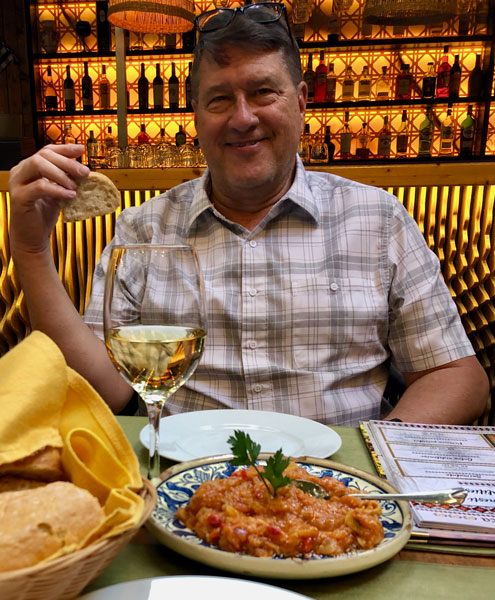
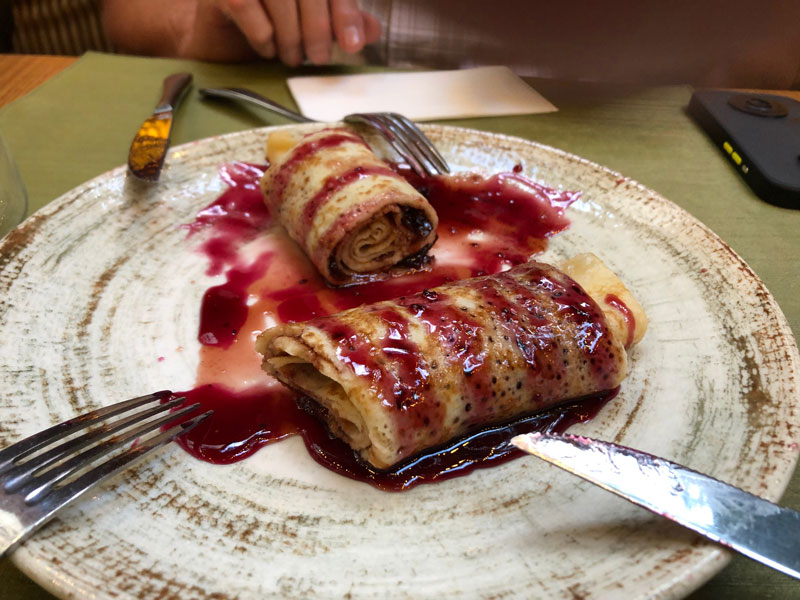
Return to the hotel, we did, for a short disco nap before seeking sustenance at the Casa Româneascã restaurant, the Number One dining spot on Miloš’s Top-Four-Dining-Suggestions-Within-Walking-Distance-Of-The-Hotel. The meal was quite satisfying – the bread and dessert especially so – and we returned with our bellies full.
Tonight, we prepare for tomorrow’s checkout; the Palace of the Parliament tour; a group lunch at a local restaurant; and the afternoon bus ride southwest to our awaiting ship in Bulgaria.
 Eastern Europe: Black Sea to Budapest
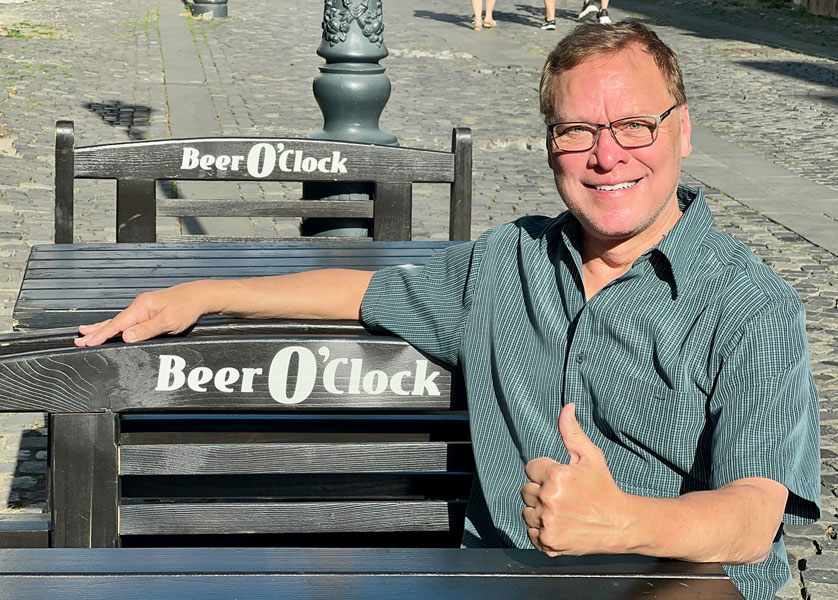
Beer o’clock! Frame it!
LikeLike